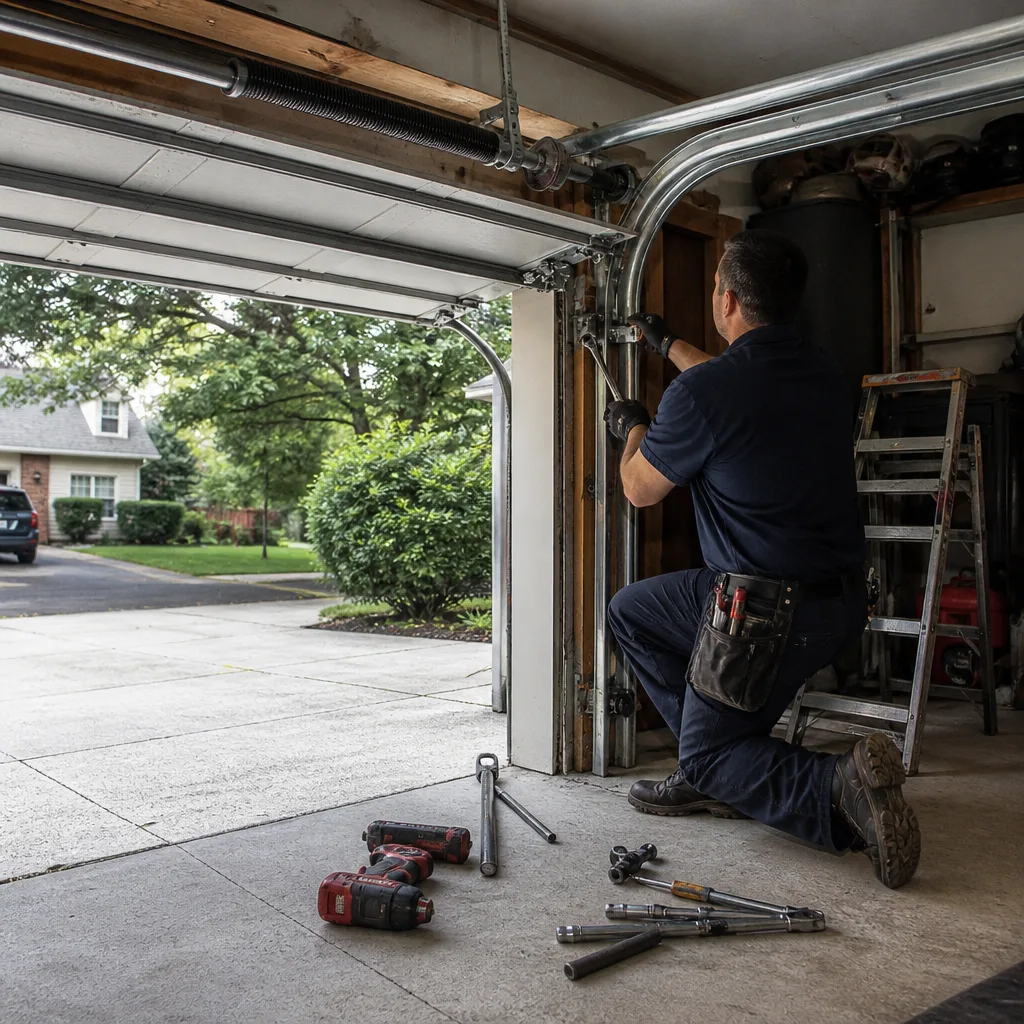
Last updated November 23, 2026
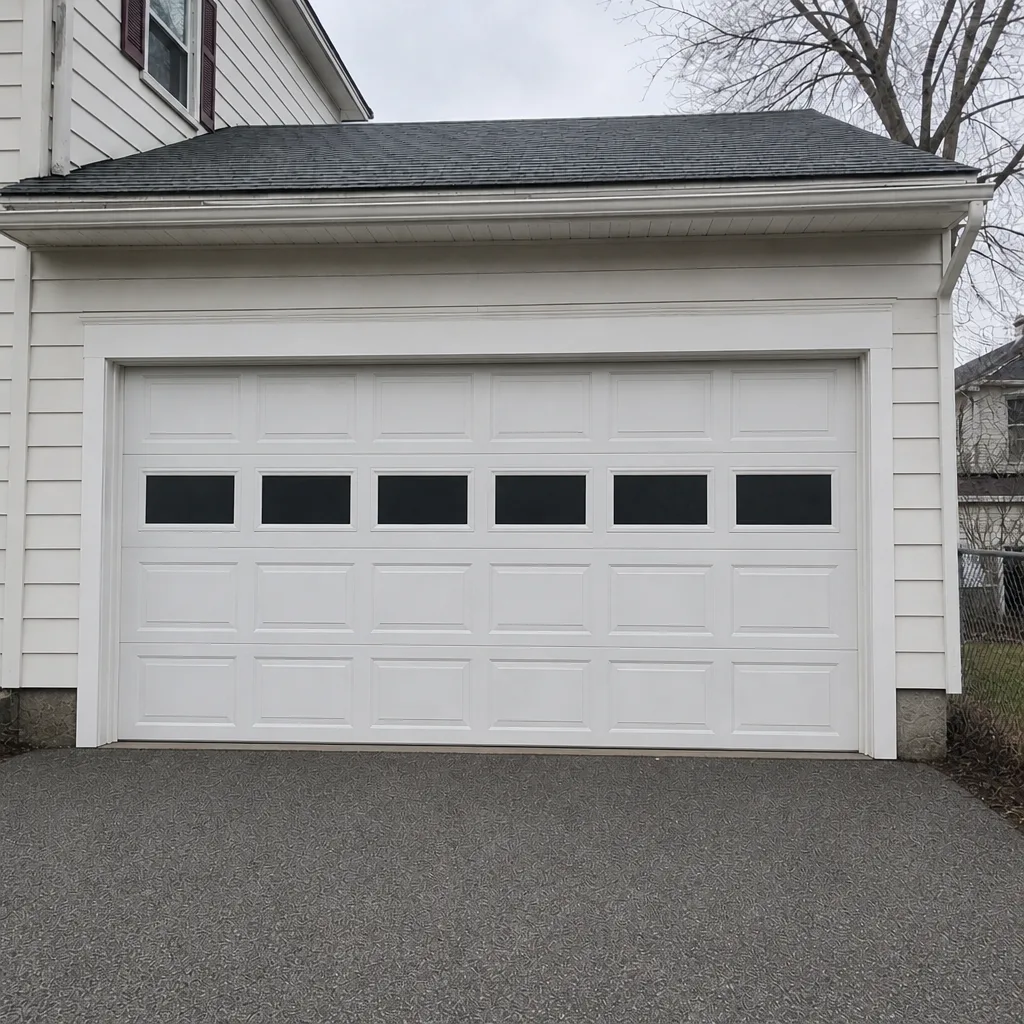
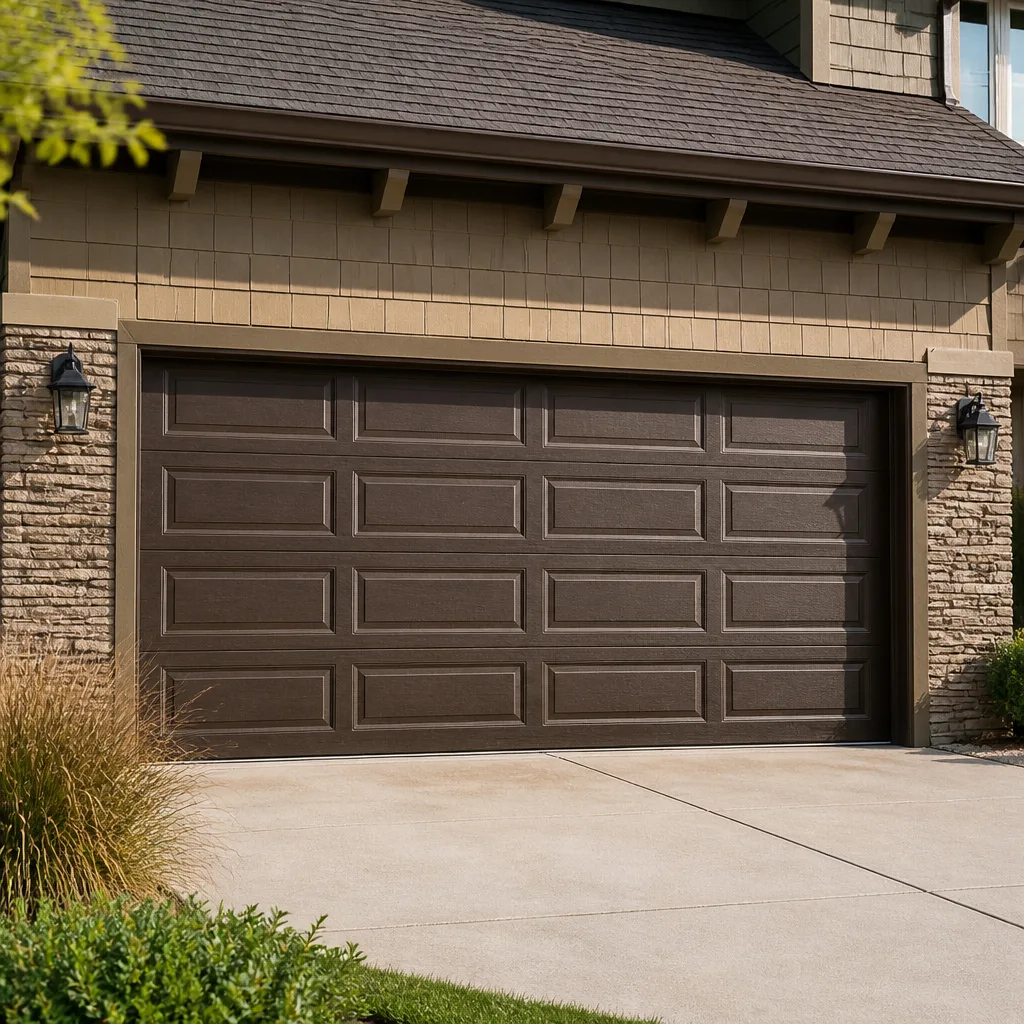 Raised-panel steel
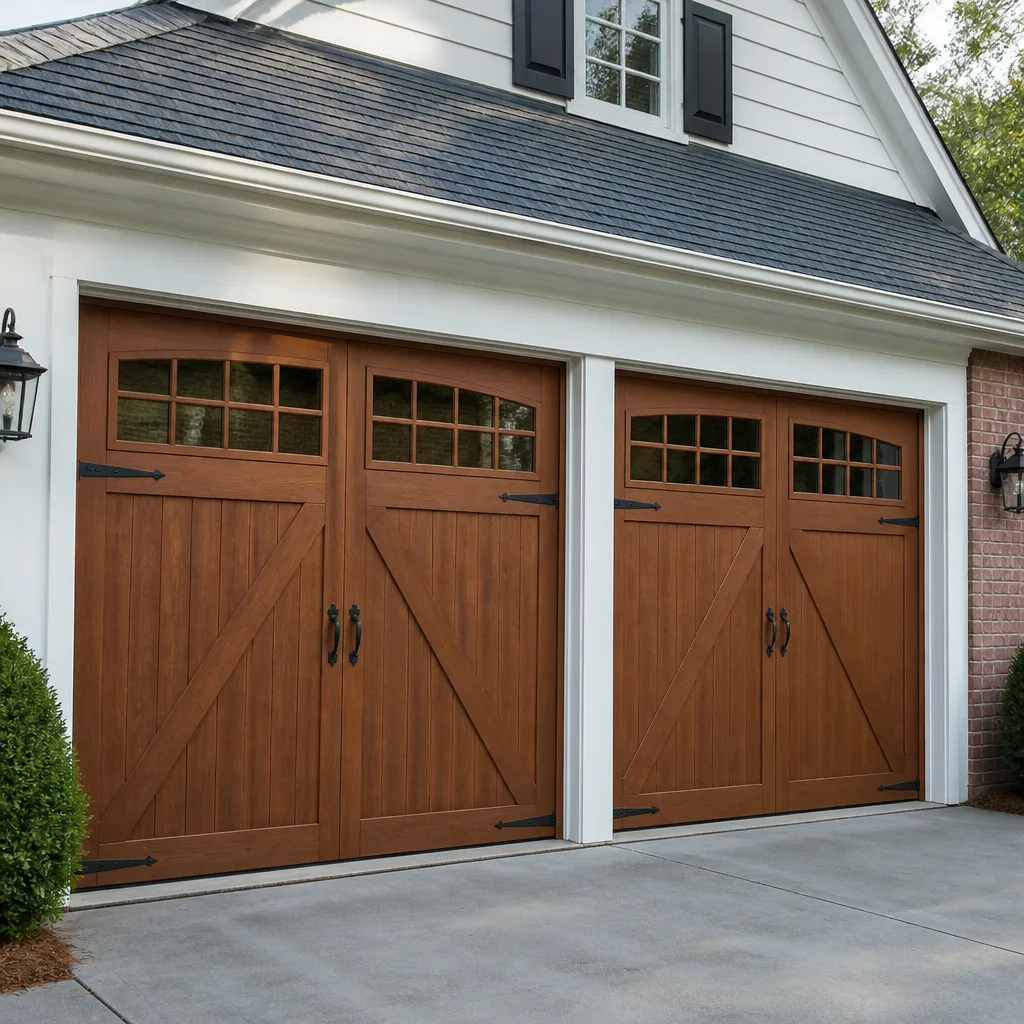 Carriage house
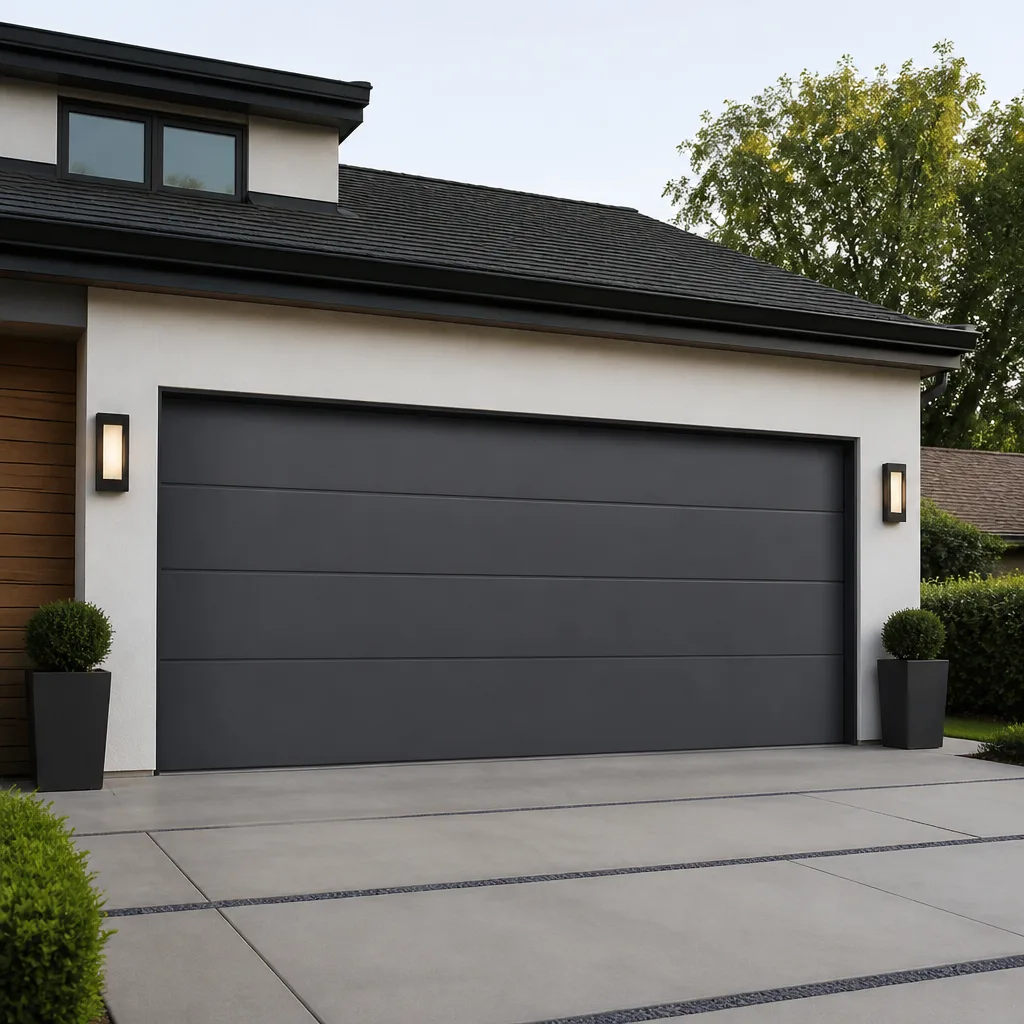 Modern flush
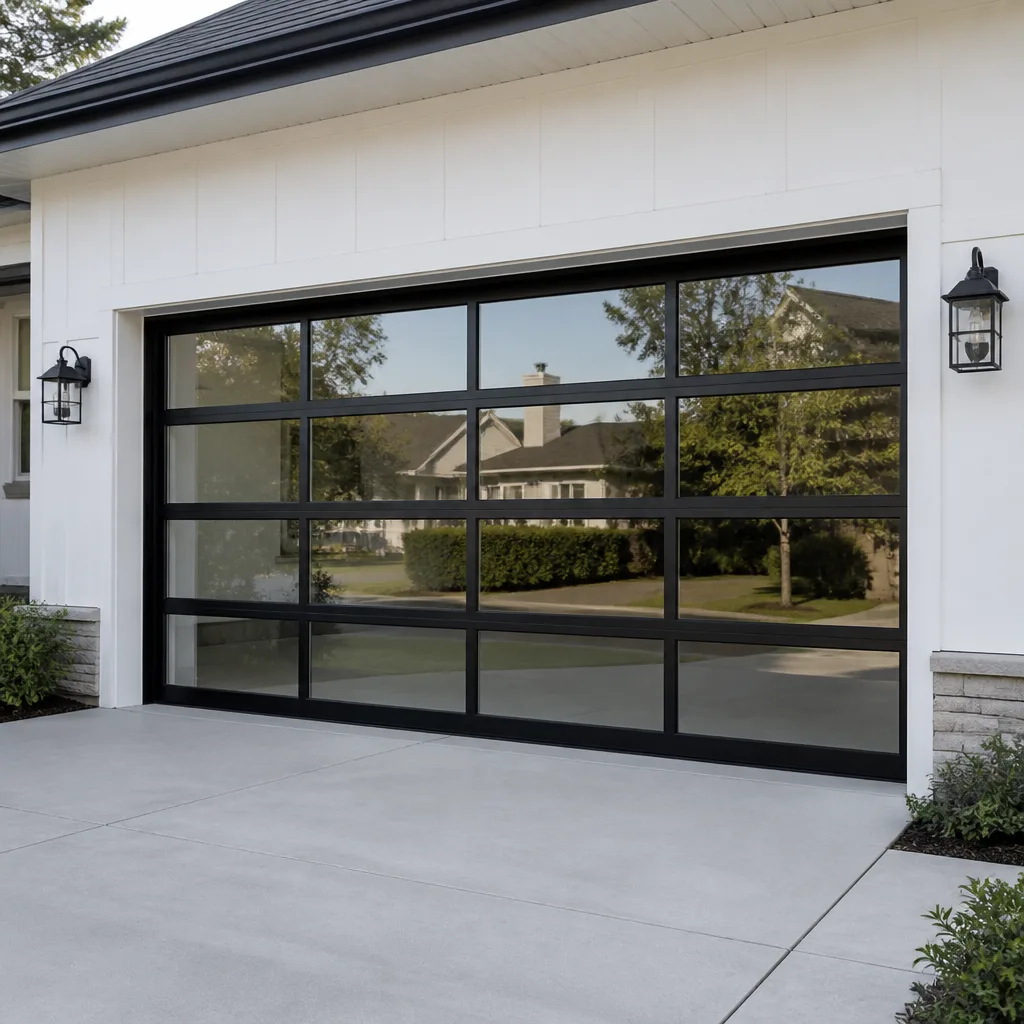 Full-view glass
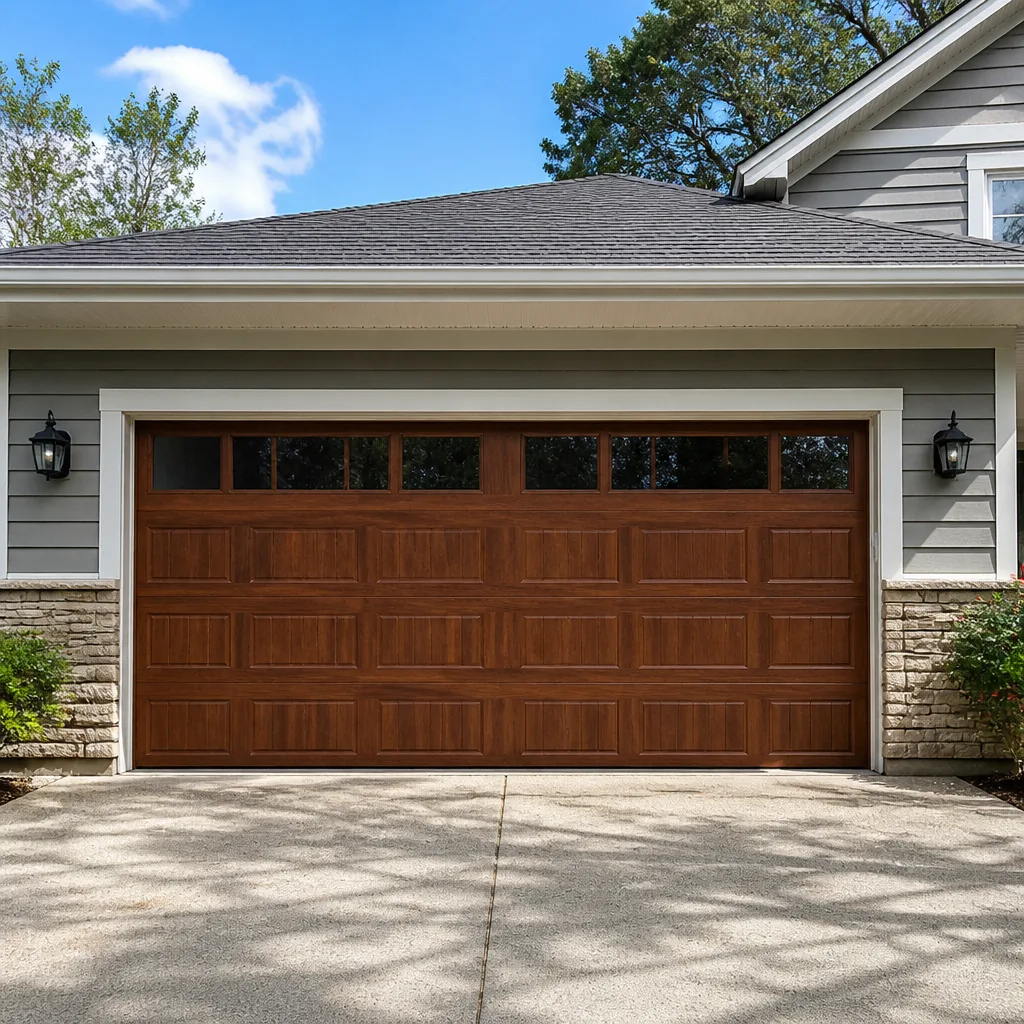 LiftMaster openers
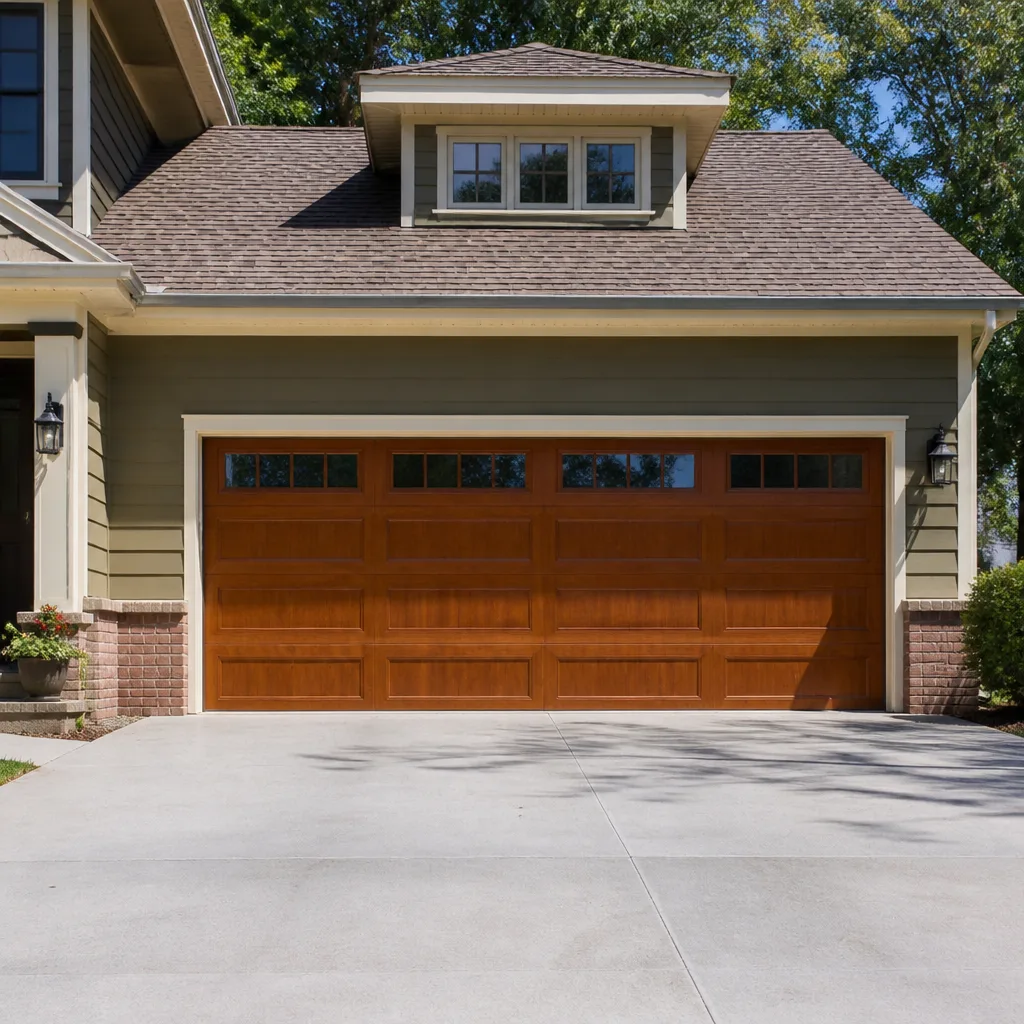 Chamberlain openers
Full 25-point door and opener safety check with every visit - springs, cables, rollers, tracks, and your LiftMaster or Chamberlain opener included
You get a price before we start. It does not change when the pro arrives.
Get your free estimateThe Complete Guide to Garage Doors in Chicopee
Your garage door moves more than 1,500 times a year. Most homeowners can’t name a single component inside it. That’s the odd thing about the largest moving object in your house: it runs silently for years, so it gets treated like a refrigerator – a sealed box you ignore until it quits. But a garage door is a mechanical system with cables under hundreds of pounds of tension, rollers that wear, seals that crack, and an opener that’s doing more work than you think. In Chicopee, where winters swing hard between freeze and thaw, that system ages faster than most people expect. This guide walks you through every decision you’ll ever face with it, from the first squeak to a full replacement, so you can spend money on what actually matters and skip what doesn’t.
Quick Answer
A garage door in Chicopee needs a tune-up about once a year, a spring or cable repair when something fails (typically $180 – $340 for one spring), and a full replacement when the panels, tracks, and hardware are all near the end of their life (most doors last 15 – 25 years). The trick is knowing which of those three situations you’re in before you call anyone. Misreading it is where most homeowners lose money.
Styles & brands we work with
- Raised-panel steel
- Carriage house
- Modern flush
- Full-view glass
- LiftMaster openers
- Chamberlain openers
Table of Contents
- Your Garage Door Is the Largest Moving Part of Your Home
- How Chicopee’s Climate Wears Out Specific Parts
- Door Problem or Opener Problem? How to Tell the Difference
- How Long Do Garage Doors and Openers Actually Last?
- Repair, Tune-Up, or Replace: The Real Decision Tree
- Which Upgrades Pay Back in a Western Massachusetts Home
- Common Mistakes to Avoid
- When to Call a Professional
- Frequently Asked Questions
Your Garage Door Is the Largest Moving Part of Your Home
Think about the other machines in your house. A furnace runs a few months a year. A dishwasher runs maybe once a day. Your garage door opens and closes several times every single day, in all weather, and it’s carrying a load of 130 to 300 pounds depending on the door. That’s not an appliance. That’s a piece of mechanical equipment bolted to your house.
Here’s why that distinction matters. Appliances fail slowly and give you warning. A garage door can run perfectly and then drop a spring on a Tuesday morning with no notice at all. The components inside it wear at different rates, and most homeowners only ever notice the one part that finally breaks. The rest keeps aging in the background.
The five systems doing the real work:
- Torsion or extension springs – counterbalance the door’s weight, so you’re lifting maybe ten pounds instead of two hundred.
- Cables and drums – transfer the spring tension to the door and keep it level as it travels.
- Rollers and hinges – guide the door along the track with as little friction as possible.
- Tracks – the frame the whole thing rides in.
- The opener – the motor that does the pushing and pulling, and the part most people blame first.
When one of these starts to go, the others feel it. A dry roller adds strain to the opener. A worn bottom seal lets water in, which rusts the bottom section. A spring that’s lost tension makes the opener work twice as hard. Treat it as one connected system and you’ll get years more out of all of it.
How Chicopee’s Climate Wears Out Specific Parts
Chicopee sits in the Connecticut River Valley, and that geography shapes what fails and when. The valley holds cold air in winter and humidity in summer, and the freeze-thaw cycle runs hard from late fall through early spring. Every time the temperature crosses 32°F, water that got into a crack expands when it freezes and pries that crack wider when it thaws. Do that fifty or sixty times a winter and the weakest parts of a door show it first.
The parts we see fail earliest in Chicopee homes:
- The bottom seal. This is the first line of defense against everything the road throws at it. It’s also the part closest to the pavement, which means it sits in snowmelt, road salt drift, and standing water. A cracked bottom seal lets water wick up into the bottom panel, and once a steel panel starts rusting from the inside out, replacement is the only real fix.
- Torsion springs. Cold makes steel brittle, and springs that spend a winter cycling in a cold garage fail sooner than springs in a mild climate. The freeze-thaw cycle also puts extra stress on the cables and drums holding that tension.
- The opener. A door that’s stiff from cold weather forces the opener to work harder. That extra strain shows up as a motor that struggles on the way up or a gear that wears out years ahead of schedule.
- Paint and finish. Humid summers aren’t kind to wood or older steel doors. Any spot where the finish has worn through is a spot where moisture gets in.
Road salt matters too, especially if your garage sits close to the street or you park wet, salted cars inside. Salt drift and salty slush splash up onto the bottom sections and the hinges, and steel that would last twenty years elsewhere can rust through in Chicopee in half that if the seal is bad. Keeping the bottom seal intact and rinsing the lower panels a few times each winter is one of the cheapest things you can do for the door.
Door Problem or Opener Problem? How to Tell the Difference
This is where homeowners waste the most money. The door won’t open, so the assumption is “the opener’s broken.” Sometimes that’s true. Often it isn’t, and replacing a perfectly good opener doesn’t fix a door that’s binding in its tracks or running with a snapped spring.
The good news is you can usually tell which one it is before anyone arrives. Run through this sequence:
- Pull the release cord. That’s the red handle hanging from the opener rail. It disconnects the door from the motor so you can move the door by hand.
- Lift the door manually. A balanced door should lift with modest effort and stay put wherever you let go of it, roughly three feet off the floor. If it feels like you’re lifting a truck, or it slams down on its own, the problem is in the door’s springs and balance, not the opener.
- Watch the door travel. If it moves by hand but the opener won’t budge it, the issue is likely the opener’s motor, gears, or logic board. If the opener runs but the door barely moves or shakes, look at the door’s hardware and tracks.
- Listen. A grinding sound from the motor points to opener gears. A bang or pop from over the door, followed by a door that won’t lift, points to a spring.
This is exactly the distinction we sort out on garage door opener repair calls every week. The homeowner expects to hear they need a new motor. Half the time the opener is fine and the door simply can’t be moved because a spring has let go or a cable has jumped its drum. If the door won’t move by hand, don’t replace the opener. Fix the door first.
Signs the door is the problem
- The door is heavy to lift, or drops when you let go of it.
- It’s crooked, or one side lags behind the other.
- Rollers are squealing, or the door jumps and shakes in the tracks.
- You can see a broken spring, or a cable hanging loose.
Signs the opener is the problem
- The motor runs but nothing moves (and the door is easy to lift by hand).
- The wall button doesn’t respond, or the remotes stop working together.
- Grinding or buzzing from the motor housing.
- The door reverses or stops partway for no obvious reason, and the safety sensors are clear.
How Long Do Garage Doors and Openers Actually Last?
Most people are surprised at how long a garage door can last when it’s maintained, and how quickly it can go when the same part keeps failing. A door’s lifespan isn’t one number. It breaks down by component, and the components age at very different rates.
Here’s a realistic picture for a Chicopee home:
- Steel door panels: 15 – 25 years with regular upkeep. Rust at the bottom section is the usual reason a door gets replaced before its time.
- Springs: these don’t last decades, and anyone who tells you otherwise is guessing. A torsion spring is good for a high number of cycles, and a door that runs four or five times a day in Chicopee burns through those cycles faster than a door that runs twice.
- Openers: widely in the 10 – 15 year range for a modern unit, with the motor usually outlasting the gears and the electronics.
- Rollers and hinges: the cheapest parts, and the ones most often ignored. Nylon rollers outlast metal, but both have a finite life and both are cheap to replace.
- Bottom seal: somewhere in the three to six year range in our climate, faster if the door faces the street where the road spray hits it.
Brand familiarity matters here. The homes in Chicopee we see most often have LiftMaster or Chamberlain openers, Clopay or Raynor doors, and a fair number of Craftsman systems that were installed years ago and are still going. The internal parts aren’t interchangeable, and the way each brand’s opener handles force limits and safety checks is a little different. Knowing the specific model means a technician isn’t guessing at the problem. That’s where brand expertise turns into real money saved, because you fix the right part the first time instead of swapping parts until something works.
Repair, Tune-Up, or Replace: The Real Decision Tree
This is the question that actually costs people the most. There’s no single right answer, but there is a decision tree, and following it keeps you from overspending on a door that’s near the end or underspending on one that just needs a service call.
Step 1: Is the door safe to operate right now?
If a spring is broken, a cable is loose or hanging, or the door comes down hard, stop using it. Springs and cables are under high tension and can cause serious injury if you try to handle them yourself. Keep the door down and call a trained professional. This is the one situation with no gray area.
Step 2: Is it one broken part, or a pattern?
One failed part on an otherwise healthy door is a repair. That’s a spring, a cable, a roller set, a snapped section, a failed opener gear. The cost is usually modest and the door goes back to running right. A garage door spring repair is a good example: it’s a common, well-understood job with a known price, and it makes total sense on a door in good shape.
Step 3: How old is the door, and how many parts are failing at once?
When you’re looking at multiple failures in a short window – a spring this year, a cable next, a bottom section that’s rusted through – you’re paying for the privilege of a door that’s done. That’s the point where a repair starts to cost more than it’s worth.
Step 4: Does the structure still support the door?
Bent tracks, a sagging header, or sections that have warped permanently mean the door will never run well, no matter how many parts you throw at it. This is a replacement conversation.
Step 5: Can you honestly reach the door from inside, and does it feel light?
A door that’s loud, jerky, or starts each cycle with a shake is telling you the whole assembly is loose. That’s usually the moment a tune-up pays back the fastest.
The honest cost thresholds
There’s no exact dollar figure that works for every home, but the thresholds are useful:
- One part fails, door is otherwise sound: repair. Cheap, fast, and the right call.
- Small leaks, squeaks, or stiffness: tune-up. Replacing rollers, sealing the bottom, and adjusting the springs and balance is far less than a door.
- Two or more major structural parts failing, or a door more than two decades old with rust at the bottom panel: replacement. You’re on borrowed time.
- Opener is ancient and the door is failing too: replace the system together. A new door with an old opener just tires the opener out.
When the numbers point the same direction, the decision is easy. When they’re close, a written estimate from a professional who can see the door in person tells you more than any guide can. We quote every job in writing before any work starts, so you can see exactly what a repair versus a replacement costs before you commit.
Which Upgrades Pay Back in a Western Massachusetts Home
Garage door upgrades are like any home improvement: some of them make a real difference, and some of them cost a lot for little value. Here’s how to sort the two in a Chicopee home.
Insulation – worth it
In a western Massachusetts climate with real winters, an insulated door is one of the few upgrades that pays off every day. The garage shares at least one wall with the house, and often sits under bedrooms. An insulated door slows heat loss through that wall and keeps the garage from turning into a freezer. It also quiets the door, which matters if anyone sleeps above it. Skip the highest-rated commercial panels; a mid-range insulated door from a brand like Clopay or Amarr is plenty for a residential garage.
A smart opener – worth it, with a caveat
A connected opener is genuinely useful if your garage is the main entrance. LiftMaster and Chamberlain myQ systems let you open the door from your phone, check whether it’s closed, and let in a delivery while you’re not home. Genie’s newer openers do the same. The caveat: a smart opener on a door with worn springs will still strain, and no amount of app control fixes a mechanical problem. Upgrade the component that matters first.
Heavier steel gauge – worth it if you plan to stay
A thicker steel door resists dents – from a stray lawnmower wheel, a kid’s basketball, or a snow shovel bumped against the panel. In Chicopee homes with kids and driveways that double as play space, the heavier gauge pays back in fewer dings. It’s not worth it for a low-traffic garage where nothing is likely to hit the door.
Overkill upgrades
- High-end designer windows and glass: beautiful, expensive, and easy to crack if a snow shovel swings wild.
- Oversized commercial-grade hardware: unnecessary for a residential door and adds cost with no benefit.
- Full smart-home integration on a mechanical opener: adding a hub to an aging motor is putting lipstick on a machine that’s on its way out. Fix the mechanics first.
The pattern is simple. Anything that keeps your Chicopee garage warmer, quieter, or structurally stronger pays back. Anything that’s mostly cosmetic on a door with a finite lifespan is a luxury, and that’s fine as long as you know that’s what you’re buying.
Common Mistakes to Avoid
- Replacing the opener when the door is the problem. If the door is heavy to lift by hand, the springs are the issue. A new opener on a door that won’t balance will fail too, and you’ll have paid twice.
- Trying to fix a broken torsion spring on your own. Torsion springs are under hundreds of pounds of tension. A spring that lets go while you’re holding it can break bones. This is the one job that should always go to a trained professional.
- Ignoring the bottom seal. It’s the cheapest part on the whole door and the most important one in a Chicopee winter. Cracked and brittle, it lets salted snowmelt into the bottom panel and starts rust that can’t be reversed.
- Using a general handyman for a door or opener repair. Garage door systems are their own trade. A generalist will often guess at the part, and in a brand like LiftMaster or Chamberlain, guessing wrong wastes money. Familiarity with the specific brand is worth more than a generic hourly rate.
- Skipping the annual tune-up. Lubrication, balance checks, and a roller inspection once a year are far cheaper than the failures they prevent, and they catch a spring on its way out before it strands you at the worst possible time.
- Forcing a door that’s jammed or crooked. A door that’s off-level or jumping its track will bend the panels and the tracks if you keep running the opener. Stop using it and get it looked at.
- Buying a door on looks alone. Insulation, steel gauge, and panel construction matter more than the style in an actual New England climate. Ask what the door is made of before you fall in love with the color.
When to Call a Professional
Some problems are easy to reason through. These are not, and they’re the ones that need a trained hand:
- A broken torsion spring or a cable that has snapped or come loose. Do not run the door. The tension in these parts is real and it can hurt you.
- A door that comes down hard, doesn’t stay up, or has to be forced past a certain point.
- The opener runs but nothing moves, or the motor is grinding.
- A crooked door, or one that’s jumped its track.
- Rust at the bottom section that’s started to eat into the panel.
- A door that’s 15-plus years old and failing more than once a year.
Chicopee Garage Door Repair Co offers free estimates in Chicopee and the surrounding area. We work on garage doors and openers only, so the person who shows up does this every day. Call (877) 401-9972 and we’ll give you a written price before any work starts. If your door is stuck and can’t wait, emergency service is part of what we do, not an add-on.
Frequently Asked Questions
Typical garage door spring repair in Chicopee runs about $180 – $340 for one spring, and a matched pair is usually replaced together, so a pair is roughly twice that. The exact price depends on the spring size and the door’s setup, and the written estimate sets the final number before any work begins. Call (877) 401-9972 for a free estimate on your door.
Yes, for situations that can’t wait. A door stuck open or closed, a snapped spring, or a door you can’t safely move is exactly the kind of thing emergency service is for. Call (877) 401-9972 and we’ll find a time that works. We’re closed on Saturdays; if the door fails then, call and we’ll book you for Sunday.
No. We quote the job in writing and agree on the price before any work starts, so the number you’re given is the number you owe. If we find something during the job that changes the scope, we stop and talk it through with you first rather than surprising you with a bigger invoice.
The local professionals we connect you with are licensed and insured as Massachusetts requires. Our technicians have up to 13 years of experience, and they’re trained on the specific brands most Chicopee homes actually have: LiftMaster, Chamberlain, Genie, Clopay, Amarr, Wayne Dalton, Craftsman, and Raynor. Call (877) 401-9972 to schedule a free estimate.
Once a year is the right rhythm for most homes here. The freeze-thaw cycle and salty road spray do more to a door than most climates, so a yearly tune-up catches a weak spring, a drying roller, or a cracked bottom seal before it turns into a bigger repair. If your door runs more than four or five times a day, keep to that schedule. Call (877) 401-9972 to book a tune-up.
LiftMaster, Chamberlain, and Craftsman openers show up most often, with Clopay, Amarr, Wayne Dalton, and Raynor doors on many houses. Genie systems are common too. We’re trained to service all eight, which matters because each brand’s opener and door hardware work differently. Knowing your equipment means the right diagnosis the first time. Call (877) 401-9972 if you’d like a free estimate on yours.
The Bottom Line
Your garage door isn’t an appliance. It’s a mechanical system with springs, cables, rollers, and a motor that all wear at their own pace, and in Chicopee’s freeze-thaw climate the wear shows up first at the bottom seal, the torsion springs, and the opener. Learn the difference between a door problem and an opener problem, know the realistic lifespan of each part, and use the decision tree before you spend a dollar. Repair one failed part. Tune up a healthy door. Replace when the pattern and the age say it’s time. Whatever you decide, get a written price before the work starts, and never tackle a tension spring yourself.
Chicopee Garage Door Repair Co handles the whole range under one company: Chicopee Garage Door Repair Co repairs doors and openers, replaces springs, and installs new doors, with no referrals out. If you’re in Chicopee and the door is squeaking, sticking, stuck, or simply past its prime, we’ll take a look and give you a straight answer. Call (877) 401-9972 for a free estimate, and we’ll tell you exactly what your door needs and what it’ll cost.
Written by the team at Chicopee Garage Door Repair Co.
See the difference
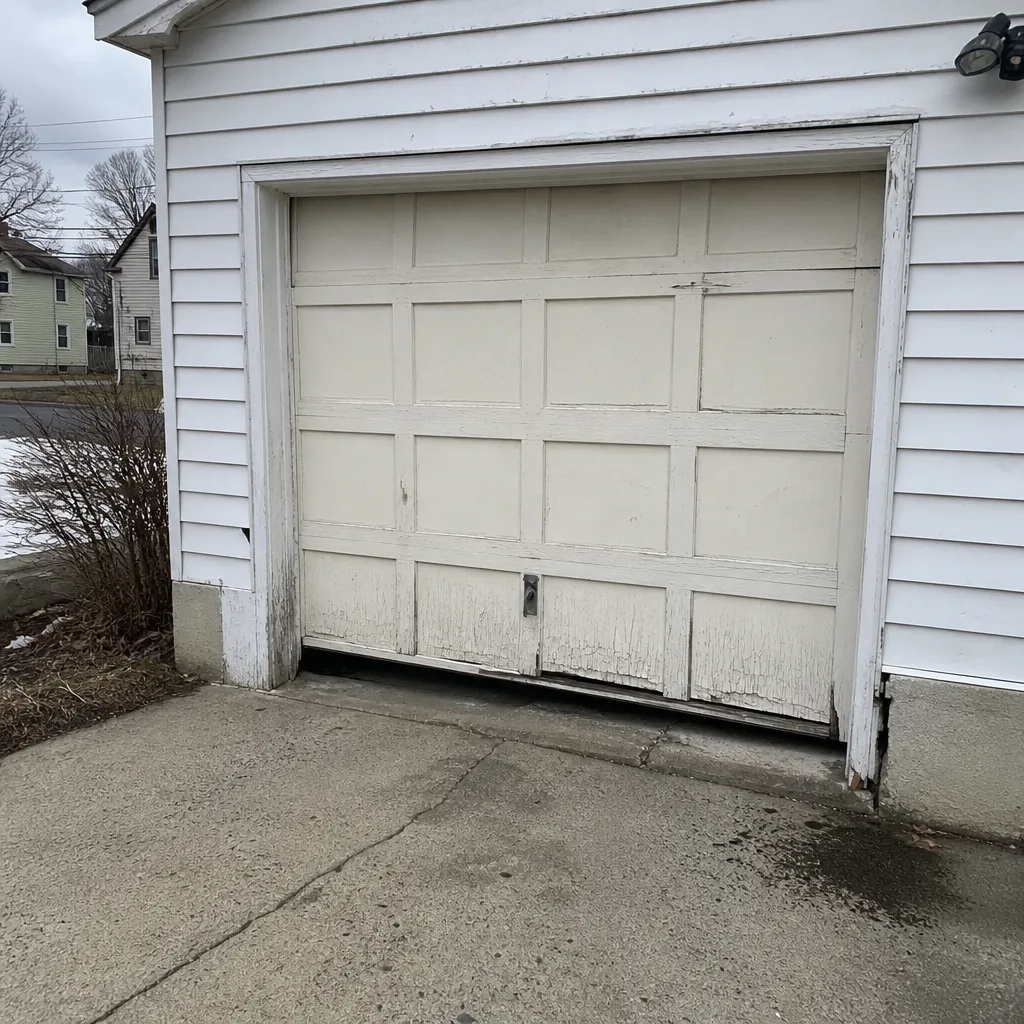 Before
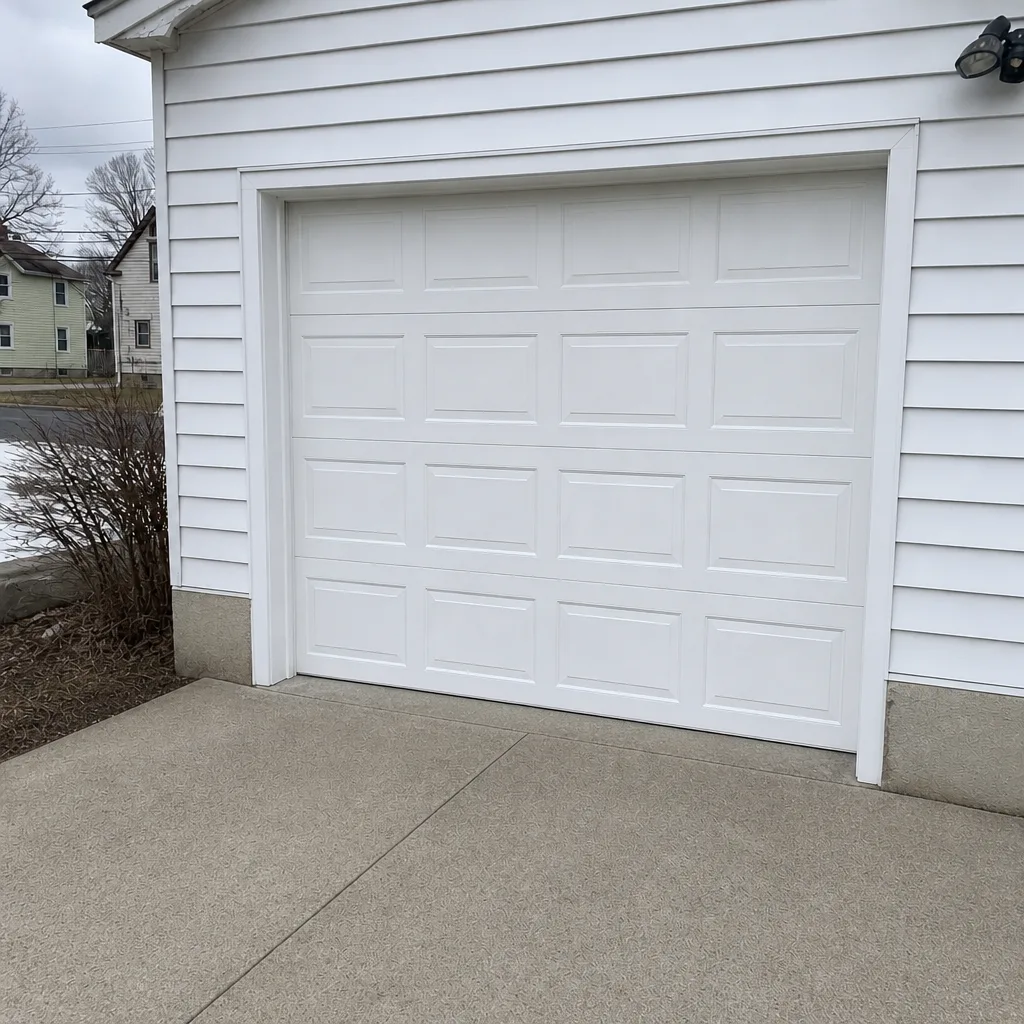 After
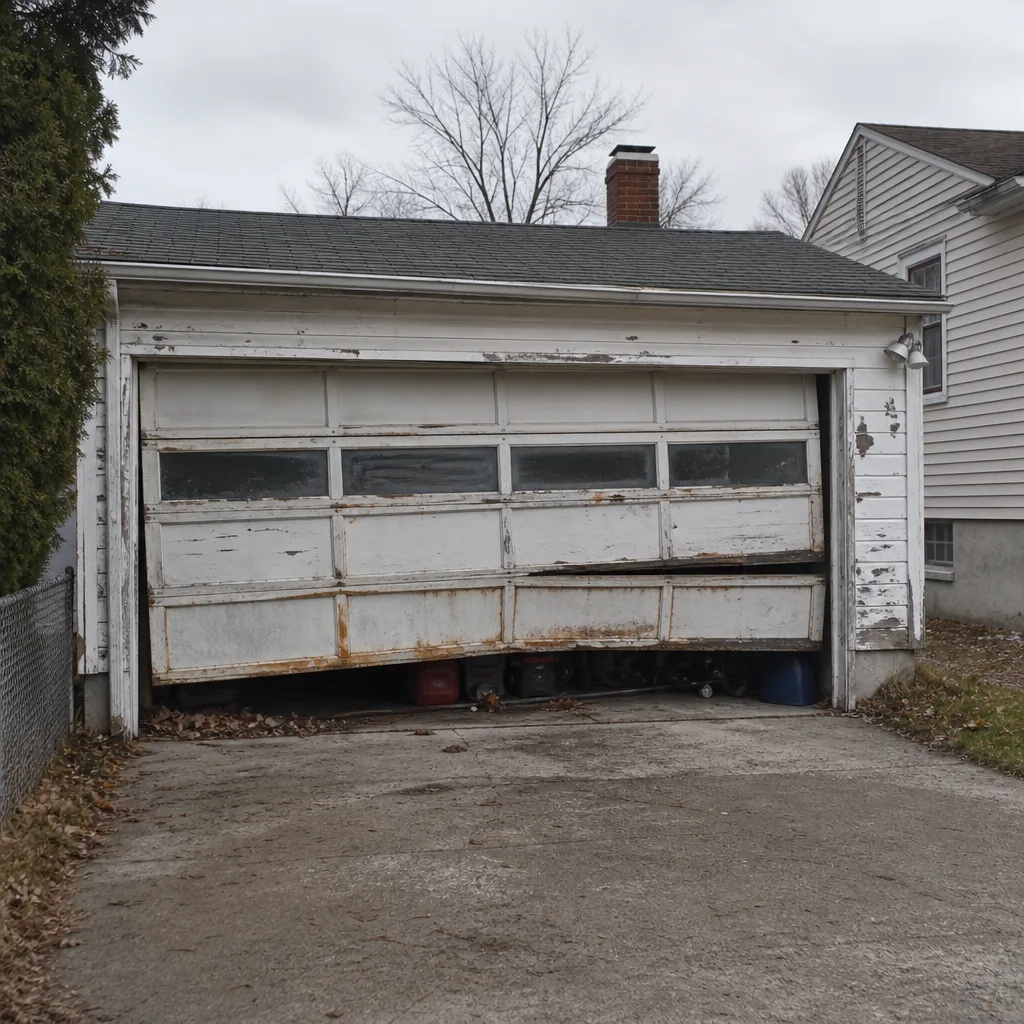 Before
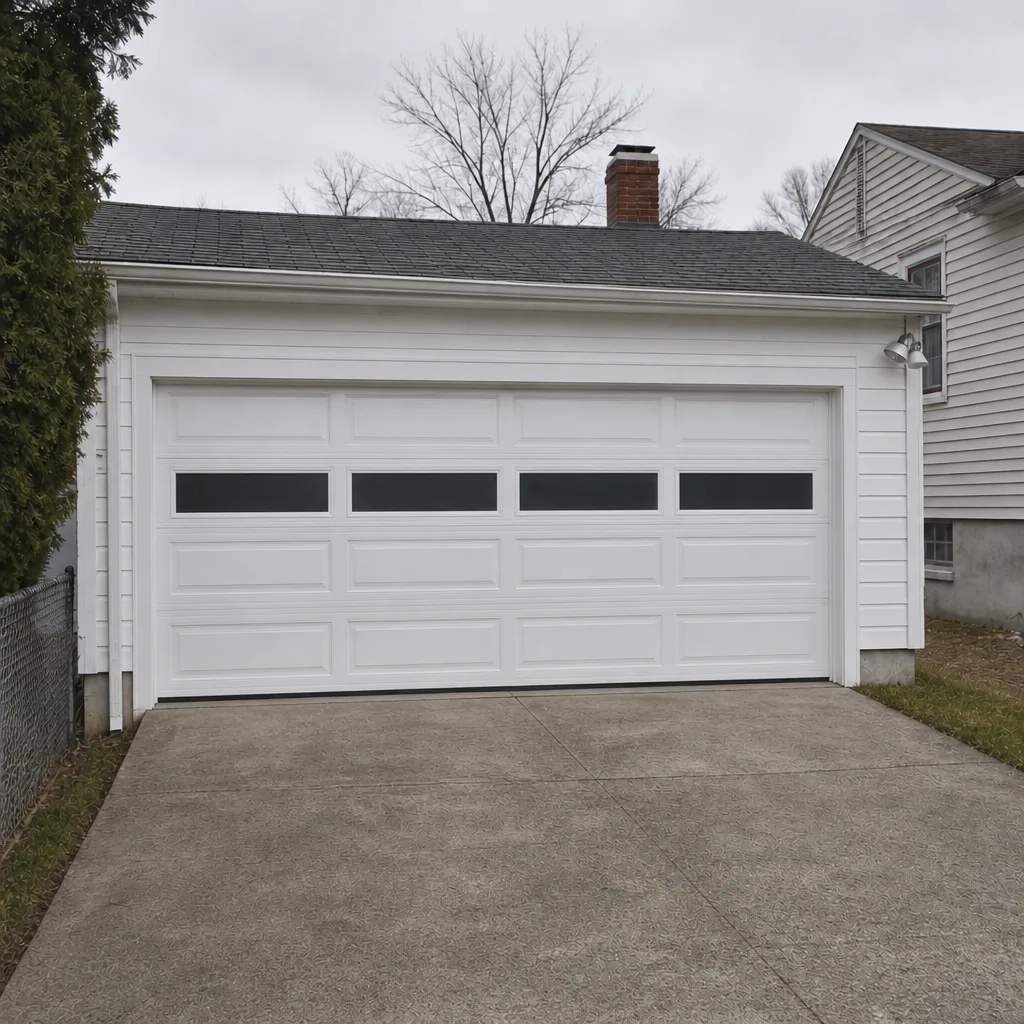 After
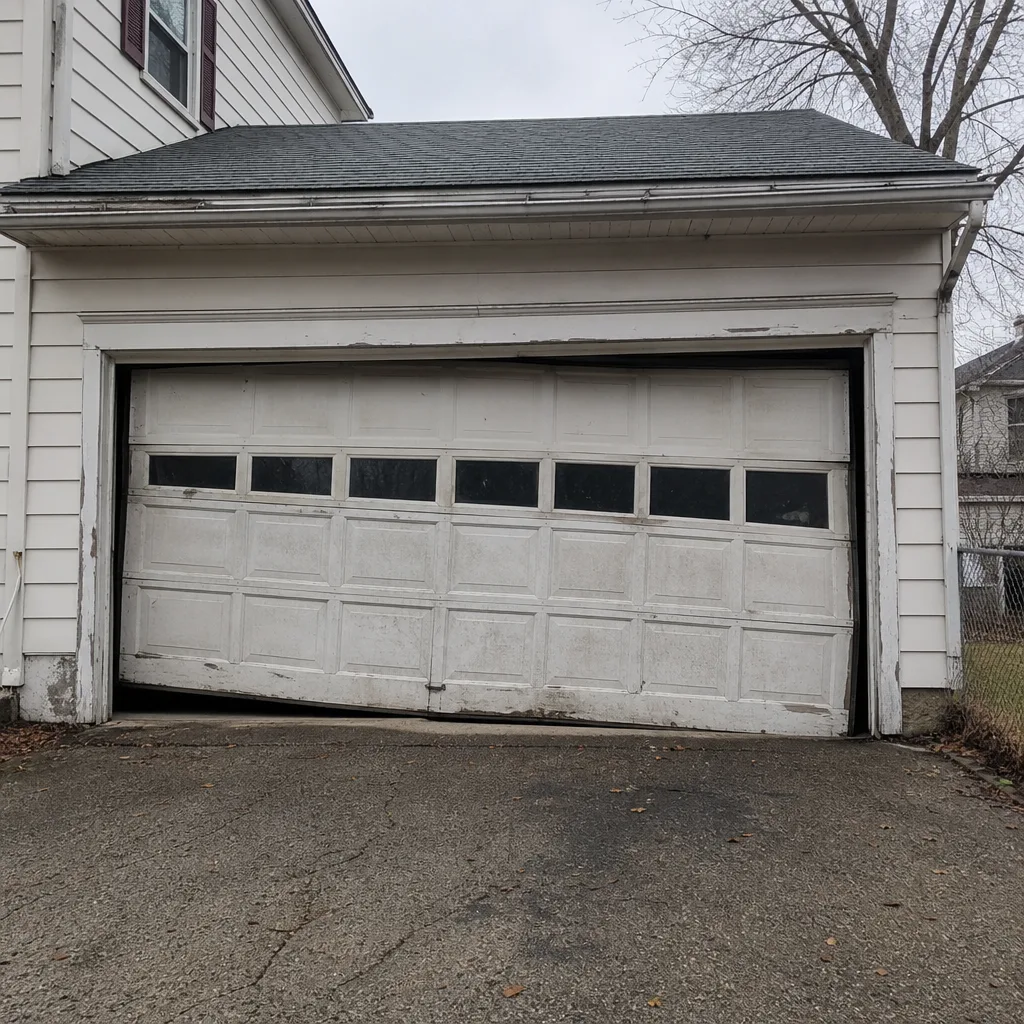 Before
 After