Last updated November 23, 2026
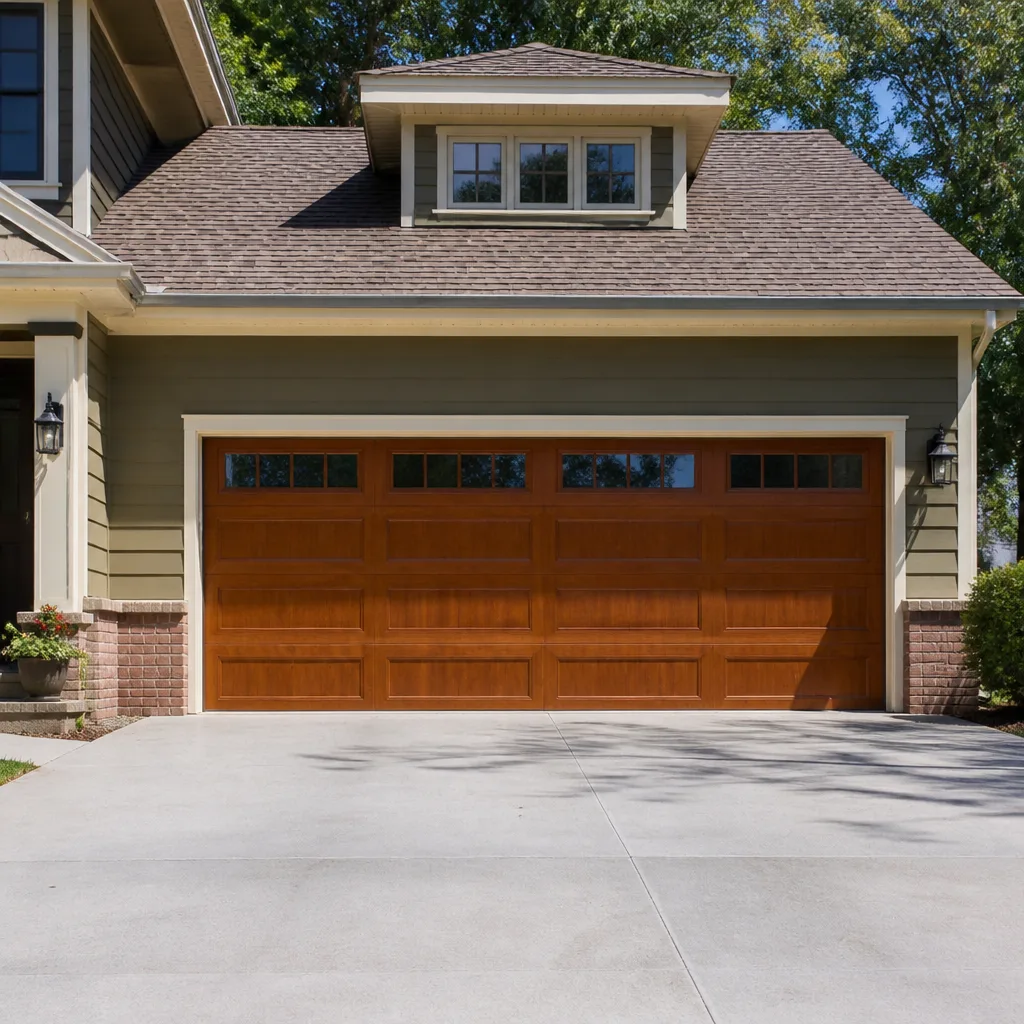
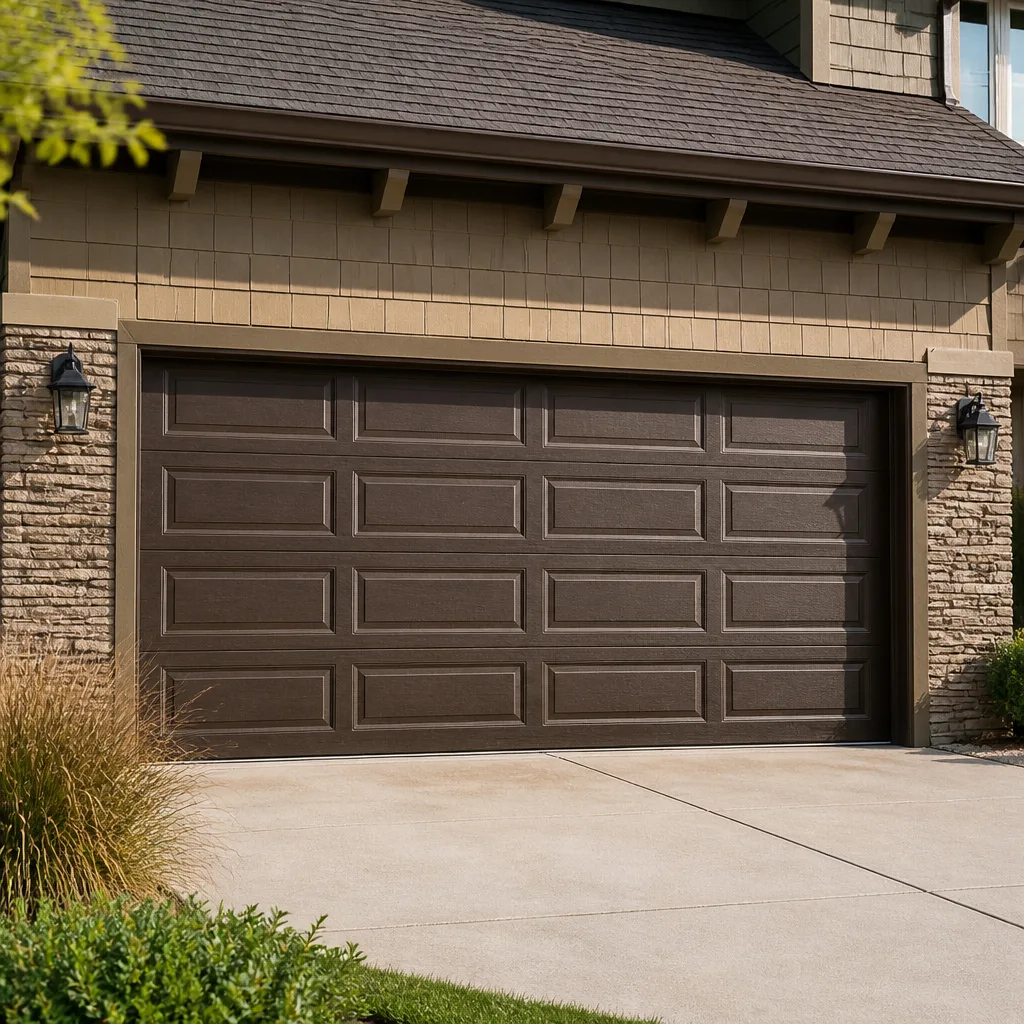 Raised-panel steel
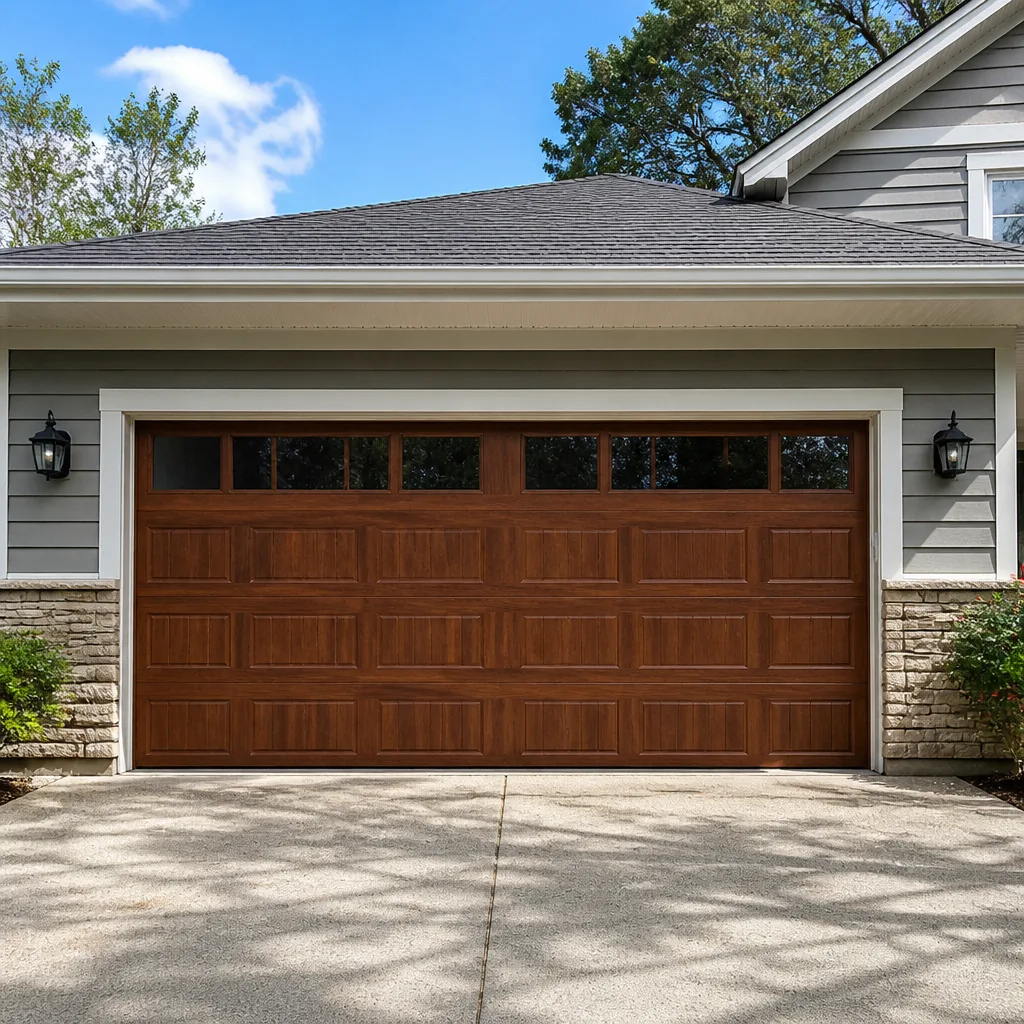
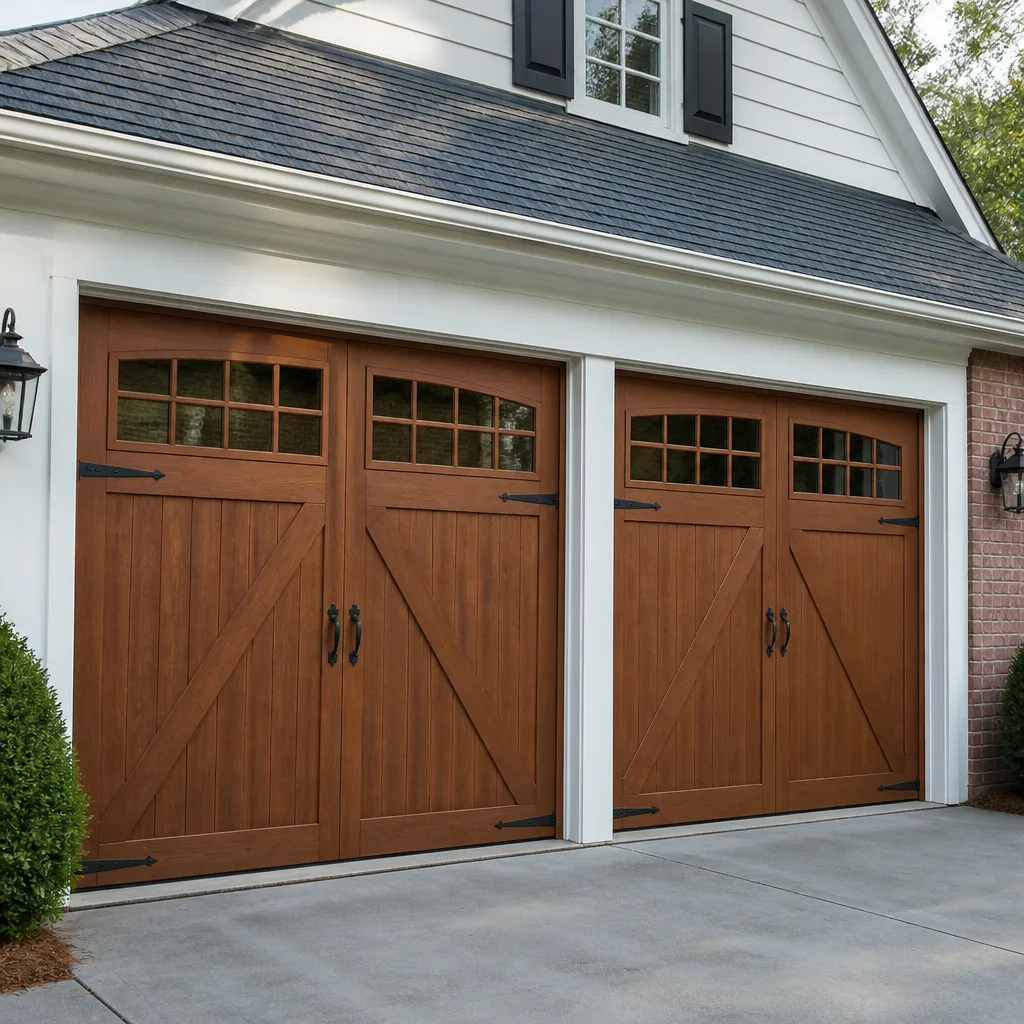 Carriage house
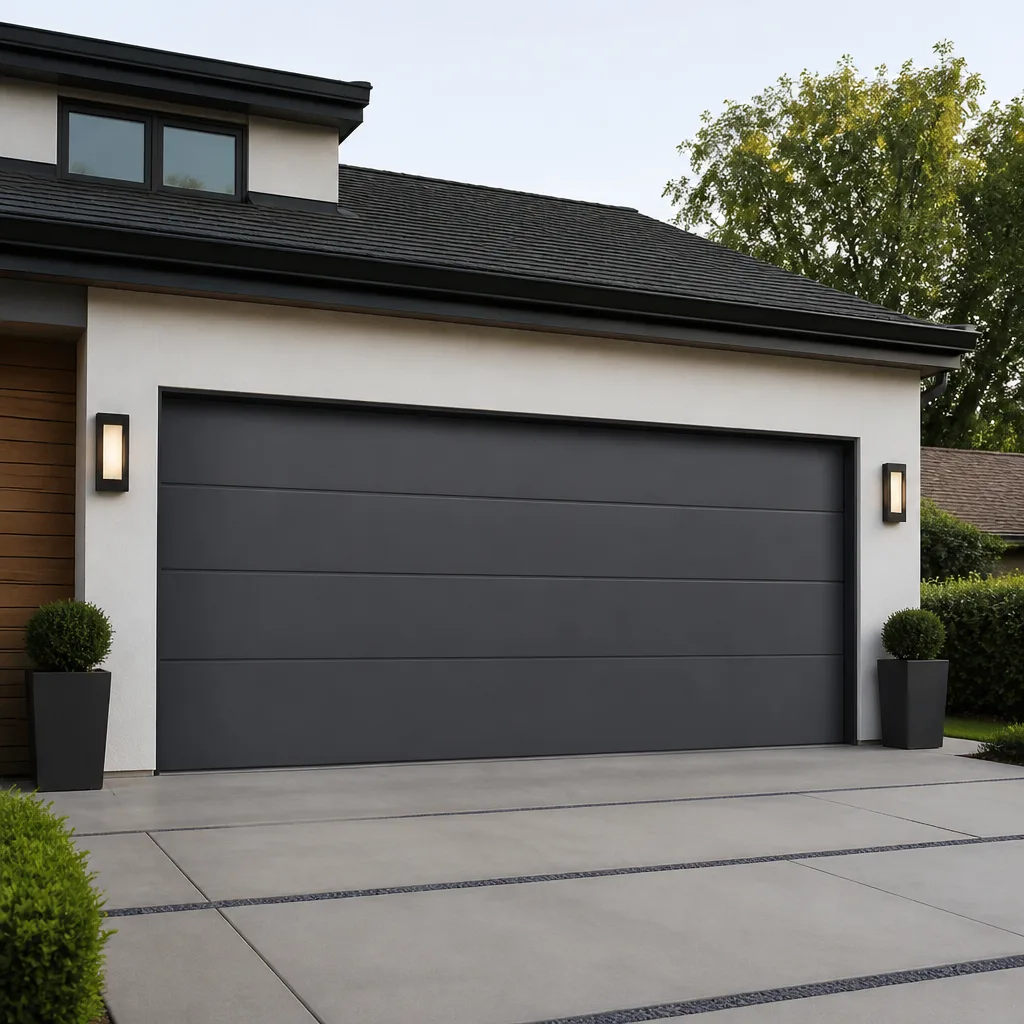 Modern flush
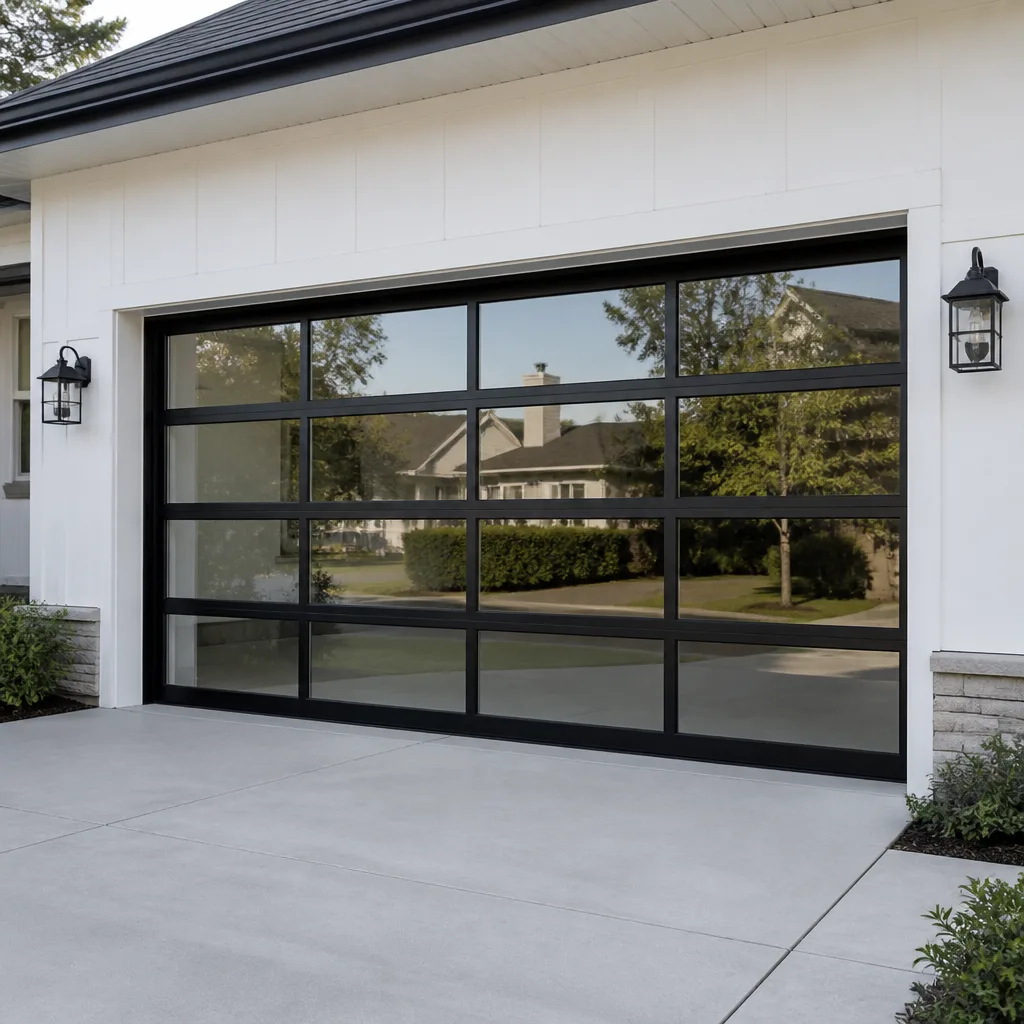 Full-view glass
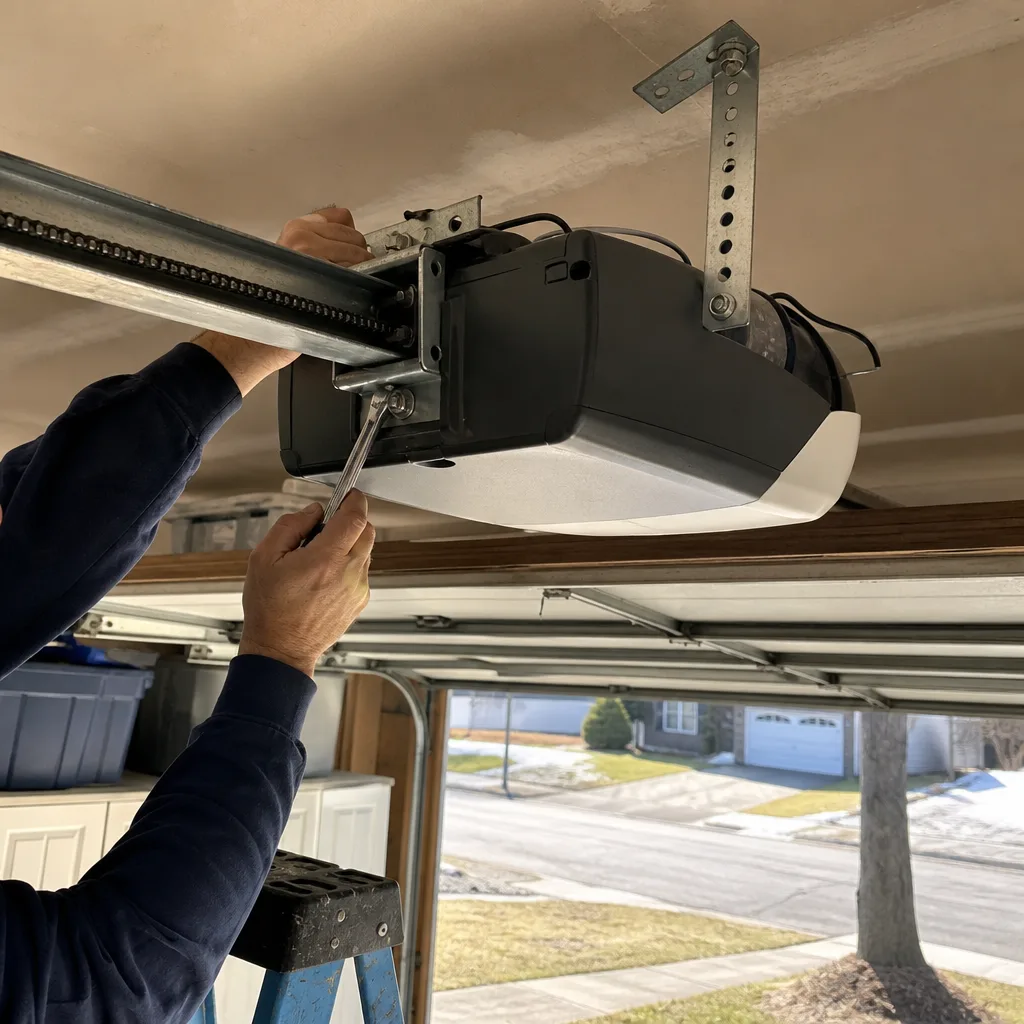
 LiftMaster openers
 Chamberlain openers
Full 25-point door and opener safety check with every visit - springs, cables, rollers, tracks, and your LiftMaster or Chamberlain opener included
You get a price before we start. It does not change when the pro arrives.
Get your free estimateGarage Door Emergency Preparedness Guide for Chicopee Homes
A garage door frozen shut during a Chicopee winter storm is a minor inconvenience if you know what to do, and a potential safety issue if you force it wrong. Most homeowners treat the garage door as furniture: it opens, it closes, nobody thinks about it until it stops. Then the panic sets in, usually at the worst possible hour, and people start yanking handles and prying panels in ways that turn a repair into a replacement. This guide covers what you actually need to know when the door won’t move: the emergency release, what to do in a blackout, how to tell a safe-to-wait problem from a call-now problem, and what to have ready when you phone for help. We’ll keep it practical and specific to how doors behave in a Chicopee winter.
Quick Answer
When your garage door stops working, the first move is almost never to force it. If the opener is dead or the door is jammed, use the red emergency release cord to disengage the opener, then raise a balanced door by hand from the bottom section and prop or secure it safely. A snapped spring, a door off its tracks, or a panel that’s buckled under tension are not wait-until-Monday problems: stop operating the door and call for service. Everything else, from a frozen bottom seal to a dead remote, usually gives you room to think it through.
Styles & brands we work with
- Raised-panel steel
- Carriage house
- Modern flush
- Full-view glass
- LiftMaster openers
- Chamberlain openers
Table of Contents
- How the Emergency Release Cord Works (And How to Use It Safely)
- What to Do When the Power Is Out in Chicopee
- Common Emergencies and the Right First Response
- Is It Safe to Leave the Door Overnight?
- Winter-Specific Failures in Chicopee Homes
- What to Have Ready When You Call for Emergency Service
- Prevention: A Simple Seasonal Checklist
- Know Your Equipment: Opener and Door Brands
How the Emergency Release Cord Works (And How to Use It Safely)
The red cord hanging from your opener’s trolley is the single most misunderstood piece of hardware on the whole door, and in our experience it’s also where most self-inflicted damage starts. That cord exists to disconnect the door from the opener motor so you can operate the door by hand. It does not lock anything, it does not fix a broken spring, and it will not make a heavy door light. What it does is separate the motor from the door so a dead opener no longer holds the door in place.
Here’s how to use it correctly, in order:
- Pull straight down and slightly toward the door, firmly, until you feel the trolley release. On most LiftMaster and Chamberlain units, the trolley is the carriage that slides along the rail above the door.
- Stand clear and lift the door from the bottom section, using the center handle if there is one. A balanced door should lift with steady effort and stay where you leave it.
- If the door feels extremely heavy or drops when you let go, stop. That almost always points to a failing spring, and the door should not be operated.
- To re-engage, raise the door until the trolley carriage clicks back into the opener’s arm, typically once the door is fully open and the opener is powered.
What you should never do is yank the cord while the door is mid-travel, or use the release to try to “reset” a door that is jammed on its tracks. A door that is off its tracks under release tension can swing or drop unpredictably. If you’re unsure whether the door is balanced, don’t test it by hand. Our garage door repair team can check balance and spring condition in a single visit, and that’s the honest way to find out what’s actually wrong before you stress anything else.
What to Do When the Power Is Out in Chicopee
A blackout in Chicopee during a nor’easter or an ice storm is the classic garage door emergency, and it has a clean solution: the release cord. Once the door is disengaged from the opener you can operate it by hand, which is exactly how garages worked before openers existed. The trick is doing it safely and then securing the door afterward so you’re not leaving your home open to the street.
Here’s the order of operations when the power is out:
- Pull the release cord to disconnect the opener, then raise the door by hand from the bottom panel.
- Prop the door fully open, or lower it gently and let it rest on the ground if the door is balanced and won’t slam.
- Secure the door before you go inside. A door resting on the ground is not locked. If you’re leaving the house, lock the interior manual lock if your door has one, or block the door with a bar or wedge behind the bottom section from inside.
- When power returns, re-engage the trolley by opening the door fully by hand so the carriage clicks back onto the opener arm, then test the opener with a short cycle.
One thing to watch: an older door with a worn spring may be much heavier than it was when new, and lifting it by hand can be a strain. Don’t use the manual method as an excuse to test a door that’s been sluggish. If it feels wrong, leave it and call for service.
If your opener has a battery backup, that’s the far easier answer. LiftMaster, Chamberlain, and Genie all sell battery-backup openers and add-on battery units, and they keep the door working through a short outage. If your opener is older or has no backup and you’d rather not repeat the manual routine every storm, that’s a conversation worth having with a technician.
Common Emergencies and the Right First Response
Not all garage door emergencies are created equal. Some are urgent because of safety, some are urgent because of security, and some are just a nuisance you can live with until a scheduled visit. Knowing which is which saves you a panicked, expensive call and keeps you and your family safe. Here are the four you’ll see most often in Chicopee, with the correct immediate response for each.
1. A Snapped Spring
A snapped torsion spring (the coil above the door) or a broken extension spring (along the sides) is the most common failure and the most dangerous. You’ll typically hear a loud bang, and the door will suddenly feel very heavy or won’t lift at all. Do not operate the door. A door on one broken spring is unbalanced and the remaining spring is under extreme tension. High-tension springs and cables can cause serious injury, and this is not a job for a homeowner or a general handyman. Call for service. Our garage door spring repair service is a dedicated service for exactly this job, not a side note to general repair.
2. A Jammed or Buckled Panel
If a panel has buckled or a section has separated from the track, the door can bind mid-travel. Don’t force it up or down. Pull the release to take pressure off the opener, leave the door where it sits if it’s stable, and call. A door that’s partially open with a jammed section can drop suddenly if you keep cycling the opener.
3. Door Off Its Tracks
A door that’s visibly out of its tracks is a call-now situation, every time. It’s not just stuck; it’s structurally unstable. A door that is off the tracks can drop, and if it’s on a section of track that’s bent or loose, the door can swing laterally. Don’t touch the opener, don’t try to walk the door back onto the track, and don’t leave the door half up and unattended. Call for emergency service.
4. A Frozen Bottom Seal
The most common Chicopee winter issue: a bottom seal iced to the concrete. Don’t force the opener to break the seal; that’s how opener gears and trolleys get damaged. Instead, run warm (not boiling) water along the seal, or use a de-icer or a heat-safe method to free it, then clear the ice from the concrete before closing the door again. If the seal sticks every winter, a new bottom seal with the right profile is a cheap, easy fix that prevents the whole problem.
Is It Safe to Leave the Door Overnight?
The honest answer depends on what “stuck” means, and this is where homeowners most often get it wrong. A door that’s stuck because the opener is dead, the remote is failing, or the seal is frozen is generally safe to leave until morning. A door that’s off its tracks, has a snapped spring, or has a buckled panel under tension is not. The difference is whether the door is at rest in a stable position or whether it’s holding back stored energy that could release without warning.
Use this simple test to decide:
- Off its tracks: never wait. A door out of its tracks can drop or swing. Secure the area, keep people and pets away, and call for emergency service.
- Snapped spring: don’t operate and don’t wait on repair. The door is unbalanced and unsafe to move. Leave it closed, keep kids and pets clear, and call.
- Dead opener with a balanced door: safe to leave once you’ve disengaged the trolley and the door is closed and secured. You can wait for a normal service appointment.
- Frozen seal or dead remote: safe to leave. Handle it in the morning.
One thing to check before you decide it’s safe: closer the door is to fully closed, the more secure it is. A door that’s stopped two feet off the ground is a security gap, regardless of why it stopped. If you can’t get it fully closed, secure the garage from the inside and call. For a broad range of stuck-door problems, our garage door opener repair team can often diagnose remotely over the phone and tell you whether to hold until morning or book an urgent visit.
Winter-Specific Failures in Chicopee Homes
Chicopee winters are hard on garage doors in ways that warmer climates never see. Freeze-thaw cycles work the concrete apron in front of the door, ice builds at the bottom seal, and the cold stiffens lubricant and shrinks seals. Three failures account for most winter calls we field in Chicopee, and each has a specific right answer.
Frozen bottom seal. The seal sticks to the concrete and the opener tries to force it. The right response is to free the seal with warm water before cycling the door. The wrong response is to keep hitting the button until something gives. A replacement seal is the long-term fix.
Contraction and misalignment. Cold shrinks the steel track slightly and stiffens the rollers, which can cause a door to bind near the top or bottom of its travel. If the door runs rough in cold weather but fine in spring, that’s usually a lubrication and track-alignment issue, not a failing opener.
Ice on the tracks. Ice in the track or a chunk of frozen slush under the door can force a section out of alignment. If the door hit ice and now runs crooked, stop operating it and have it checked. That’s often a track-adjustment job, but if the panel got bent it can become a panel-replacement job.
One preparation step worth doing before the first hard freeze each year: clear the concrete apron of leaves and debris, check the bottom seal for cracks, and lubricate the rollers, hinges, and springs with a garage-door-specific lubricant. If your door has been sluggish all fall, get it checked before winter, not during. A sluggish door is far more likely to become a frozen emergency.
What to Have Ready When You Call for Emergency Service
The single biggest time-saver in an emergency is knowing what your door and opener are. A technician who knows the door is a Clopay or Wayne Dalton, or the opener is a LiftMaster with a chain drive, arrives with the right parts and doesn’t waste a return trip. In our experience, half the friction on an emergency call is working out what’s installed, and that’s avoidable with two minutes of prep now.
Before you call, gather:
- The opener brand and model if you can see it. The label is usually on the back or side of the opener head. If it’s a LiftMaster or Chamberlain, the model number and any myQ or Wi-Fi label matter.
- The door brand, if visible. Clopay, Amarr, Wayne Dalton, and Raynor labels are usually on the bottom section or a hinge.
- What happened and when. “Heard a bang, door stopped” is a snap. “Door won’t move, no sound” is a power or opener issue. That distinction alone can change the visit.
- What the door is doing now. Is it fully closed, partially open, crooked, or off the track? If it’s partially open, is it secured?
- Anyone injured or anything damaged. If a spring or cable snapped, keep people and pets clear of the door until a technician arrives.
We trained our technicians to service eight of the most widely installed brands in North American homes, so if you can give us the brand and model we can usually tell you in the first call whether it’s a part we can source quickly. That’s one more reason to snap a photo of your opener label and the door’s bottom-section tag now, and keep it on your phone or taped inside the garage.
Prevention: A Simple Seasonal Checklist
Most garage door emergencies don’t come out of nowhere. In our experience, they come from a few worn parts that were never checked. A seasonal checklist, done before the cold season and again in spring, catches most of them. This is the checklist we’d give a Chicopee homeowner who wants to stay ahead of failures:
- Test the balance. With the opener disengaged, lift the door halfway by hand. A balanced door stays put. A door that sags or won’t stay is on its way to a spring failure.
- Test the safety reverse. Put a small box or a 2×4 flat on the floor under the door and close it. The door should reverse on contact. If it doesn’t, stop and call a technician; a failed safety reverse is a safety issue.
- Lubricate. Garage-door-specific lubricant on rollers, hinges, and springs, but not on the track itself.
- Look at the tracks. Dents, bends, or loose brackets are early signs of a track problem, and they’re cheap to fix before they cause a jam.
- Check the bottom seal and cables. Cracked seals and frayed cables are winter problems waiting to happen. Replace them before they fail.
- Check the opener’s force and travel settings if the door has been running rough. These are easy to get wrong and are best left to a technician unless you’re confident.
None of that is glamorous, but it’s the difference between a small repair and a call at 10pm. The larger point: spring and balance work should always be handled by a trained technician. We handle the dangerous parts correctly, and our technicians have up to 13 years of experience on the equipment most homeowners already own.
Know Your Equipment: Opener and Door Brands
Garage doors and openers are not generic. Each major brand has its own quirks in how it mounts, how the opener’s force and travel settings behave, and how the safety reverse is wired. When you call a generalist, they often start by learning your equipment on the clock. When you call a specialist that works with a specific set of brands, they start with a good guess. That matters most in an emergency, when the first question is usually “what’s the fastest path to a working door.”
We’re familiar with eight major brands: LiftMaster, Chamberlain, Genie, Clopay, Amarr, Wayne Dalton, Craftsman, and Raynor. That covers the vast majority of doors and openers in Chicopee homes, from older Craftsman chain drives to newer LiftMaster myQ setups that are integrated with a smart home. If your opener is a Genie with a wall-mounted console, or a Chamberlain with a battery backup, the troubleshooting path is different, and the parts are different. Knowing the brand on the first call means the technician arrives prepared, which is exactly what you want when the door is off the track or the spring is snapped.
If your door is stuck and you can read the brand from the label, mention it when you call. If you can’t, a photo of the opener head is usually enough for us to identify the brand. Either way, our team can tell you what to expect and whether the issue is one that can be scheduled or needs an urgent visit.
Common Mistakes to Avoid
- Forcing the door. The single most common and most expensive mistake. A stuck door that’s forced can turn a spring replacement into a panel replacement and a track job.
- Pulling the release cord mid-travel. The trolley is only meant to release when the door is at rest. Releasing it while the door is moving can leave the car stuck or cause the door to drop.
- Treating a snapped spring as a “bring it in Monday” problem. A door on one broken spring can drop off its tracks or worse. Have it repaired, don’t operate it.
- Assuming a dead opener is the problem. In our experience, a surprising number of “opener failures” are actually a broken spring or a misaligned track. The opener is fine; the door is not.
- Ignoring the safety reverse. A door that closes on contact with an obstruction instead of reversing is a safety issue, and it’s one a homeowner can test in a minute.
- Leaving a partially open door overnight. A door that’s stopped two feet up is a security gap regardless of why it stopped. Secure it or get it closed.
- Letting ice build under the door. Freeze-thaw cycles in Chicopee will lock the door to the apron if you don’t clear it, and forcing the opener to break the seal can damage the trolley or gears.
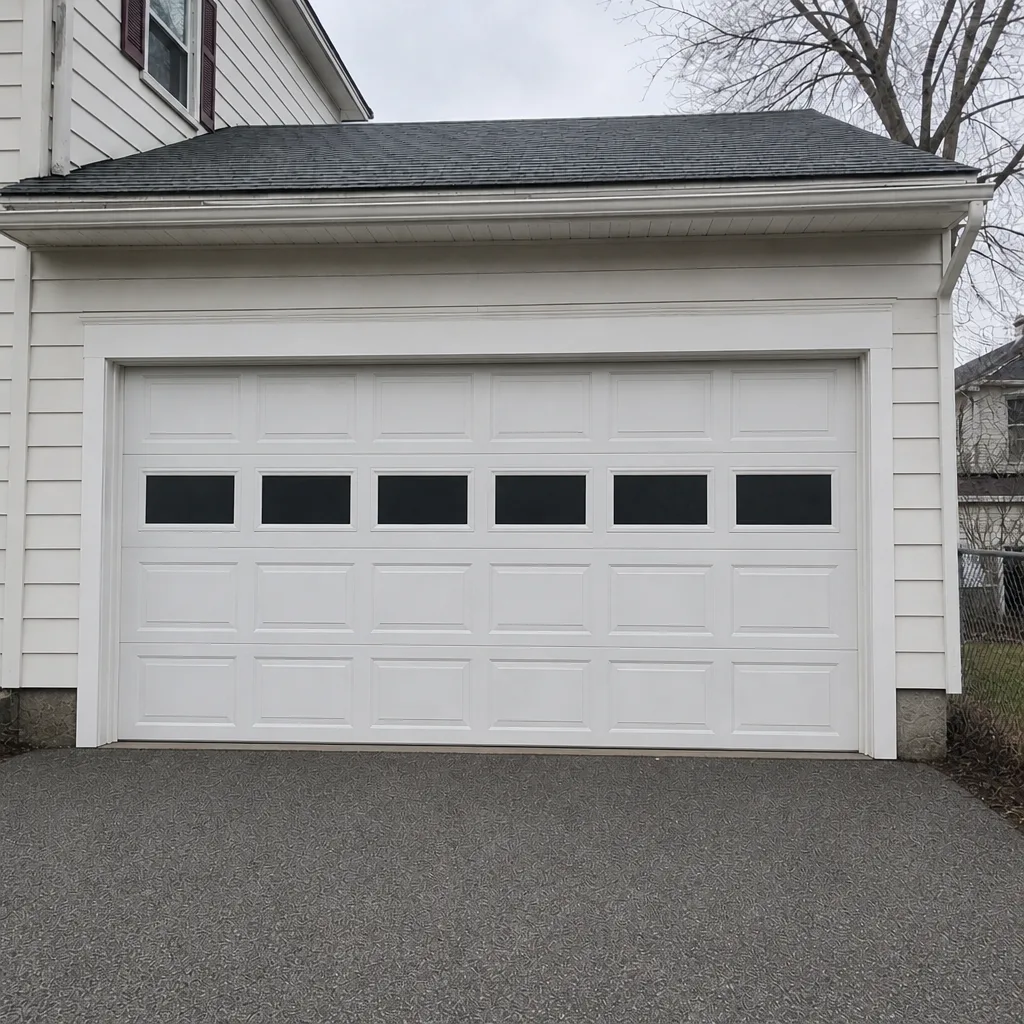
See the difference
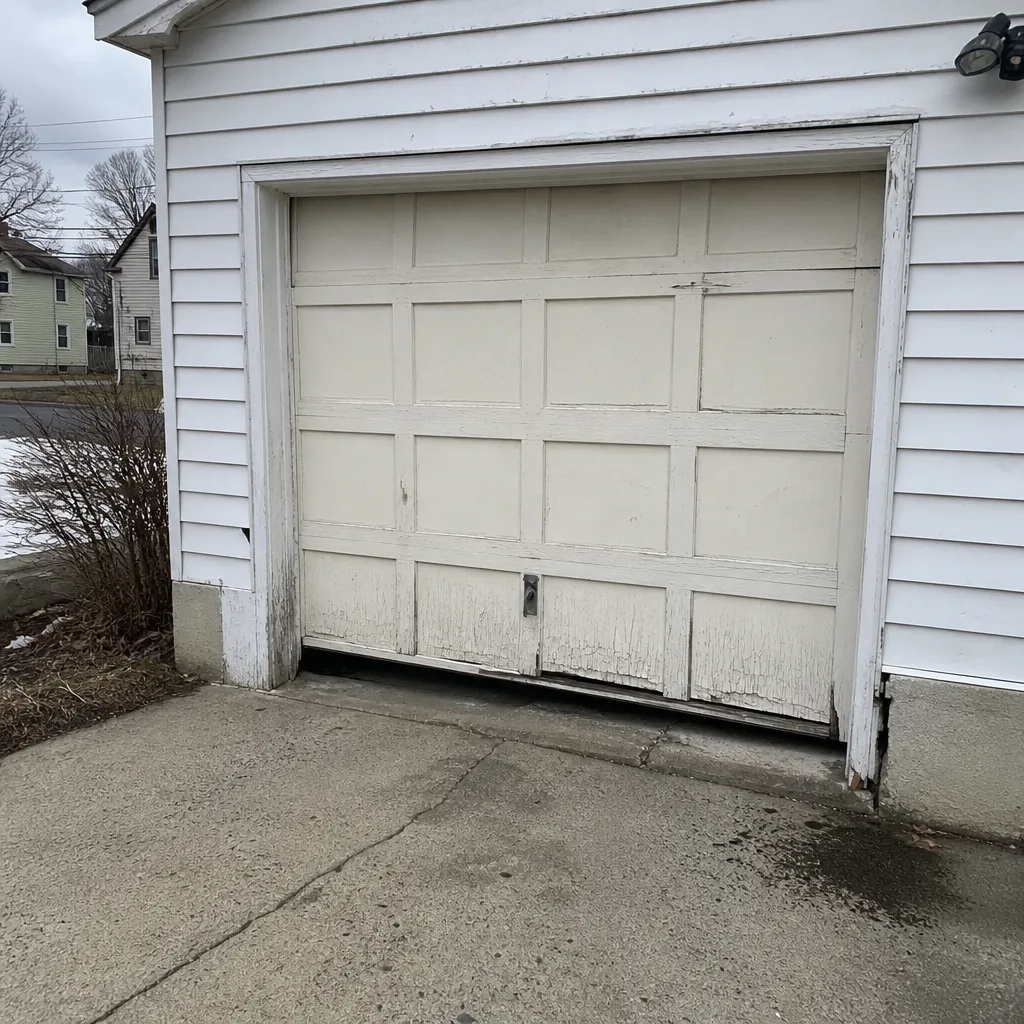 Before
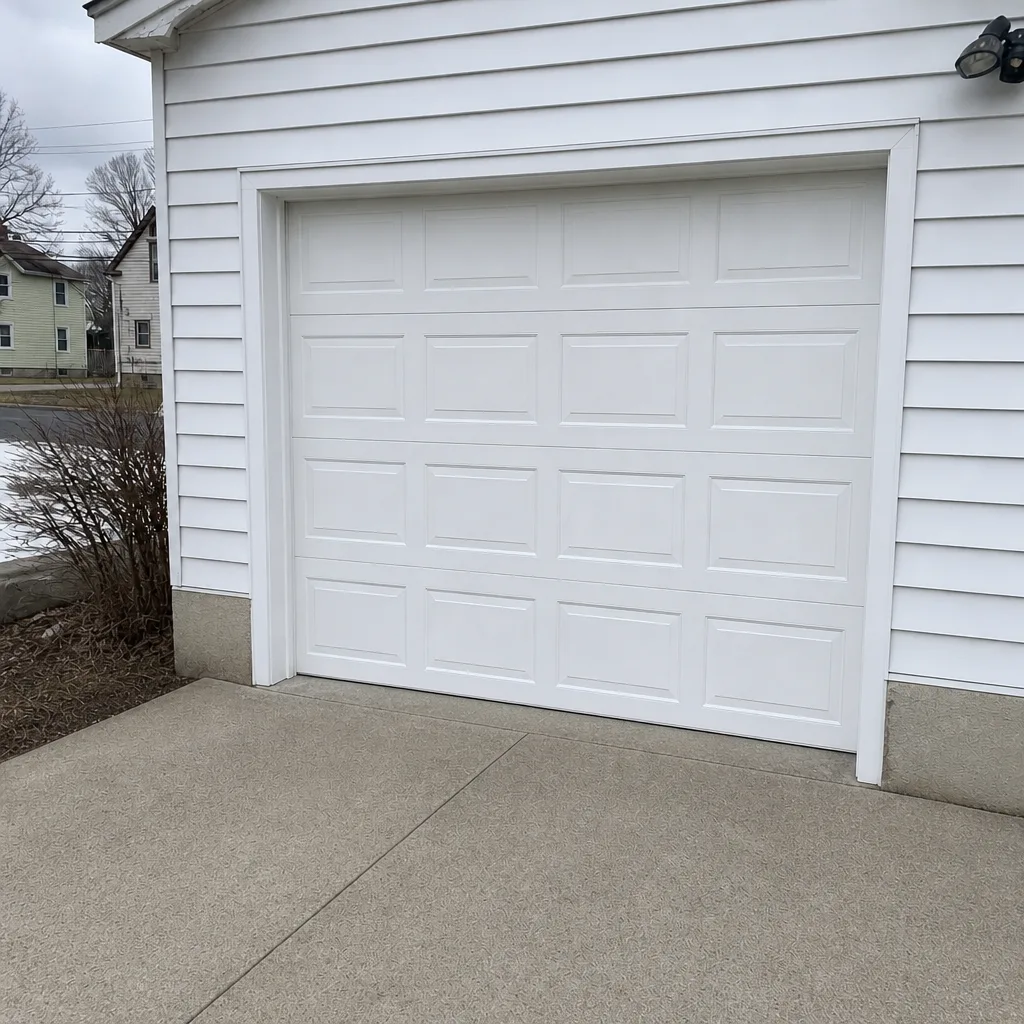 After
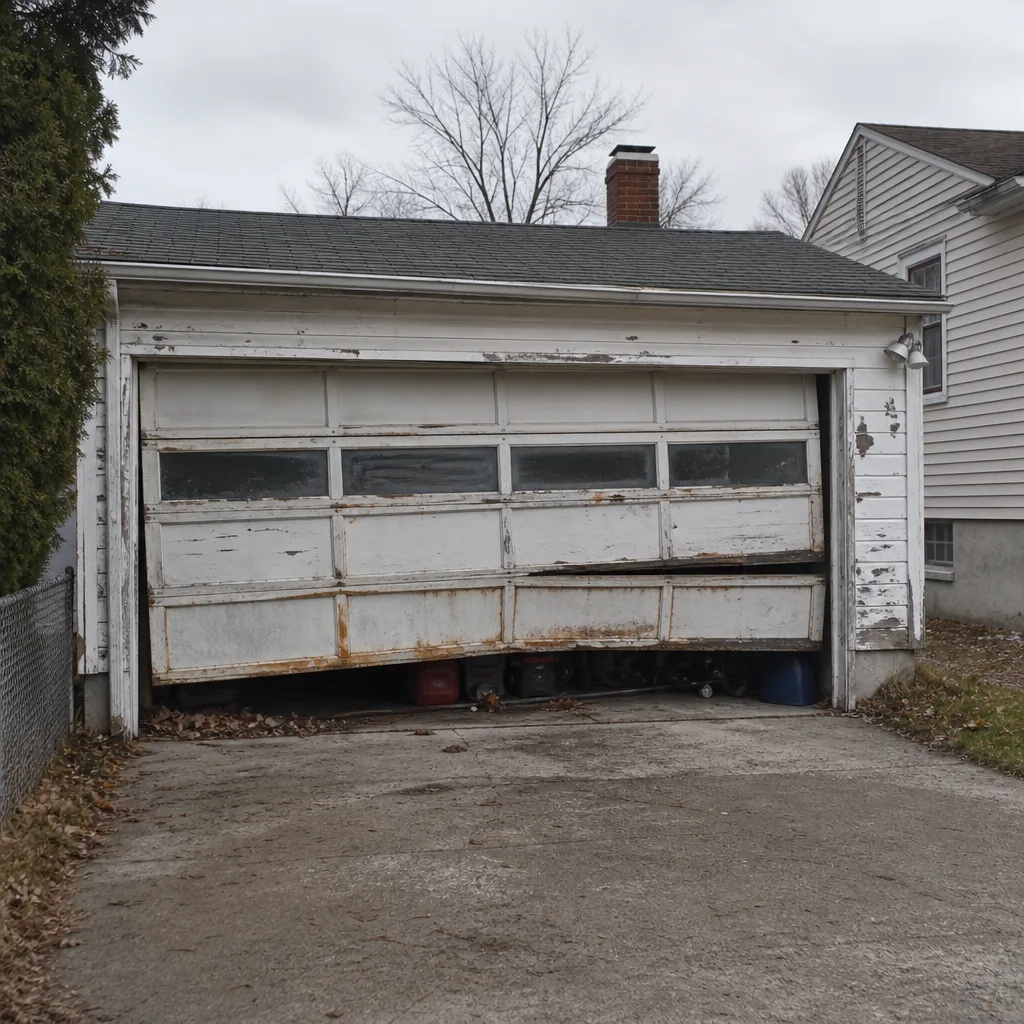 Before
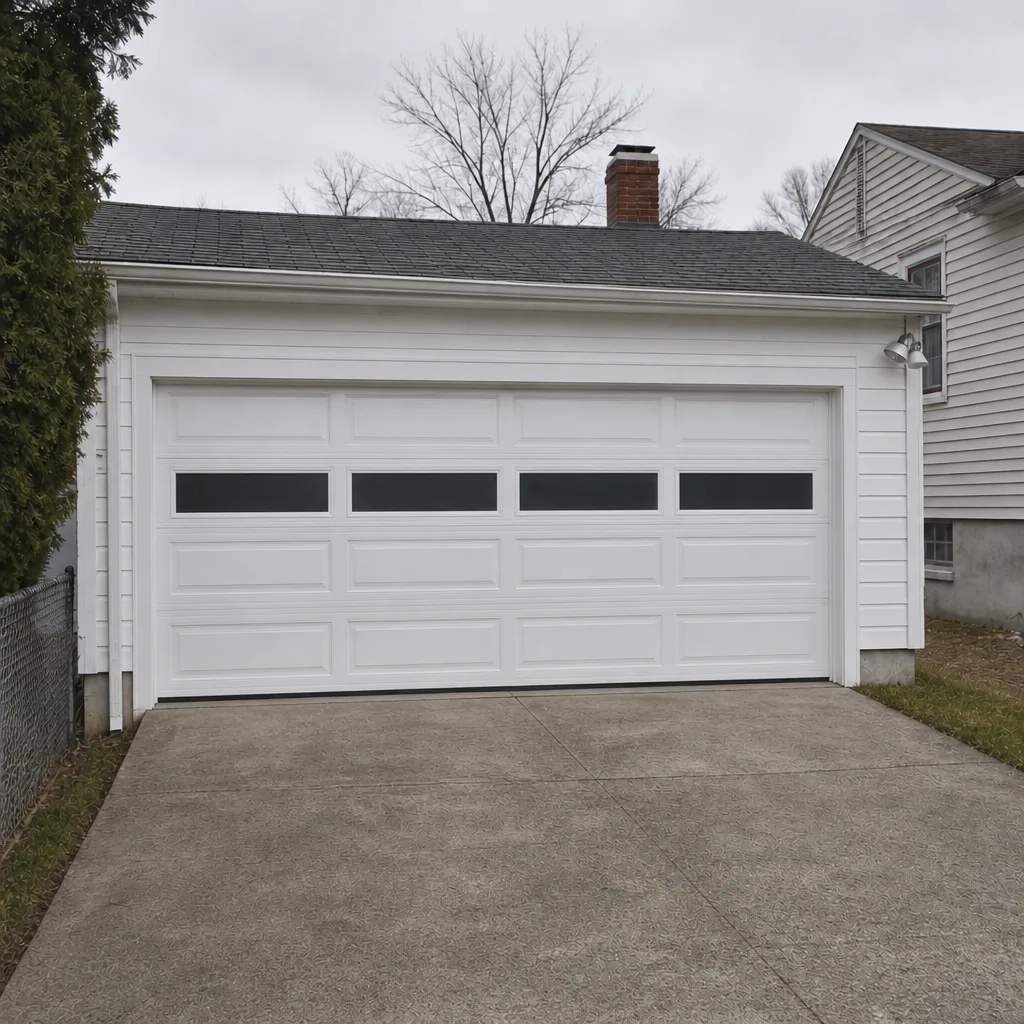 After
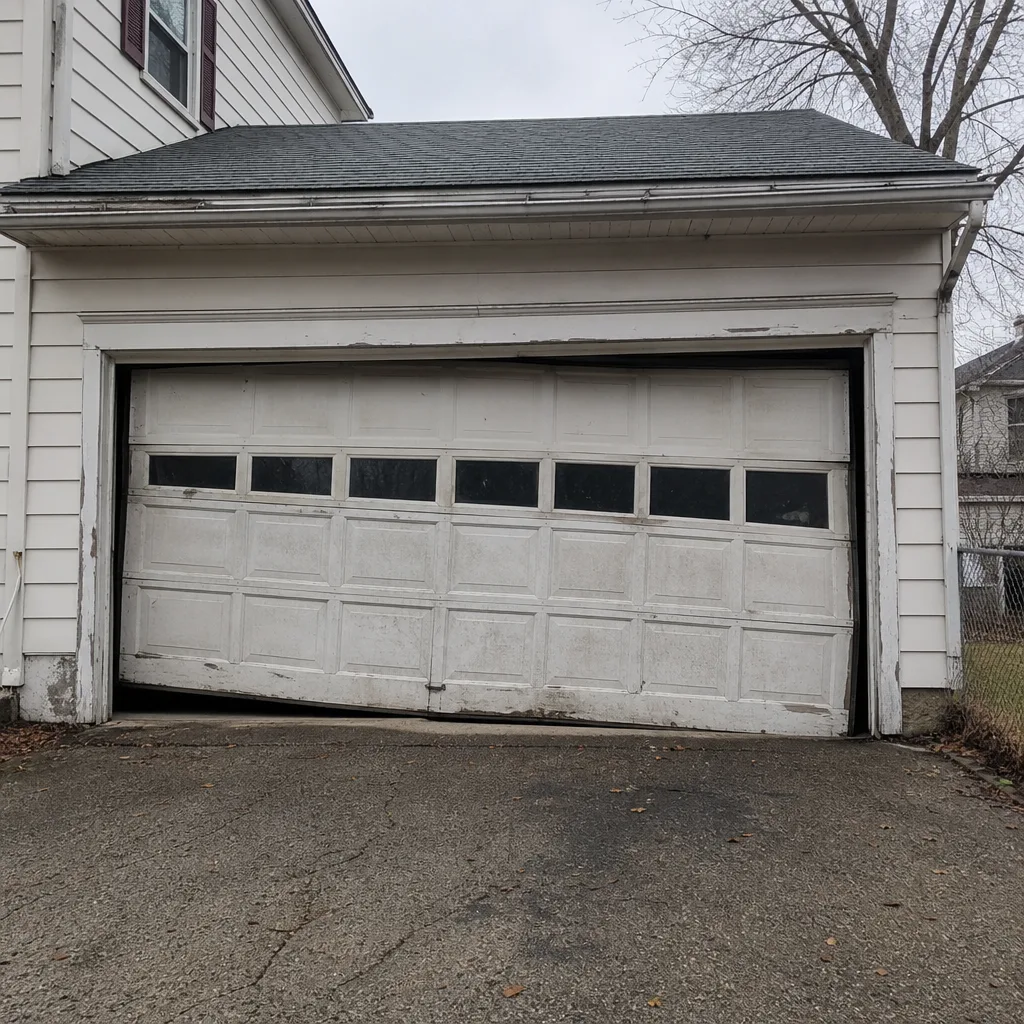 Before
 After
When to Call a Professional
Some jobs are fine as a DIY task: replacing a remote battery, freeing a frozen seal, or securing a stuck door overnight. Others are not, and it’s worth being clear about where that line falls. A snapped spring, a door off its tracks, a buckled panel under tension, or a safety-reverse failure are all jobs for a trained technician, because the risk of injury or secondary damage is real. When the door is acting in a way that feels wrong, the smart move is to stop operating it and get someone who works on doors every day to look at it.
The good news is that a diagnostic visit is usually quick, and the fix is often simpler than the anxiety suggests. Chicopee Garage Door Repair Co offers free estimates in Chicopee. Call (877) 401-9972 to talk through what’s happening and get an honest read on whether it’s a call-now problem or a scheduled repair.
Frequently Asked Questions
Pull the red emergency release cord straight down to disconnect the opener from the door, then lift the door by hand from the bottom section. Stand clear of the door, lift with steady effort, and prop or secure the door fully open before you go inside. Once power returns, open the door by hand so the trolley clicks back onto the opener arm, then test the opener. If the door feels very heavy, stop and call for service; that usually means a spring is failing.
Yes. A door that’s visibly out of its tracks is structurally unstable and should not be operated or left unattended. It can drop or swing without warning. Keep people and pets away from the door, don’t cycle the opener, and call for emergency service in Chicopee right away. This is the one situation where “wait until Monday” is never the right answer.
No. If a spring has snapped, the door is unbalanced, and pulling the release won’t make it safe to lift. Leave the door closed, keep the area clear, and call for spring repair. High-tension springs and cables store dangerous energy, and this is not a job to attempt yourself or hand to a general handyman. A dedicated spring repair visit is the right call.
Cold weather causes three common problems in Chicopee: the bottom seal freezes to the concrete, the metal track contracts slightly and the rollers stiffen, and ice builds up on the tracks or under the door. Free a frozen seal with warm water rather than forcing the opener, lubricate the rollers and hinges before the cold season, and clear the concrete apron of debris. If the door runs rough only in cold weather, have it checked before winter, not during a storm.
A stuck door that’s left partially open is a security gap. Disengage the opener with the release cord, lower the door by hand if it’s balanced and safe to lower, and secure it fully closed. If it won’t close, block the door from the inside with a bar or wedge and keep the garage secure. For anything that feels unsafe to lower, leave it and call for service.
It helps, but it’s not required. If you can see the brand or model label on the opener head or the door’s bottom section, mention it. If you can’t, a photo of the opener head is usually enough for a technician to identify the brand and bring the right parts. Our team works with eight major brands, including LiftMaster, Chamberlain, Genie, and Raynor, so we can usually tell you what to expect before the visit.
The Bottom Line
A garage door emergency in Chicopee doesn’t have to be a crisis. The emergency release cord, a balanced door, and a clear head for what’s actually wrong will get you through most failures. The important distinctions are simple: a dead opener or frozen seal can wait; a snapped spring, buckled panel, or door off its tracks can’t. Know your equipment, keep the door and the concrete apron clear before winter, and have the brand and model ready when you call. Our technicians have up to 13 years of experience on the brands most Chicopee homes have, and we’d rather you call and avoid a bigger problem than force the door and create one. For a free estimate, call (877) 401-9972, and if the door won’t move, tell us what’s happening and we’ll help you decide whether it’s a call-now or a scheduled repair.
Written by the team at Chicopee Garage Door Repair Co.