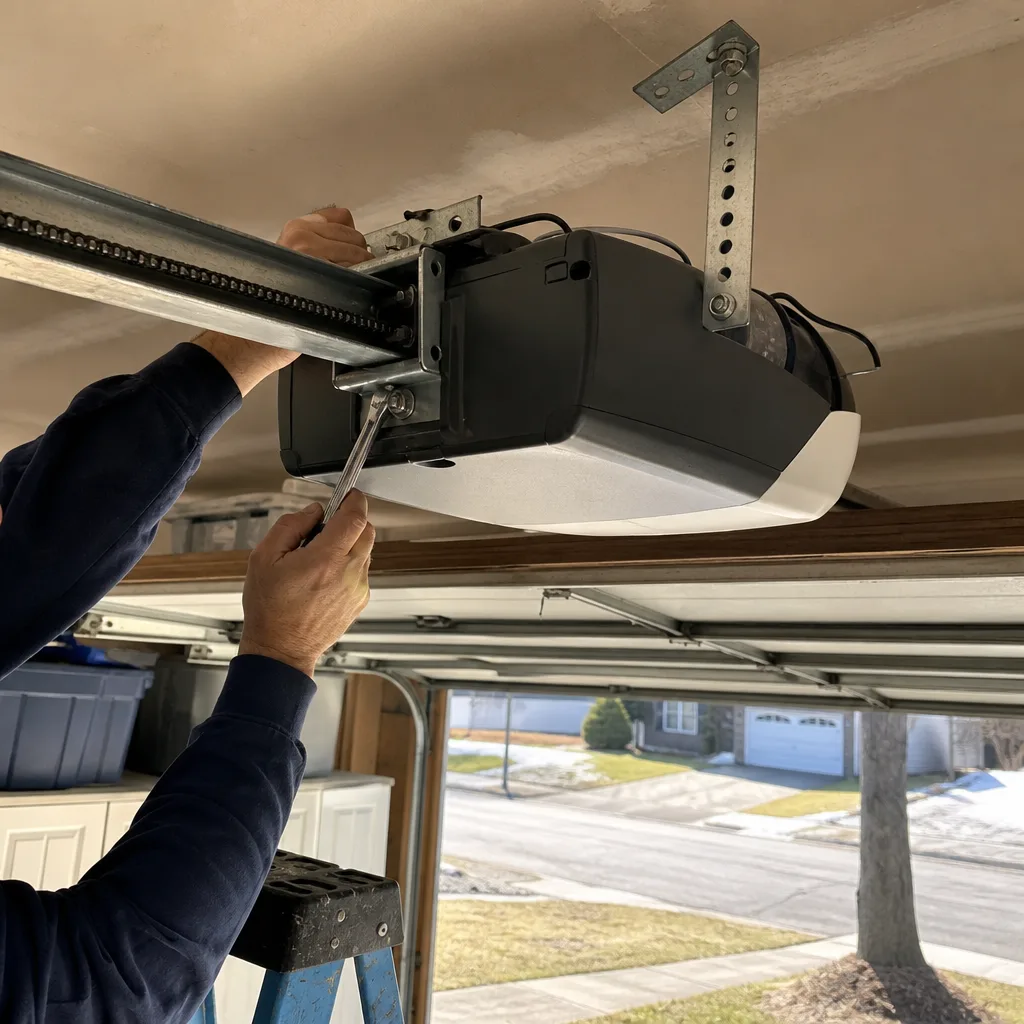
Last updated November 23, 2026
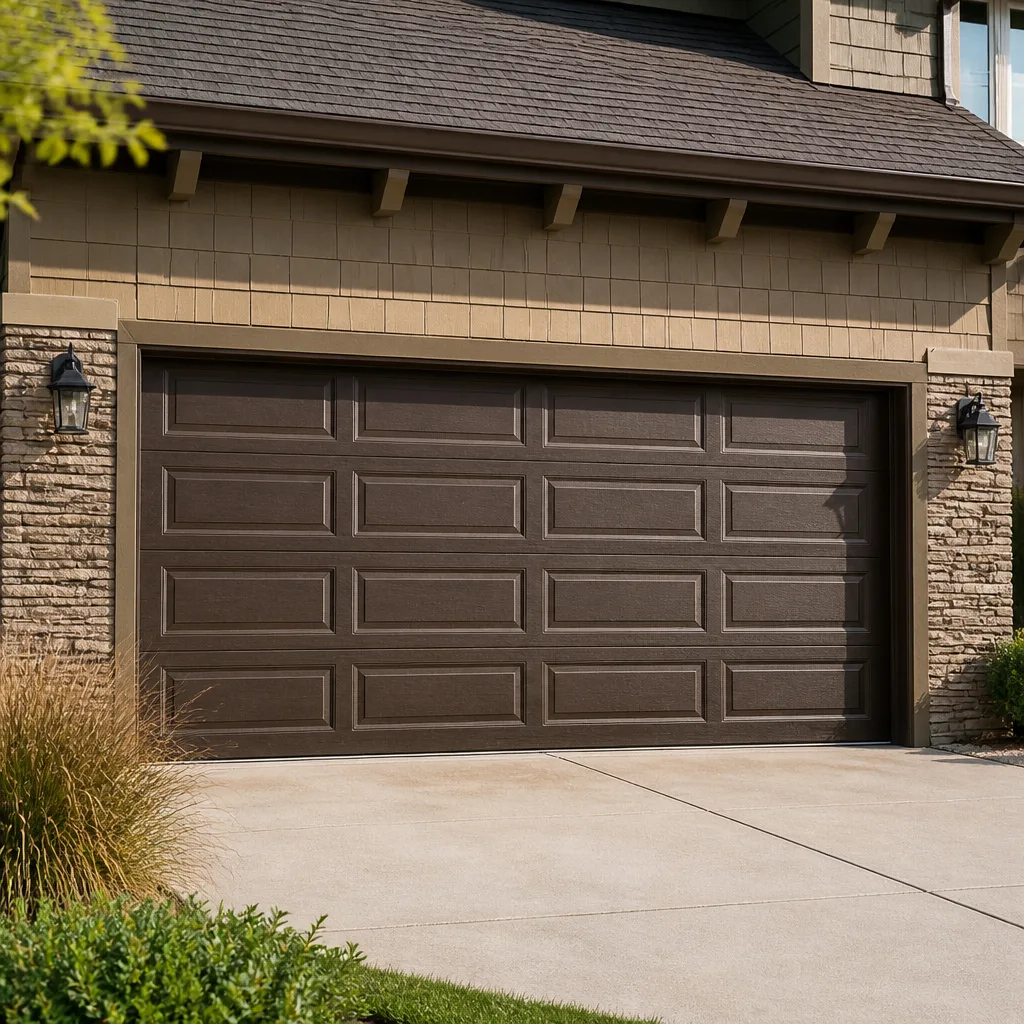 Raised-panel steel
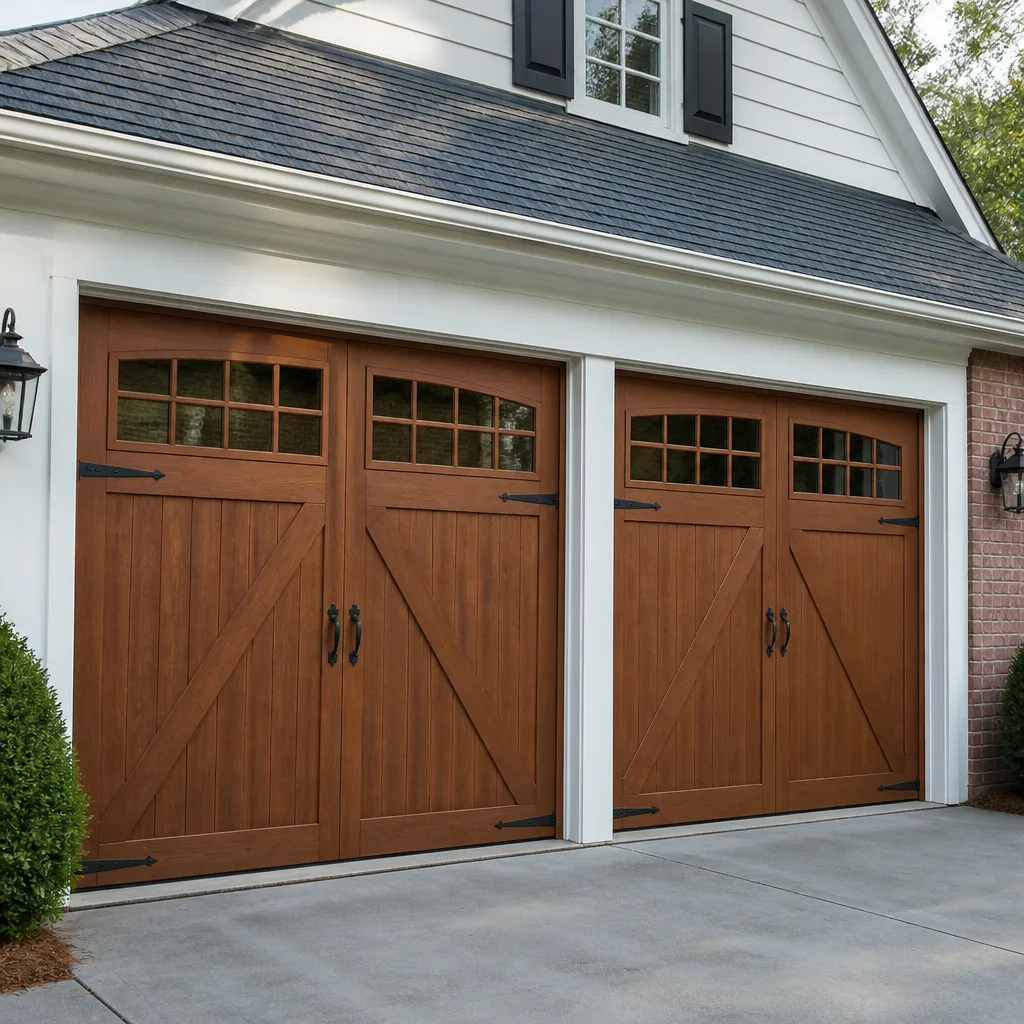 Carriage house
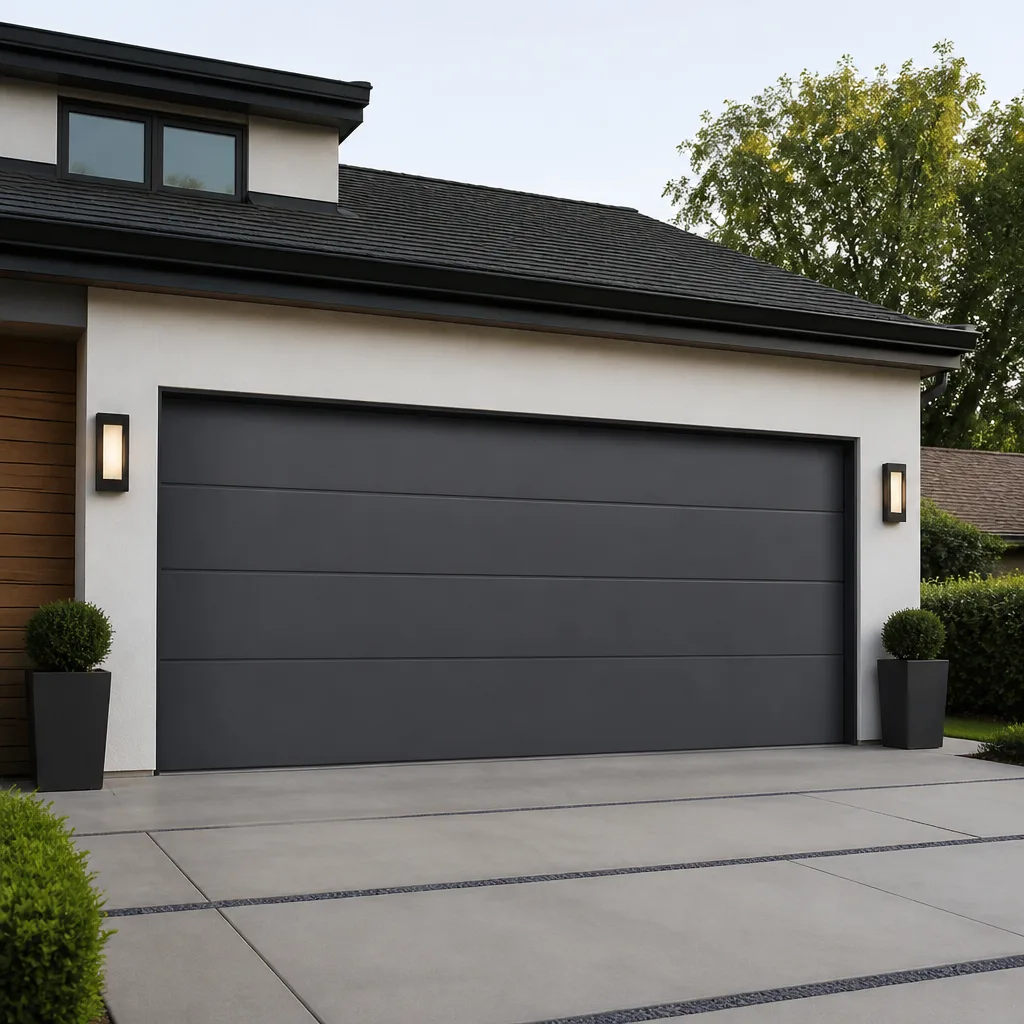 Modern flush
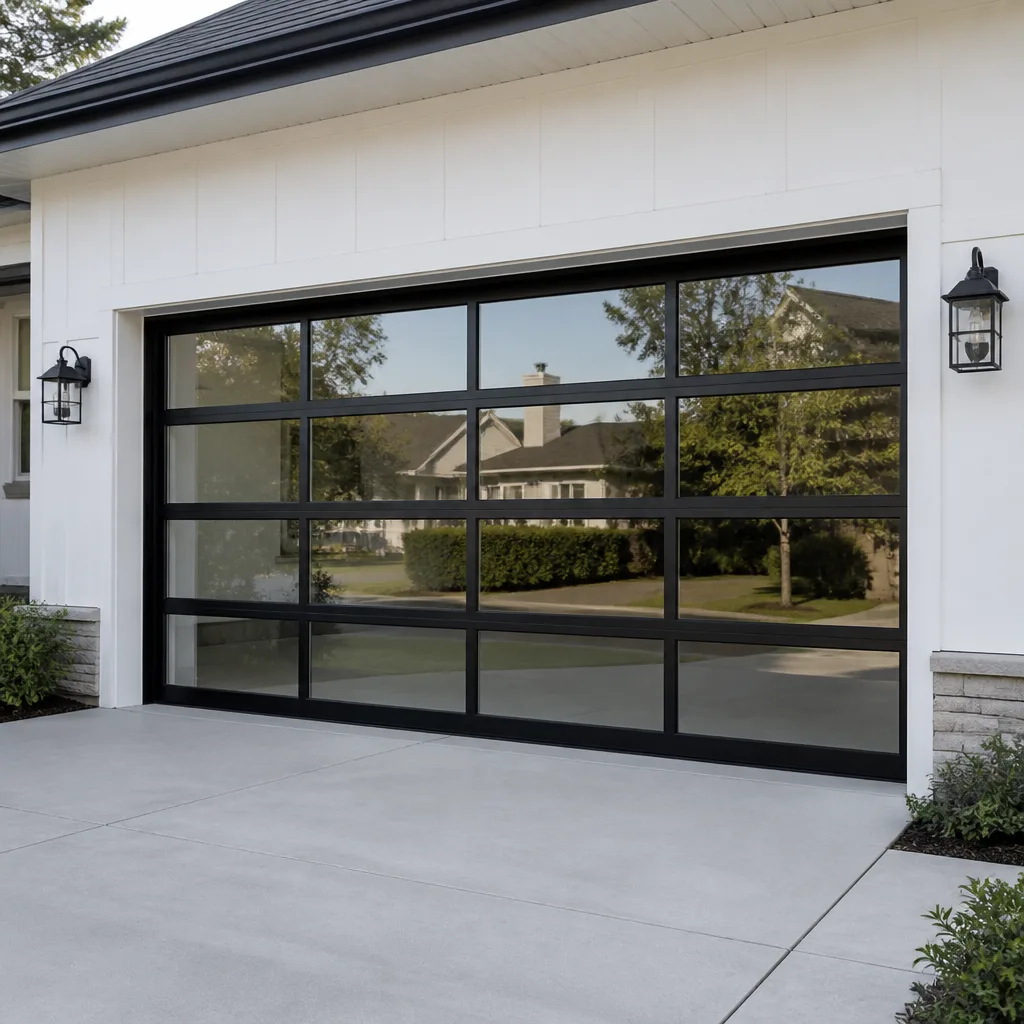 Full-view glass
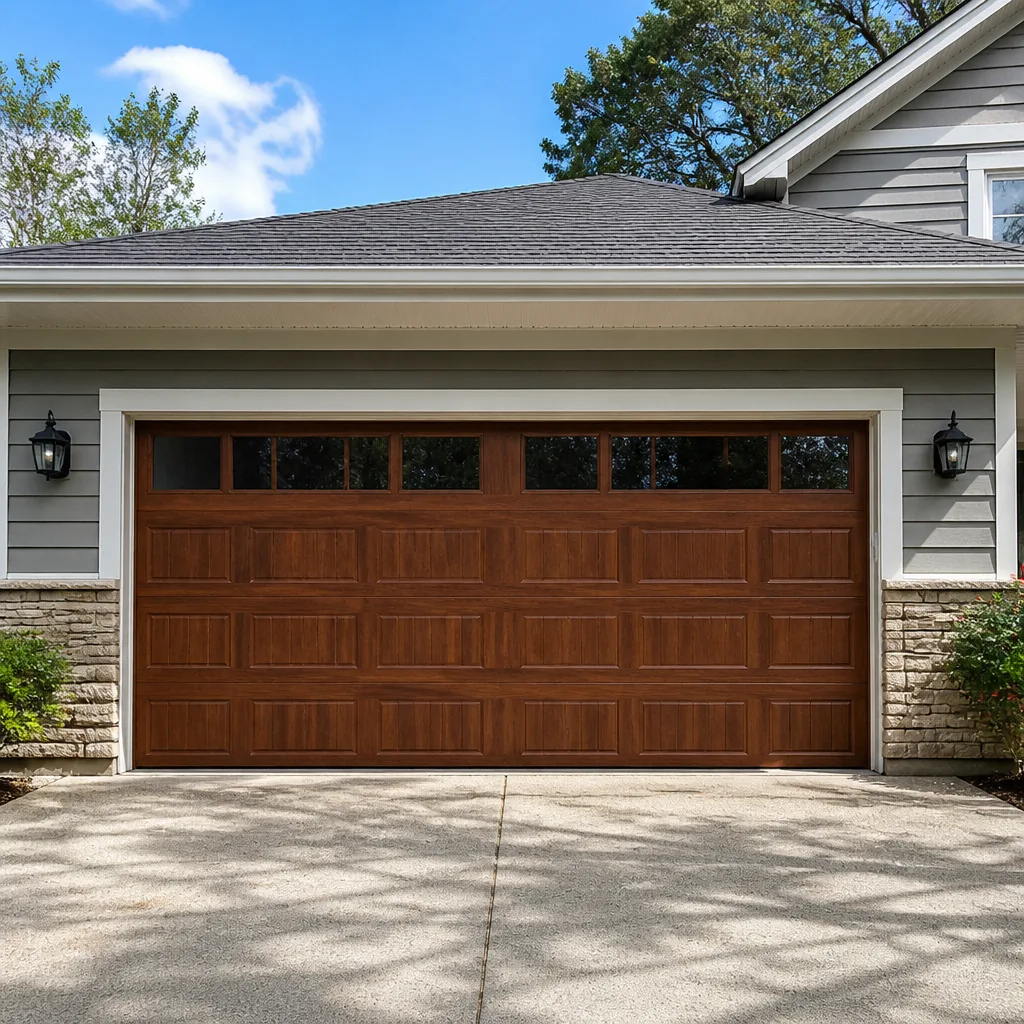 LiftMaster openers
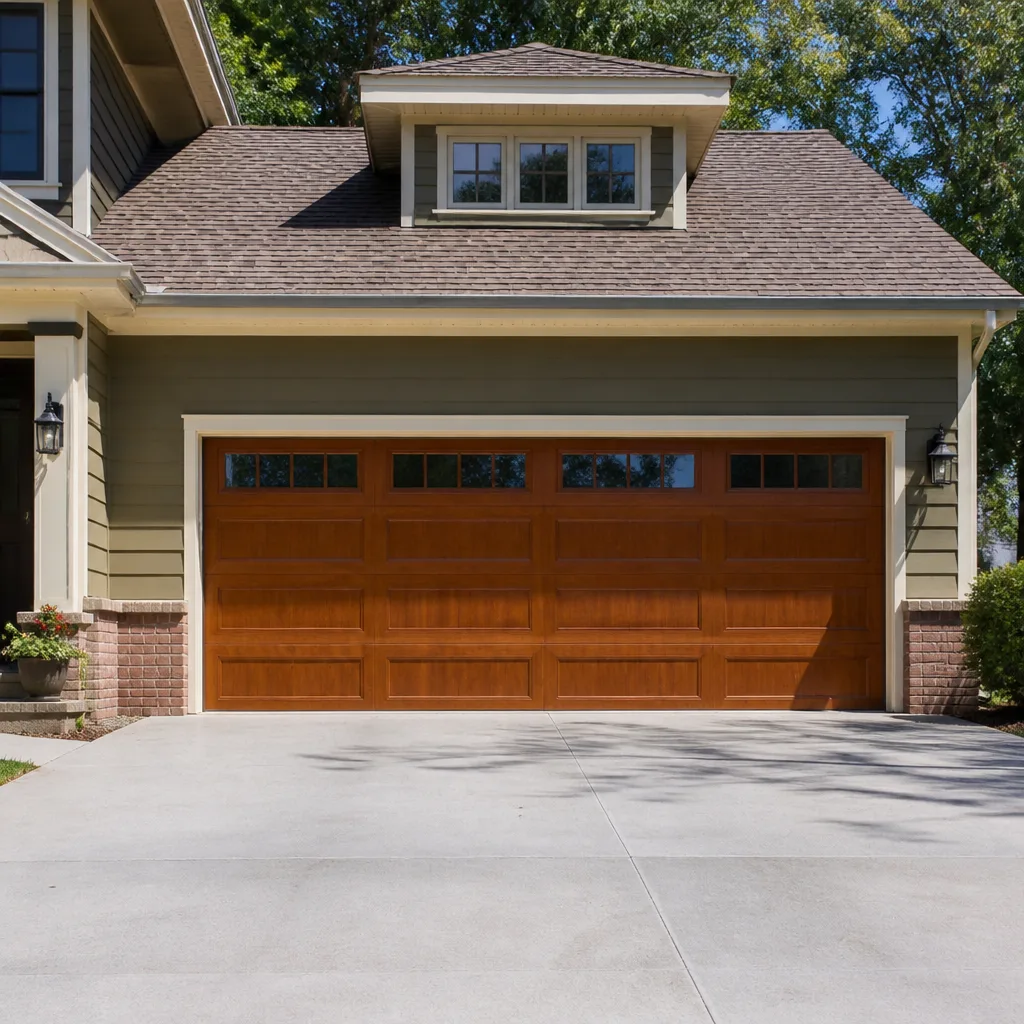 Chamberlain openers
Full 25-point door and opener safety check with every visit - springs, cables, rollers, tracks, and your LiftMaster or Chamberlain opener included
You get a price before we start. It does not change when the pro arrives.
Get your free estimateGarage Door Warning Signs: A Chicopee Homeowner’s Reference Guide
A grinding noise and a scraping noise are not the same warning. One usually means your opener’s gears are wearing down; the other often means a roller has failed and the door is dragging against the track. Homeowners who treat those two sounds the same way end up paying to replace the wrong part. This guide teaches you to read garage door warning signs as a diagnostic language, matching the sounds, movements and behaviors you notice to the specific components that cause them. You’ll learn what to check, when a sign means call today, and what’s safe to watch. Every example is written from our Chicopee experience, where cold winters put real stress on springs, tracks and openers.
Quick Answer
Most garage door warning signs fall into three categories: sounds (grinding, squealing, popping, banging, clicking), visible clues (track gaps, rust streaks, uneven cable coils, sagging panels) and behaviors (slow movement, uneven travel, reversing without obstruction). The sound or behavior tells you which component is failing; the urgency tells you whether to call today, schedule within the week, or simply monitor it. In Chicopee, cold-weather changes in speed and stiffness are often the earliest sign of spring fatigue.
Styles & brands we work with
- Raised-panel steel
- Carriage house
- Modern flush
- Full-view glass
- LiftMaster openers
- Chamberlain openers
Table of Contents
- What Each Sound Tells You: A Grinding, Squealing and Popping Guide
- Visual Warning Signs You Walk Past Every Day
- Behavioral Warning Signs: Slow, Uneven and Reversing Doors
- The Urgency Triage: What Means Call Today vs. Monitor
- Cold-Climate Warning Signs Specific to Chicopee Homes
- Opener Warning Signs: Clicking, Flashing Lights and Dead Remotes
- Common Mistakes to Avoid
- When to Call a Professional
What Each Sound Tells You: A Grinding, Squealing and Popping Guide
Sound is the most honest diagnostic tool you have, if you know what you’re hearing. Garage doors make noise as a matter of course, but the type and location of the noise points to a specific part. Learn these five sounds and you’ll walk out to your garage with a much better idea of what’s actually wrong before anyone even arrives.
Here’s what each one typically indicates:
- Grinding: Usually opener gears or the opener’s drive system. If the door starts moving and you hear a heavy grind, the nylon or steel gears inside the opener housing may be wearing. On older Craftsman and Genie units this is common. Sometimes the grind comes from a dry torsion tube or a rusted bearing plate behind the door, so listen for whether the noise happens the instant the door starts or halfway through travel.
- Squealing: Metal-on-metal friction. Nine times out of ten it’s rollers with worn bearings or a hinge joint that’s lost its lubrication. Squealing that gets worse over weeks usually points to a roller about to seize.
- Popping: A single sharp pop, not a rhythmic sound, is a big deal. It often means a torsion spring has broken or a cable has jumped its drum. Popping at the end of travel can be the door slamming against a stop. If you hear a loud pop followed by the door refusing to open or falling fast, stop and call.
- Banging: Loose panels, a loose track bracket, or an unbalanced door hitting the floor harder than it should. Banging during movement suggests loose fasteners; banging at the top or bottom of travel suggests a travel-limit problem.
- Clicking: A single click when the door would normally move is often a safety sensor or a logic board issue. Repeated clicking can be the opener’s relay or a misaligned limit switch.
Each of these corresponds to a specific part. If the grinding noise turns out to be the opener itself, that’s garage door opener repair territory. If the popping turns out to be the spring, that’s garage door spring repair.
Visual Warning Signs You Walk Past Every Day
Not all warning signs announce themselves with sound. Many of the most important ones are visual and sit right in front of you every time you park. A quick visual inspection once a month is genuinely worth the two minutes.
- Gap between the door and the floor: If you can see daylight under the bottom seal, the door is misaligned, the bottom rubber has flattened, or the door is hanging slightly off-plumb. Uneven gaps across the width are more concerning than a uniform thin light line.
- Gap between adjacent panels: A panel that sits noticeably different from its neighbor has usually taken a hit or has loosened at the hinges. Left alone, water and cold get in and the panel stresses the ones around it.
- Rust location: Rust at the bottom of the door is normal wear from snow and road splash tracking in. Rust along a horizontal seam or concentrated on one side is different and usually points to that side binding against the track.
- Cable coil inconsistencies: Look at where the cable wraps around the drum at the top corners of the door. The wraps should be even and tight on both sides. A cable that has jumped a groove, looks frayed, or is loose where the other side is tight is a red flag.
- Sagging top section: The top panel of your door carrying a slight curve or dip is often a sign of spring imbalance or a bent strut. On heavier doors – steel-backed Amarr and Wayne Dalton doors, for example – this can mean the spring system was undersized for the door’s actual weight.
- Track gapping at the jamb: Stand at the door and sight down the vertical track on each side. Both tracks should look parallel and unbroken. A gap where the track pulls away from the jamb is one good bump away from the door coming off track.
None of these signs need a panic response on their own. But each one is a mechanical fact that points to a specific fix, and home repair by guesswork is where small problems turn into structural ones.
Behavioral Warning Signs: Slow, Uneven and Reversing Doors
Movement tells its own story. A door that suddenly operates differently than it did a month ago is sending a signal about a component under load, not just a matter of habit or mood.
Slow operation
If the door is slower than it used to be, the opener is likely straining. That can be worn gears, a loosening drive chain or belt, or the opener compensating for a door that’s gone heavy. In cold weather the door itself gets stiffer, and a good opener may still slow down noticeably. Slowness that persists into mild weather is a mechanical signal, not a seasonal one. If a Wi-Fi-enabled LiftMaster or Chamberlain myQ opener is also responding slowly to commands from your phone, the opener itself may be the culprit.
Uneven movement
A door that rises faster on one side than the other, or that tilts as it travels, is out of balance. Two causes are common: uneven spring tension, or a cable on one side binding. Do not try to adjust springs yourself. That’s the one repair where a serious mistake is genuinely dangerous. Look at where the door body is when it hangs unevenly – if it’s high at the bottom, the torsion springs are the likely suspect. If the bottom is level but the top tilts, that’s more often a bent vertical track or a loosened panel.
Reversing without obstruction
If the door comes down and then goes back up even though nothing is in the way, the safety sensor circuit or opener logic board is the cause. The sensors near the bottom of the tracks may be misaligned, dirty or failing. A reversing door is a genuine safety risk in a home where children or pets use the garage. Get it diagnosed before the mechanic sees a repeat.
These behaviors are exactly the kind of thing an experienced technician identifies quickly. Our technicians have up to 13 years of experience and have seen this pattern across most of the brands we service.
The Urgency Triage: What Means Call Today vs. Monitor
Not every warning sign warrants the same response. Here’s a practical triage. This list is what we’d give a homeowner who calls concerned about something specific – knowing which category you’re in helps you decide how fast to act.
| Level | Signs | What to do |
|---|---|---|
| Call today | Loud pop followed by the door not lifting; visible spring break; door stuck open or partially down; cable unwound or frayed; door came off track; opener housing hot to the touch; reversing door with a child or pet in the garage | Stop using the door and call for same-day emergency service |
| Schedule this week | Grinding or squealing that’s new; door slower than it used to be; even small gaps between door and floor; uneven movement; opener remote intermittently failing | Book a repair visit for the next available appointment |
| Monitor | Faint rust along seam; a single worn-looking hinge roller; slight seasonal stiffening; one remote that needs a fresh battery | Note it, schedule a routine inspection during the next service call |
The safest rule of thumb: any sign that involves a hanging door, a broken spring, a frayed cable, or a door operating when something or someone might be under it moves immediately into the call-today tier. Everything else deserves inspection but rarely panic.
When you’re ready to book, that one call covers the whole job. We handle garage door repair and the diagnosis that goes with it, without sending you to a second contractor for the opener or the door itself.
Cold-Climate Warning Signs Specific to Chicopee Homes
Chicopee winters load the garage door system in ways that warm-climate guides simply don’t cover. The Pioneer Valley’s cold snaps, repeated freeze-and-thaw, and snow tracked in from driveways all change what “normal” looks like. Here are the signs specific to a Chicopee home that are easy to miss if you’re using a general checklist.
- Seasonal speed change that doesn’t reset in spring: A door that was fine in October and crawls in April might just need lubrication. A door that crawls every winter and never fully recovers is likely showing torsion spring fatigue – the spring has lost some of its lift, and the opener is doing the work the spring should be doing.
- A door that gets harder to lift manually each winter: If you’ve ever released the opener and lifted the door by hand, you know what “balanced” feels like. Weight that increases year over year points to the same spring fatigue, plus the cold thickening of the grease.
- Snow and ice packed along the bottom seal: After a storm, snow can pack under the bottom seal and freeze to the floor. If your door starts moaning and dragging after a heavy snow, the problem may be ice, not the door. Clear it before assuming something’s broken.
- Condensation on the inside of steel doors: Repeated freeze-thaw cycles inside an unheated garage can leave a steel door sweating on its interior, which accelerates rust along seams – especially on older Wayne Dalton and Clopay doors. Rust that appears in winter is worth watching more closely than rust in July.
- Opener failing to close in cold snaps: The opener’s safety sensors respond to temperature, and older openings can act sluggish. If the door only refuses to close in very cold weather, the sensors are the first place to check.
Any of these signs in a Chicopee home should be looked at sooner than they would in a mild climate, because every cold snap adds stress to a system that’s already tired.
Opener Warning Signs: Clicking, Flashing Lights and Dead Remotes
The opener is the brain of the system, and the signs it gives are less mechanical than spring-and-track signs, but just as specific. Most modern homeowners are running one of a handful of systems. Being able to tell a Craftsman-era opener’s logic board symptoms apart from a newer LiftMaster or Chamberlain myQ system’s symptoms saves real diagnostic time. We work on what you already have, so we know the quirks.
Clicking and no movement
A single click from the opener when you press the button, with no door movement, is usually the opener’s internal logic or relay. On older units, the capacitor or gears are often the culprit. On newer units, a safety-sensor fault can cause the same symptom. Check the sensor’s indicator light first before assuming the opener is dead.
Flashing lights on the opener housing
Most openers use the light on the housing to signal fault codes. A specific pattern – usually a certain number of blinks, then a pause – corresponds to a specific fault. Note the pattern before you call. The pattern tells a technician what to check first, which saves a diagnostic trip.
Remote or app working intermittently
For a smart opener, intermittent control from the app points to the home network or the opener’s Wi-Fi module. For a traditional remote, the battery is the first suspect, then the antenna wire on the opener housing. If the app works but the remote doesn’t, the issue is the remote or its programming. If neither works but the wall button does, the wireless receiver has likely failed.
Opener running but door not moving
This is a mechanical disconnect, not an opener fault. The trolley has likely come loose from the carriage or the emergency release was triggered. That’s a mechanical diagnosis, and it belongs with the rest of the door inspection.
Between opener repairs, spring repairs and door repairs, one call covers it. If you’re already dealing with something the opener points to, our Chicopee Garage Door Repair Co team handles the repair directly.
Common Mistakes to Avoid
A few mistakes repeatedly turn small fixes into larger problems. Here’s what to avoid, especially in a Chicopee home where winter doesn’t leave much room for error.
- Treating every noise as the same problem. A grinding opener and a scraping roller sound similar in passing but need completely different repairs. Recording the sound on your phone to play back for a technician is a genuinely useful habit.
- Ignoring a popping sound and running the door anyway. A pop usually means a spring or cable has failed. Running the opener with a broken spring overloads the motor and the door can fall. Stop and get it looked at.
- Adjusting springs or cables yourself. Torsion springs are under serious tension and can cause injury if handled without the right tools and technique. Springs are dangerous, and they should be handled by someone trained to handle them. This is the single most important mistake on this list.
- Greasing everything. Grease belongs on some parts (rollers, hinges, the torsion tube) but not on nylon opener gears or the inside of the opener housing. Over-greasing traps grit and accelerates wear. Follow the owner’s manual’s lubrication points.
- Assuming a slow door is just the cold. Cold weather does slow a door – but only temporarily. A door that stays slow once temperatures warm up is telling you the springs are fatiguing.
- Waiting for a symptom to get worse before booking. Most of the warning signs in this guide are cheaper to fix the earlier they’re caught. Waiting until a door won’t open at all typically doubles the repair.
- Buying a new opener when the door itself is the problem. If the door is binding, unbalanced or heavy, a new opener just gets worn down faster. Diagnose the door before shopping for a new opener.
When to Call a Professional
Some warning signs genuinely aren’t DIY territory. Call a professional when:
- You hear a loud popping sound followed by the door not lifting.
- The door has come off track or is visibly hanging on one side.
- A cable is frayed, unwound or clearly off its drum.
- The door reverses without obstruction, or reverses when something is under it.
- The opener is smoking, hot to the touch, or clicking without moving the door.
- The door feels dramatically heavier than it used to when lifted manually.
These are the situations where the second attempt usually costs more than the first call. Chicopee Garage Door Repair Co offers free estimates in Chicopee, and we can be booked for same-day emergency service when timing actually matters. Call (877) 401-9972 to start with a diagnosis – a quoted price before any work begins, not a surprise invoice afterward.
See the difference
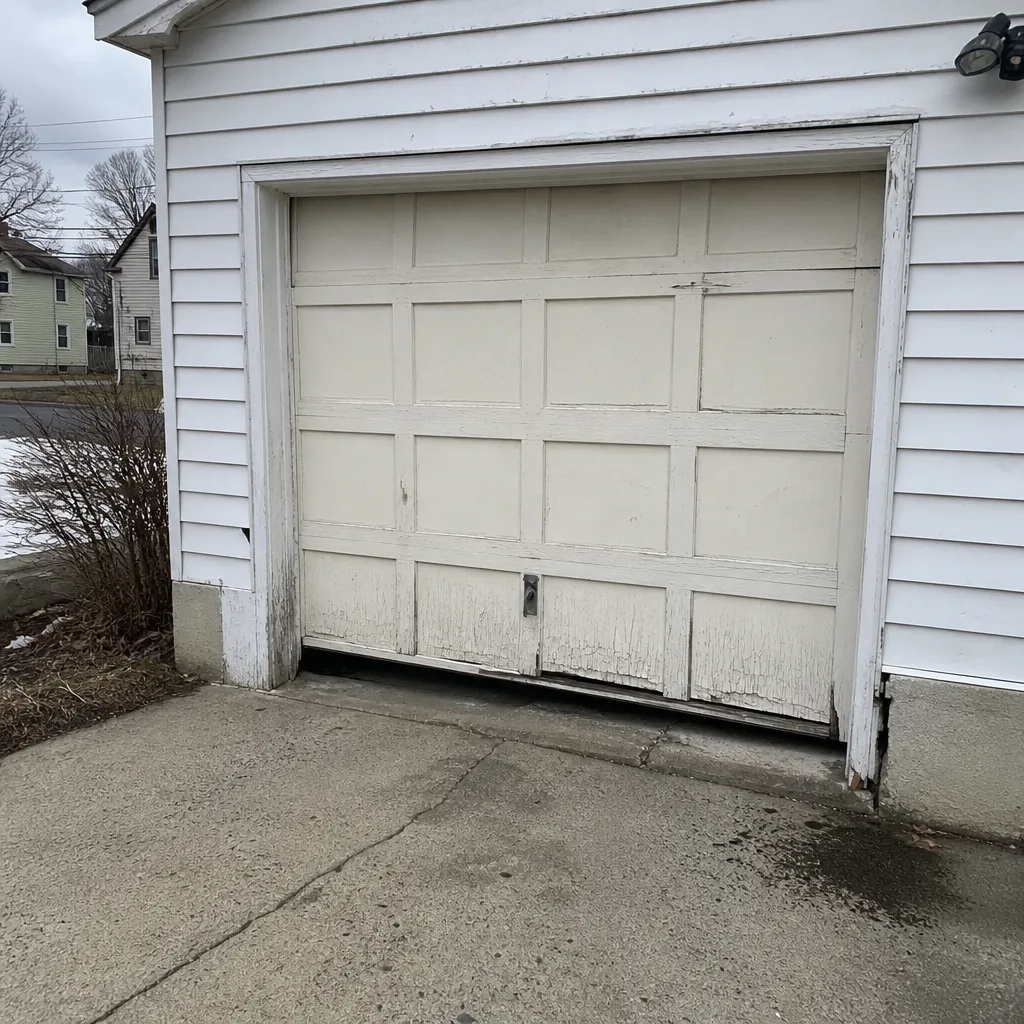 Before
 After
 Before
 After
 Before
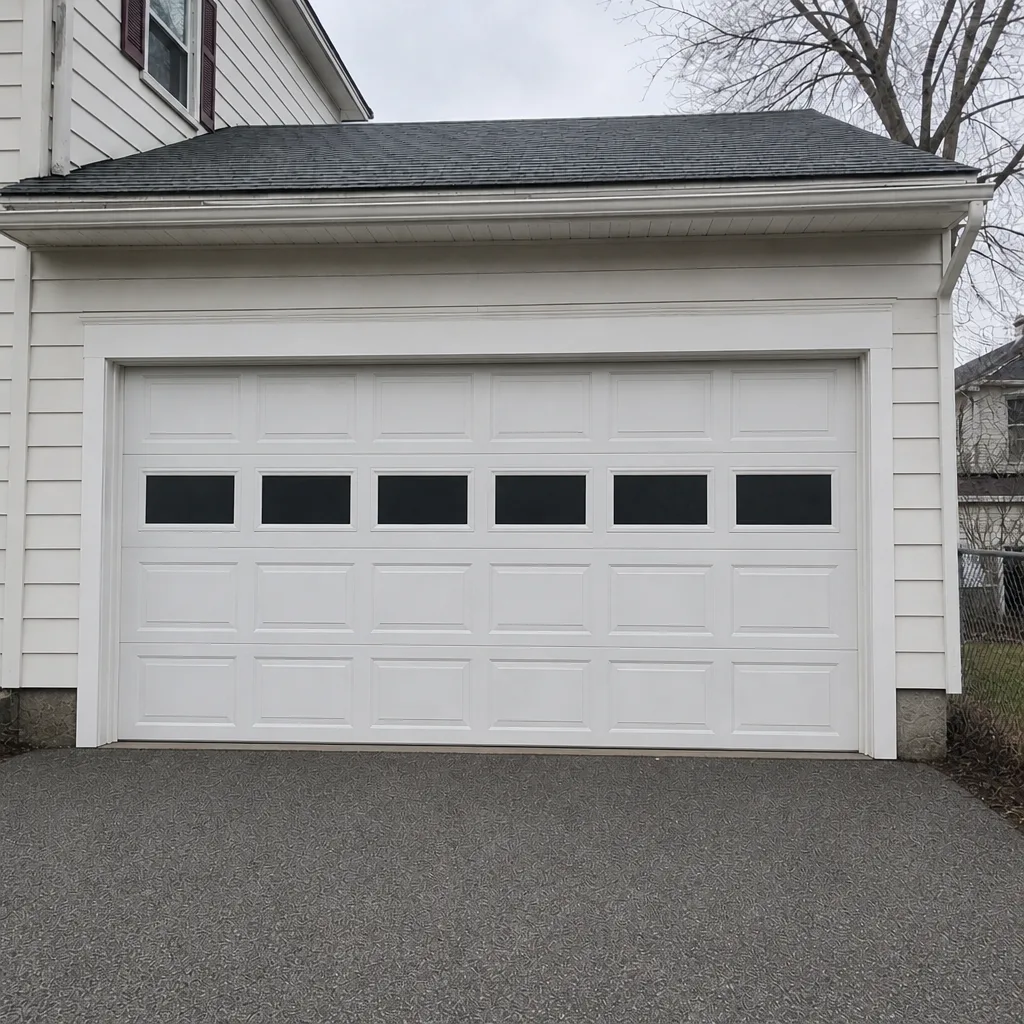 After
Frequently Asked Questions
Grinding usually comes from inside the opener (worn gears) or from a dry torsion tube, while scraping typically means a roller has failed and metal is dragging against the track. The two require different repairs. If the sound is high-pitched and continuous, suspect the opener gears. If it’s low and comes from the track, suspect a roller. Recording the sound on your phone to play back for a technician speeds up the diagnosis considerably. Call (877) 401-9972 for an exact quote – estimates are free.
Yes, because Chicopee’s winters stress the system in ways a mild climate doesn’t. Repeated freeze-thaw cycles, snow tracked in from driveways, and cold-induced spring stiffness all produce warning signs that general guides miss. A door that goes slow every winter and never fully recovers in spring is a spring-fatigue signal that wouldn’t show up in a warmer city. If your door behaves differently in winter than summer, that’s a real clue, not just seasonal mood.
Spring repair is the most common repair we see, and the cost depends on whether one or both springs need replacing. A matched pair is usually replaced together, so the pair typically runs about double the single-spring price. The written estimate always sets the final price – nothing changes once the technician arrives to look. Call (877) 401-9972 for an exact quote.
Yes. A door that reverses for no apparent reason means the safety sensor circuit or opener logic is faulting. If a child or pet is under the door when it drops and then reverses, the safety system may not stop it in time. This is a call-today issue. A technician can reset the sensors or the logic board the same day. Call (877) 401-9972 to book a same-day diagnostic.
Once a month on the visual checks (gaps, rust, cable coils) and every time you notice a new sound. In Chicopee, a mid-winter check is worth doing after any deep cold snap. The point isn’t to catch everything at once; it’s to spot the small signs before they become loud ones. Most repairs caught at the “schedule this week” stage cost significantly less than the same repair caught at the “door stuck open” stage.
No. If the wall button works and the remote doesn’t, the issue is the remote itself (battery, programming) or the opener’s wireless receiver. Both are fixable without replacing the opener. On a smart opener, if the app works but the remote doesn’t, the remote is almost always the problem. We handle opener diagnostics and remote reprogramming for the major brands, including LiftMaster, Chamberlain and Craftsman. Call (877) 401-9972 to schedule.
The Bottom Line
Your garage door sends you specific, readable signals about which part is failing: the grinding tells you it’s the opener, the squealing tells you it’s a roller, the popping tells you it’s a spring, and the visual gaps tell you the door is out of alignment. Read them as a language, not as a general alarm. When the signs are severe – a broken spring, an off-track door, a reversing door with a child nearby – call today. Everything else can be scheduled with a free estimate. Chicago… Chicopee homes face a cold-weather load on these systems that most guides don’t explain, so use this reference through the winter, not just in spring. When you’re ready, one call covers the diagnosis and the fix. Chicopee Garage Door Repair Co is here at (877) 401-9972 for a free estimate.
Written by the team at Chicopee Garage Door Repair Co.