Last updated November 23, 2026
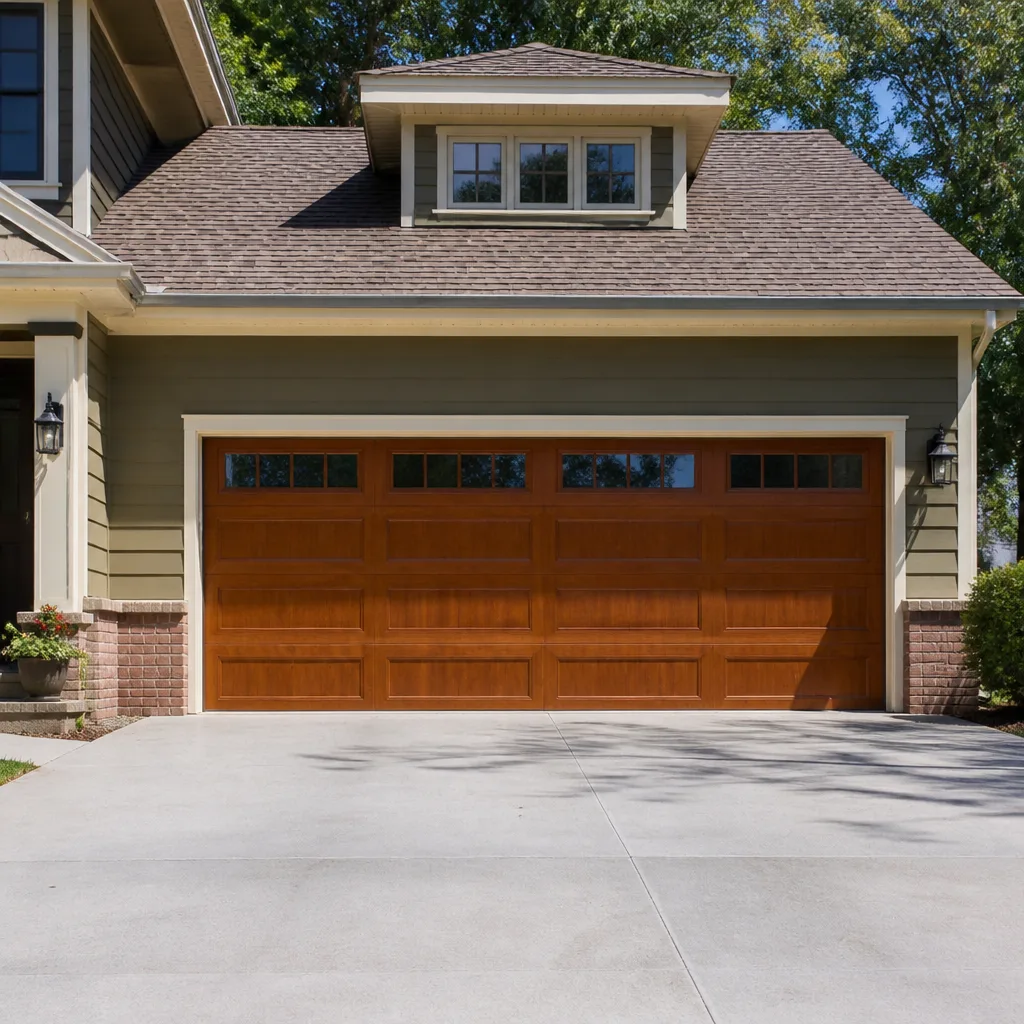
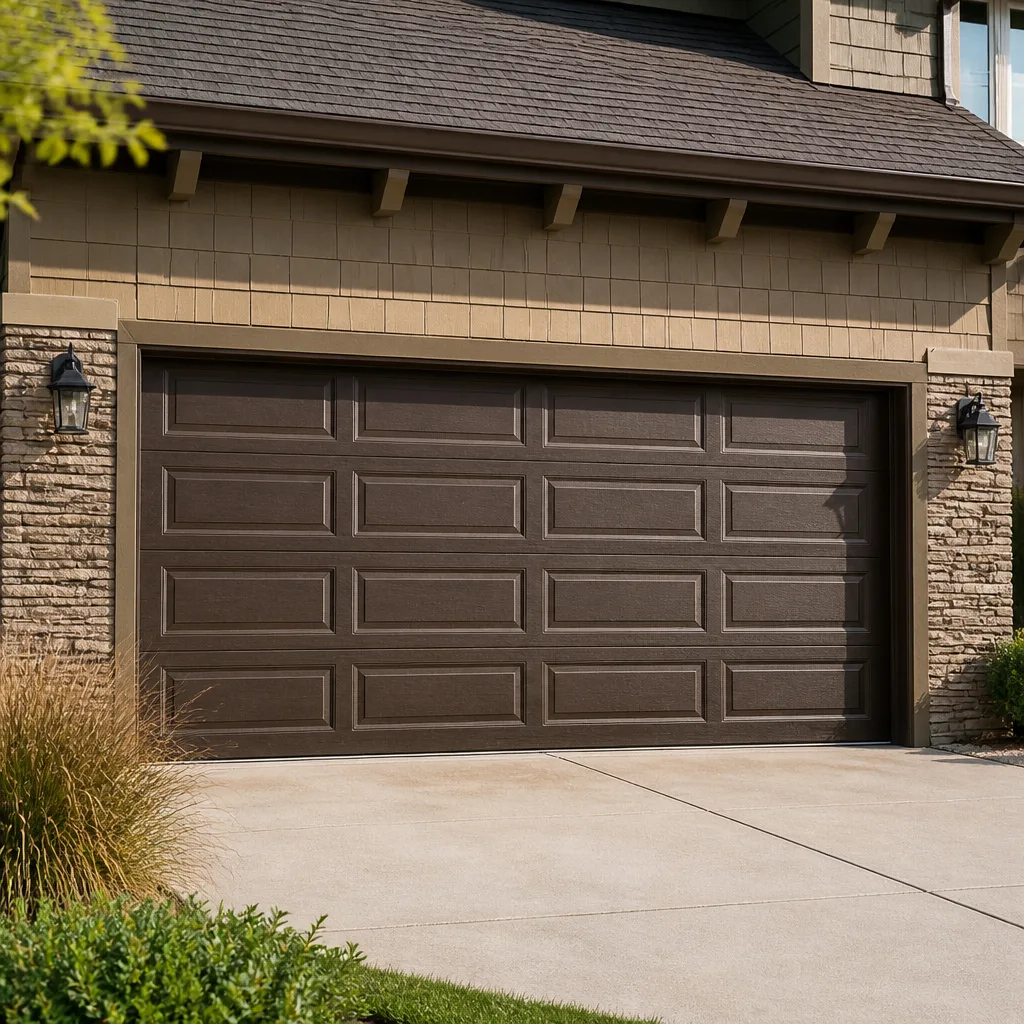 Raised-panel steel
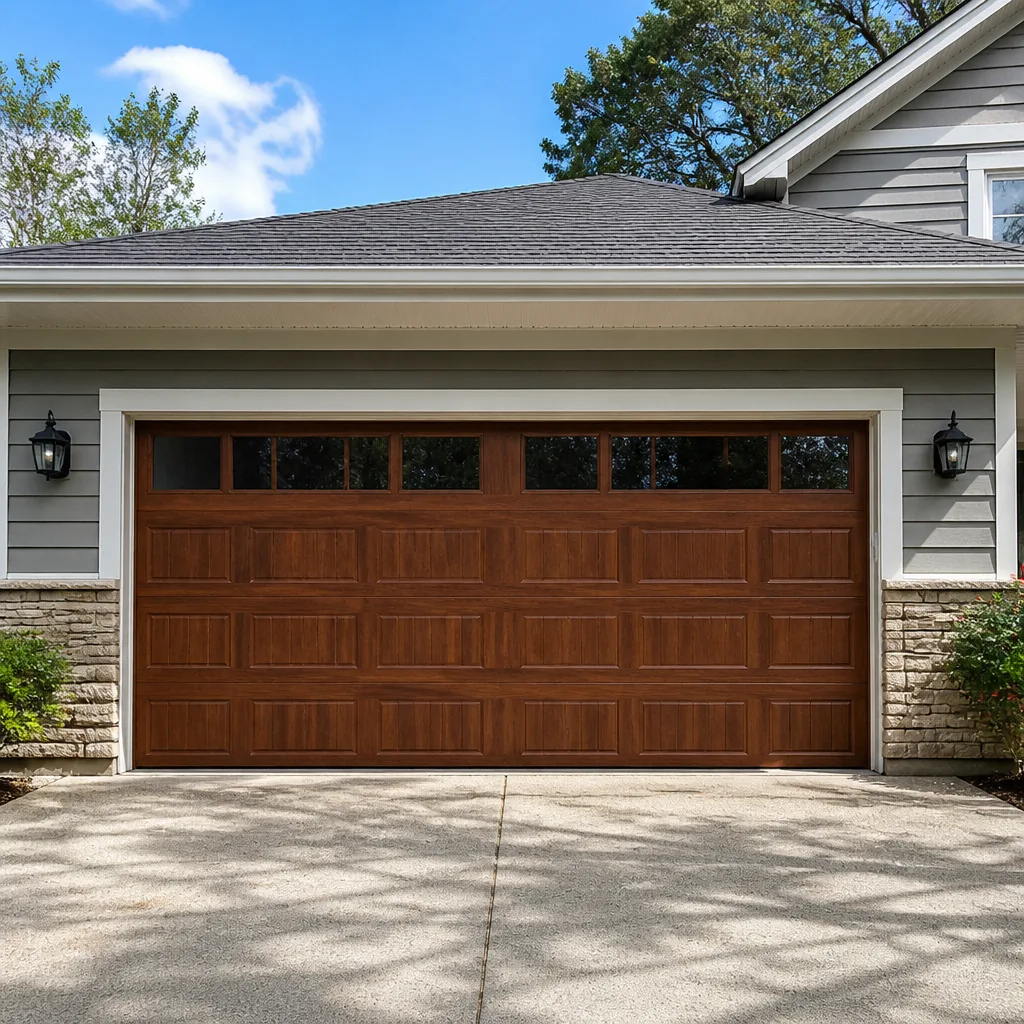
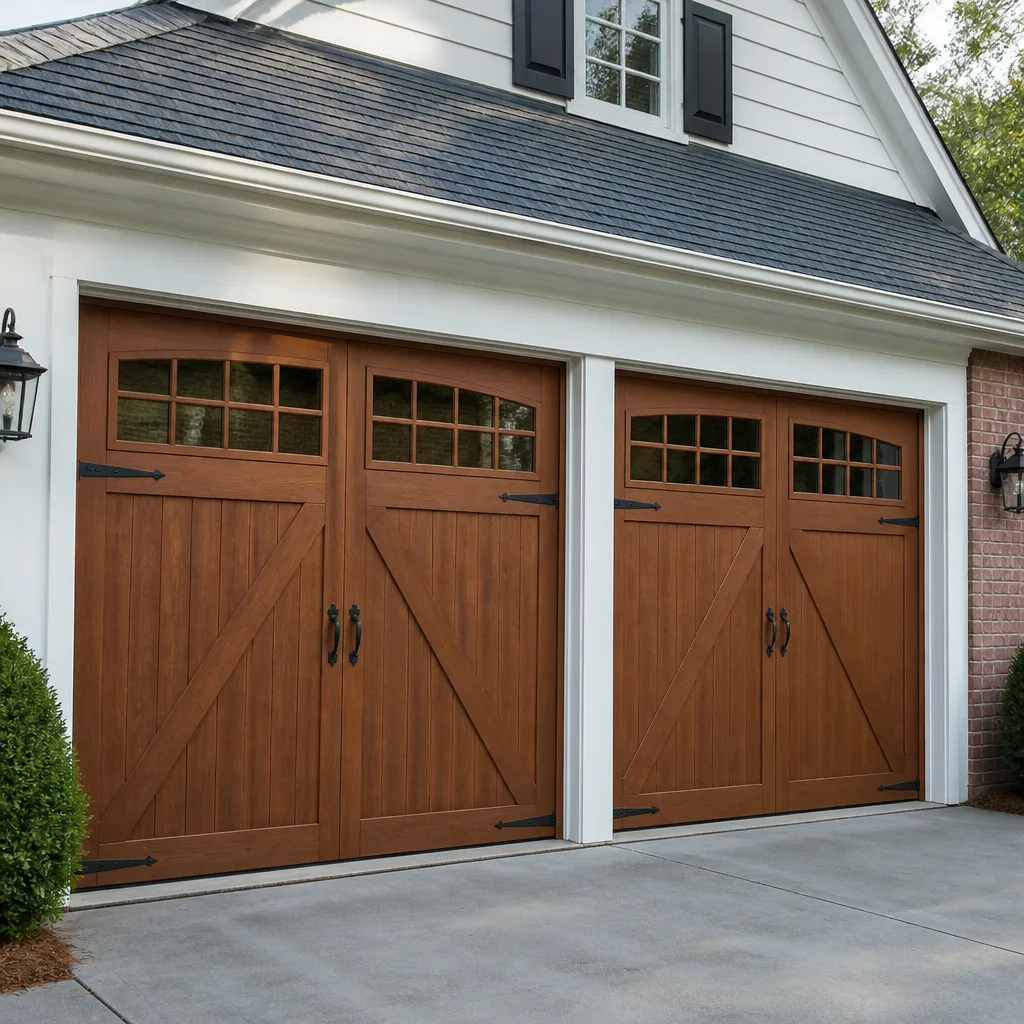 Carriage house
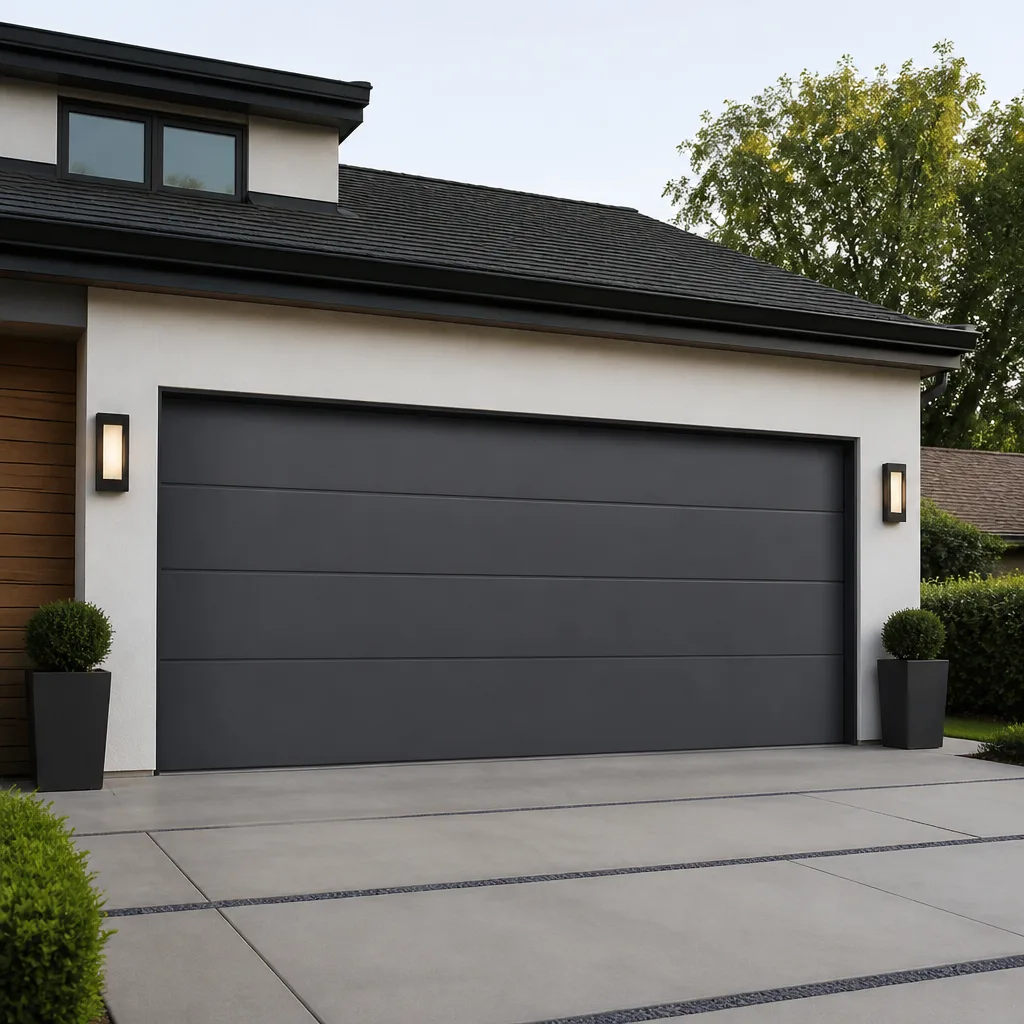 Modern flush
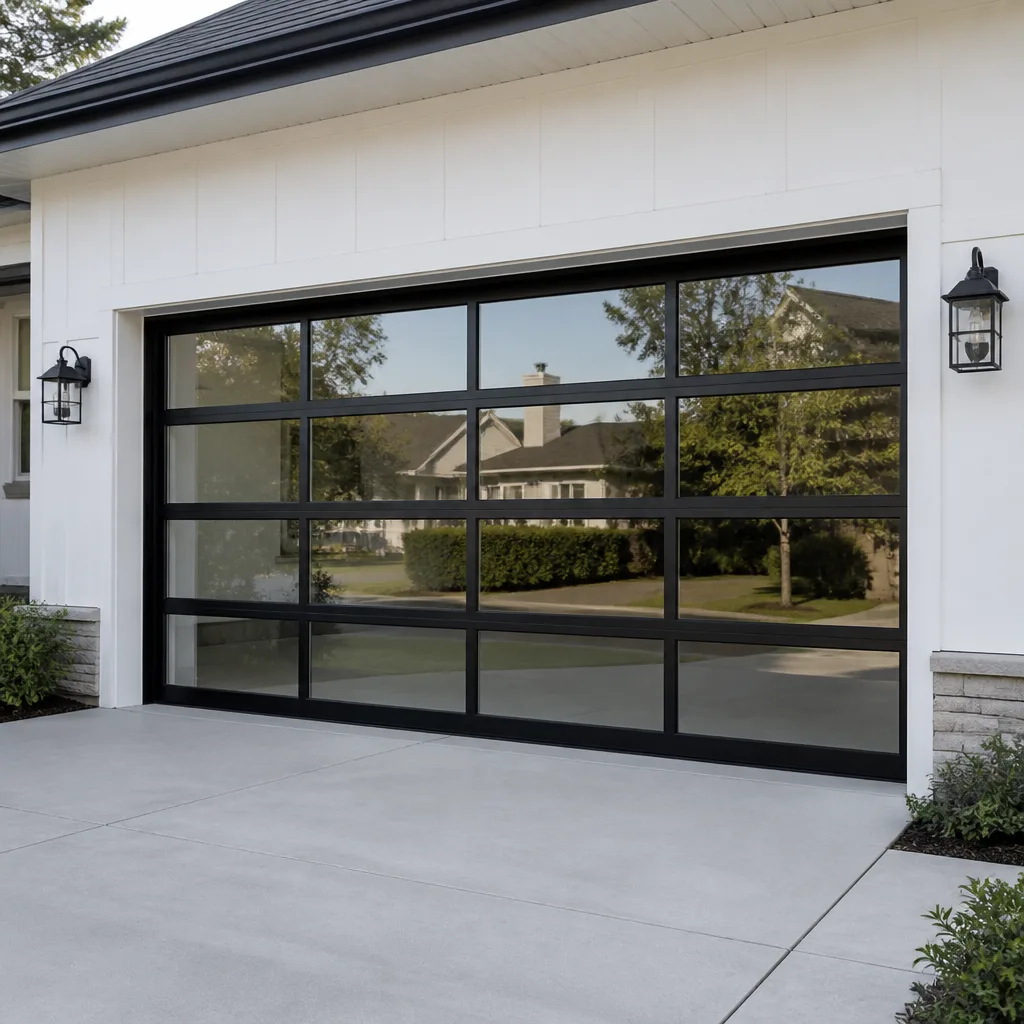 Full-view glass
 LiftMaster openers
 Chamberlain openers
Full 25-point door and opener safety check with every visit - springs, cables, rollers, tracks, and your LiftMaster or Chamberlain opener included
You get a price before we start. It does not change when the pro arrives.
Get your free estimateDIY vs Professional Garage Door: The Chicopee Homeowner’s Decision Guide
Torsion springs store enough energy to break a wrist or take out an eye. That’s not a liability disclaimer – it’s physics, and it’s why garage door repair sits in a small category of home projects where “I’ll figure it out” carries a real injury rate. The debate most homeowners have with themselves isn’t really about whether they’re handy enough. It’s about which tasks on a garage door are safe to touch and which ones are built around stored mechanical force that doesn’t care how careful you are. In Chicopee, where the garage is often the door you actually use to get in and out of the house, knowing that line matters. This guide draws it clearly: what you can confidently do, what you shouldn’t, and how to save money without gambling with a spring under tension.
Quick Answer
Lubrication, safety sensor alignment, remote and keypad reprogramming, and bottom seal replacement are reasonable DIY tasks for most Chicopee homeowners. Torsion spring replacement, cable work, and full door alignment are professional-only, not because they’re complicated but because they involve stored energy that can cause serious injury. Everything in between – opener logic, panel damage, track issues – depends on what you’re comfortable diagnosing, and a written estimate costs nothing.
Styles & brands we work with
- Raised-panel steel
- Carriage house
- Modern flush
- Full-view glass
- LiftMaster openers
- Chamberlain openers
Table of Contents
- The Real Line: Mechanical Risk, Not Skill Level
- What’s Genuinely Safe to Do Yourself
- The Short List of Professional-Only Tasks
- What Watching a Video First Actually Prepares You For
- The Hidden Cost of a Botched DIY Repair
- How to Describe What You’ve Already Tried
- Why Chicopee Weather and Housing Shape the Decision
- What Professional Repair Typically Costs
The Real Line: Mechanical Risk, Not Skill Level
The usual framing of DIY vs professional misses the point. People ask “am I handy enough?” when the better question is “does this task involve stored mechanical energy?” A torsion spring on a standard double door holds enough force to launch itself across a garage if it fails during removal. A cable under tension can whip. Those aren’t hazards you manage with care and the right wrench. They’re hazards you avoid unless you’ve been trained to work with them.
That distinction matters in Chicopee because so many homes here have older doors with original hardware. A door installed decades ago still works, but the springs and cables may be near the end of their service life even if nothing has broken yet. Touching a forty-year-old torsion spring to “see if it moves” is a different proposition than working on a five-year-old system. Age changes the risk without changing the visual.
So the useful line isn’t complicated versus simple. It’s:
- No stored energy, accessible parts: reasonable for a homeowner.
- Stored energy, calibrated tension, structural alignment: professional-only.
- Electrical logic in an opener: depends on the fault and your comfort level.
A lubricated hinge and a properly aligned sensor are jobs you can finish in ten minutes with a can of spray and a screwdriver. A snapped torsion spring is a job where the wrong move has consequences beyond a broken door. That’s the dividing line we use when a Chicopee homeowner calls and asks whether they should handle it themselves. If you need actual repair work done, our garage door repair team can diagnose it and quote it in writing.
What’s Genuinely Safe to Do Yourself
Four tasks sit firmly in the homeowner zone. These are the ones we’d tell a friend to handle on their own because a service call for them is mostly an inconvenience fee. None involve spring tension, cable load, or door alignment, and all four can be done with household tools.
1. Lubrication
Every moving metal surface on the door benefits from a light application of a garage-door-specific lubricant, not WD-40. Hinges, rollers, and the tracks themselves, plus the opener’s chain or screw drive if it has one. Apply a thin layer, cycle the door a couple of times, and wipe away excess. The single biggest cause of a noisy garage door in Chicopee is a lack of lubrication, and it’s a five-minute fix. Do it twice a year and you’ll notice the difference.
2. Safety Sensor Alignment
The two small lenses at the base of the door frame – one on each side – need to see each other. If the door reverses immediately after starting to close, one sensor has drifted or something is blocking the beam. Straighten them, clean the lenses with a soft cloth, and confirm the indicator light on each is steady, not blinking. Most sensor faults are alignment, and alignment is something you can see and correct yourself.
3. Remote and Keypad Reprogramming
A remote that stops working, a keypad that won’t take a code, a new remote that needs pairing: all of these are programming tasks. The instructions are printed on the opener’s logic board cover or in the manual for that specific model. If you have a Chamberlain or LiftMaster opener, the pairing process is documented clearly. This is the kind of job a technician will happily walk you through over the phone rather than charge you to drive out for. If you’d rather just have us reset the system, garage door opener repair covers it.
4. Bottom Seal Replacement
The rubber strip along the bottom of the door is exposed to weather, road grit, and freeze-thaw cycles every year. When it cracks or tears, it lets in drafts and water, and in Chicopee, that means snowmelt creeping into the garage. Slide the old seal out of its track and slide the new one in. It costs little, takes thirty minutes, and requires no tools beyond a utility knife if you need to trim the length.
If your opener has any of the widely installed systems – Genie, Chamberlain, or an older Craftsman – and it’s doing something unusual, the fault may be beyond a reprogramming reset. That’s when it makes sense to have someone who works on these systems every day take a look rather than guess.
The Short List of Professional-Only Tasks
Three jobs belong to a trained technician, and it has nothing to do with difficulty. Each involves either stored energy or structural calibration you can’t verify by eye.
Torsion and Extension Springs
A torsion spring requires specialized winding bars to release its tension safely and to install the new one at the correct number of turns. There is no way to test whether you got it right before it fails. A spring wound one-quarter turn off can fail the next time the door cycles shut. Extension springs, common on older doors, are equally dangerous to change. This is the single most mechanically dangerous and commonly botched garage door job, and we treat it as its own dedicated service because it deserves one. If you need spring work, our garage door spring repair team handles it with the right tools and a written quote before anything starts.
Cables Under Tension
Cables hold the door’s weight against the spring. A cable that’s frayed, off its drum, or snapped has to be restrung with the spring tension released in the correct sequence. Working on a cable without releasing tension first is how people lose fingers. Cables aren’t a “just be careful” job.
Full Door Alignment
When a door comes off its tracks, hangs crooked, or closes unevenly, the cause is usually a combination of spring balance, track position, hinge wear, and panel distortion. Diagnosis requires checking each system against the others. Adjusting one component without understanding the others can make the misalignment worse or unbalance the door. A Clopay or Amarr door that’s been knocked out of alignment is a structural problem, not a matter of tightening a bolt.
If your garage door won’t stay closed, hangs low on one side, or the spring has visibly broken, that’s a professional call. Reach us at (877) 401-9972 and we’ll quote before we touch the door.
What Watching a Video First Actually Prepares You For
A good video is worth watching. It shows you the layout of your system, naming conventions for the parts, and what a healthy door looks like when it cycles. That knowledge helps you describe the problem when you call. But there’s a gap between what a video shows and what the job actually requires that’s worth naming honestly.
Here’s what a video does not give you on a torsion spring system:
- The feel of resistance. A video can’t tell you whether that spring is at the correct tension or one turn too tight. You learn that from working on hundreds of doors.
- The consequence of a slip. Winding bars require continuous pressure. The moment your grip shifts, the bar can whip. There is no way to simulate that in a video.
- Age and condition awareness. A video usually shows a door in decent shape. In a Chicopee garage with a door from 1985, the metal fatigue looks different, and the same technique can be the wrong one.
- What to do when something is already broken. Videos assume you’re starting clean. If the door has already snapped a spring or thrown a cable, the procedure changes.
- Model-specific variation. A technique that works on one brand’s spring system may not apply to another. The brands most common in Chicopee homes – Clopay, Amarr, Wayne Dalton, LiftMaster – use different hardware layouts.
Watching a video before calling a technician is a good idea. Watching a video before replacing a torsion spring is not enough. The gap is mechanical, not informational.
The Hidden Cost of a Botched DIY Repair
When a homeowner tries a repair and it goes wrong, the cost almost always exceeds the original service call. The reason is that a botched spring replacement doesn’t just leave you with a broken spring. It often leaves you with a stripped drum, a damaged cable, or a bent track. Now there’s more to replace than there was before.
A few common examples, described in general terms:
- A spring partially wound and left in place. The next attempt has to release and redo it, which means the technician can’t just swap the spring. The drum and shaft have to be inspected for damage first.
- A cable dislodged while trying to adjust track. Now the door has to come down, the spring released, and both cables replaced as a matched set.
- A panel bent during track adjustment. A single bent section in the wrong place can sometimes be repaired, but often the door needs a section replacement or a full panel.
- An opener burned out trying to lift a door heavier than it’s rated for. If the spring was broken and the homeowner ran the opener anyway, the motor may now need replacing too.
The pattern is consistent: a repair that starts as one thing becomes three things. And the homeowner has paid twice. If you’re already mid-project, call us before you make another attempt. We can scope what’s been done, what’s still safe, and what the right next step is. Free estimates, and the written quote is the price.
How to Describe What You’ve Already Tried
If you’ve made an attempt and you’re calling a technician, the fastest way to a useful diagnosis is to tell us exactly what you’ve already done. The tech starts where you left off rather than from scratch, and the estimate reflects that. Here’s the information that makes the difference:
- What the original symptom was. “The door wouldn’t open” versus “it opened but screeched and stopped halfway” point at different systems.
- What you already did. Adjusted sensors, replaced a remote, sprayed lubricant, tried to rewind a spring. Be specific about which part you touched and how far you got.
- What changed afterward. Whether anything got better, worse, or stayed the same. If a spring was moved, describe its current position: is it holding position or fully extended?
- What kind of door and opener you have. Brand and rough age. A Genie opener from the 1990s and a LiftMaster from 2020 have completely different diagnostics.
- Whether the door is currently open or closed. This matters because a door stuck open in a Chicopee winter exposes the garage to weather, and the urgency is higher.
- Whether you heard anything unusual. A snap, a thump, a grinding sound. That single detail often tells a technician whether it’s a spring, cable, or opener fault before we arrive.
The more detail you give, the more accurate the estimate. We’d rather hear “I watched a video, tried the winding bars, got halfway, and now it won’t move” than “it’s broken.” Every detail shortens the diagnosis and gets your door back to normal faster.
If the door is stuck open right now, that’s a call-now situation, not a schedule-later one. We offer emergency service for Chicopee homes, and (877) 401-9972 goes straight to the team.
Why Chicopee Weather and Housing Shape the Decision
A garage door in Chicopee lives through a wider temperature swing than the same door would in a milder climate. Summer heat expands steel tracks slightly and softens rubber seals. Winter cold contracts them again and stiffens lubricant. Freeze-thaw cycles along the bottom of the door work at the seal and at the threshold. That cycle, repeated over years, is why the seal cracks earlier here than a homeowner might expect and why a door that seemed fine in October can feel stiff in January.
The housing stock matters too. Chicopee has a mix of older homes with original garage doors and newer construction with modern insulated systems. Older doors from the 1970s and 1980s still in service often use extension springs rather than torsion, and those springs corrode and fatigue over decades. A door that “worked fine until last week” and then snapped is a strong indicator that the spring was already past its safe service life. Age of hardware, not age of house, is what determines whether the door is safe to work on.
Neighborhood geography plays a small role too. Homes on sloped lots – common in parts of Chicopee near the river and in older residential blocks – often have doors that face downhill, which means water and snowmelt pool at the bottom threshold. A worn seal is more consequential in those situations than a flat-lot garage.
None of this changes the DIY boundary. A homeowner can still replace a seal and lubricate the door in January. But the reason the work is worth doing is different. The parts wear out here faster than the standard “check it every few years” advice implies.
What Professional Repair Typically Costs
Estimates in Chicopee run in ranges, and the written quote after a technician sees your door sets the final price. The numbers below are typical ranges for common jobs, not a promise of exact pricing.
| Job | Typical Estimate |
|---|---|
| Torsion spring replacement (one spring) | $180 – $340 |
| Extension spring replacement (pair) | $150 – $290 |
| Cable replacement (per cable) | $110 – $200 |
| Safety sensor repair or replacement | $90 – $180 |
| Opener repair (common faults) | $120 – $280 |
| Opener replacement, including install | $320 – $650 |
| Panel or section replacement | $220 – $550 |
| Full door replacement (basic door, installed) | $900 – $2,200 |
Spring prices are per spring. A matched pair is replaced together almost always, so a pair costs roughly twice the single-spring range. That’s the honest number, and we don’t split the difference to make the headline look smaller.
If you’ve already made an attempt and something is now worse, the quote will reflect the additional diagnosis and parts. That’s the hidden cost we covered earlier – and the reason doing the free tasks yourself and calling a technician for everything else is usually the cheaper path. Call (877) 401-9972 for a free estimate; the quote you get before work begins is the price after it ends.
Common Mistakes to Avoid
- Touching a torsion spring without winding bars. No substitute exists for the correct tool, and a pair of vise grips is not one. If you don’t have the right bars, the job stops there.
- Running the opener on a broken spring. A door with a broken spring is extremely heavy, and the motor will strain to lift it. Continued use often burns out the opener, adding a second repair to the bill.
- Replacing one spring of a matched pair. Springs wear at the same rate. Putting one new spring next to a worn one imbalances the door and shortens the life of the new one. Replace the pair.
- Adjusting track by eye. Garages rarely have perfect floors, and tracks are set to compensate for that. Adjusting a track to look level on a floor that slopes may unbalance the door’s alignment.
- Disabling the safety sensors to stop the door reversing. Taped-over or deactivated sensors remove the feature that prevents the door closing on a person. Fix the sensors, don’t defeat them.
- Forgetting to close the door in winter. Snowmelt at the threshold scours the bottom seal, and a partially closed door in freezing conditions is another failure vector. A door that suddenly won’t close fully in January often has a frozen seal or track.
- Trying to fix a frozen bottom seal with a pry bar. This damages the seal and the door bottom. Thaw it, then replace the seal if it’s cracked.
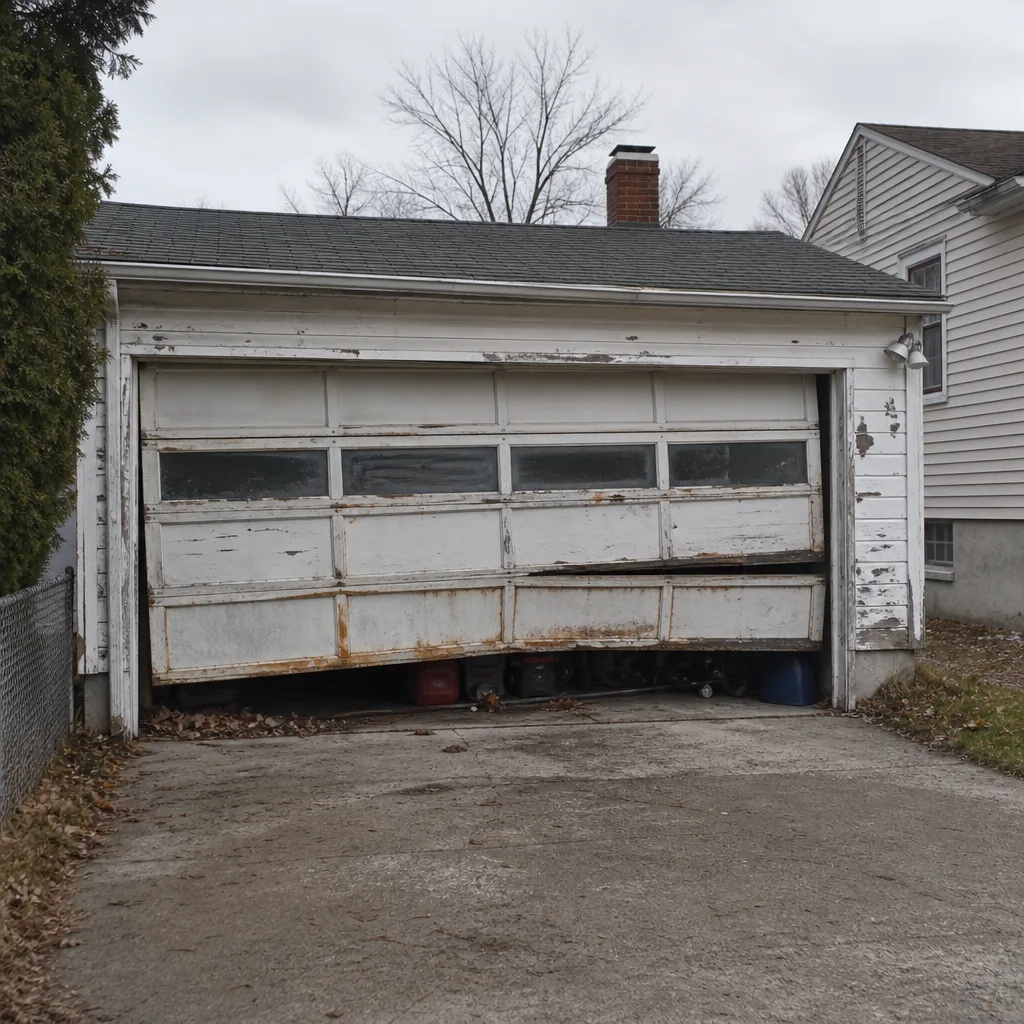
See the difference
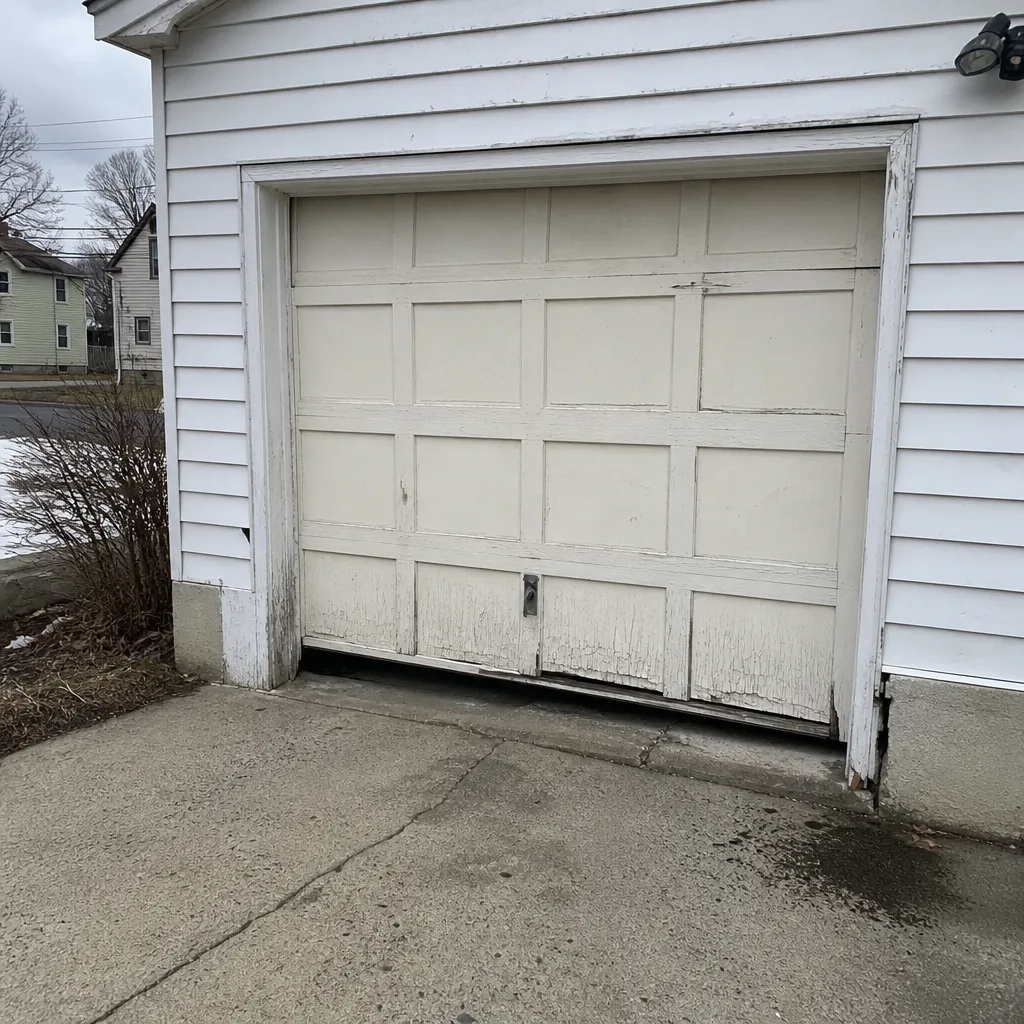 Before
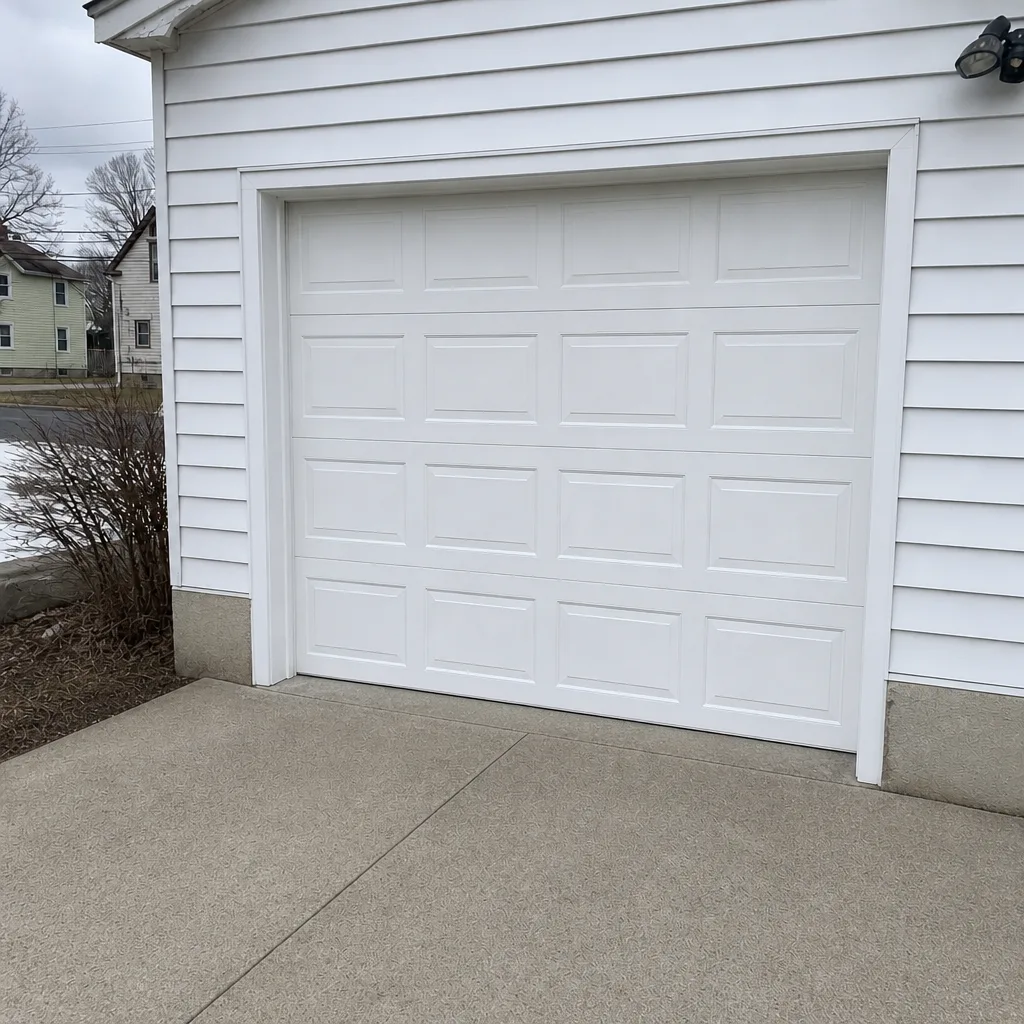 After
 Before
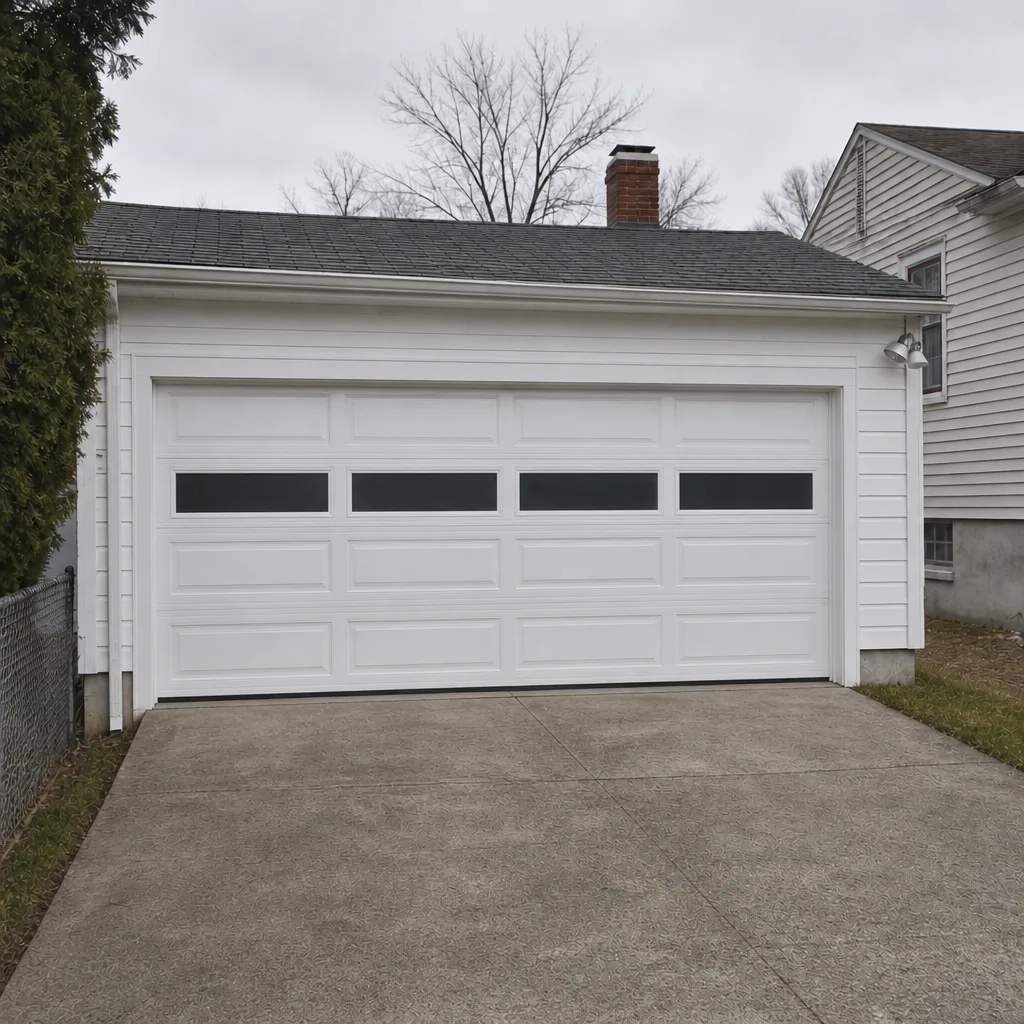 After
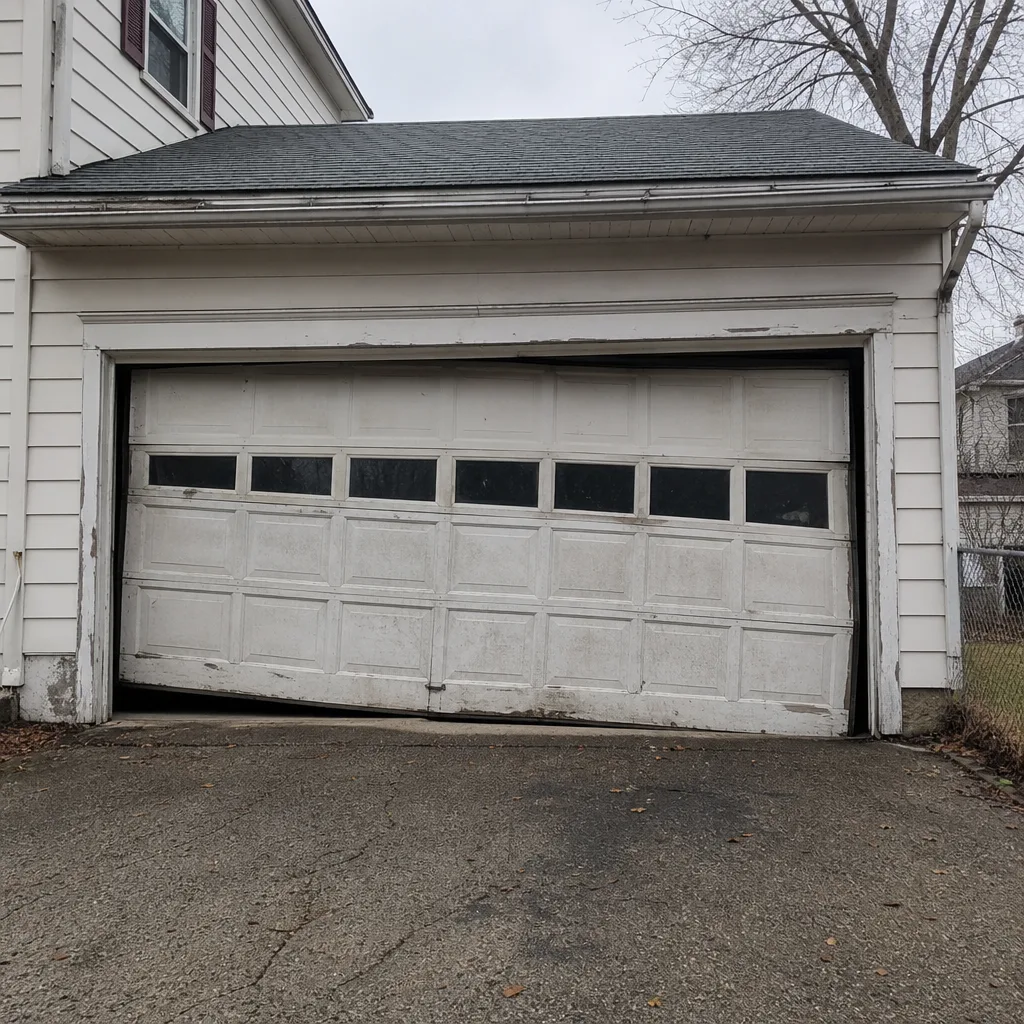 Before
 After
When to Call a Professional
Call a professional when a spring has visibly snapped or feels loose, when a cable is frayed or off its drum, when the door has come off its tracks, when it hangs unevenly, when the opener runs but the door doesn’t move properly, or when any part of the door makes a sound you can’t explain. Call when you’ve tried a fix and it didn’t work, and call if the door is stuck open in cold weather. Each of these is a case where further DIY attempts can turn a single repair into three. Chicopee Garage Door Repair Co offers free estimates in Chicopee – call (877) 401-9972. Our technicians have up to 13 years of experience, and they work on LiftMaster, Chamberlain, Genie, Clopay, Amarr, Wayne Dalton, Craftsman, and Raynor systems – which means the diagnosis starts from familiarity with what’s already in your garage, not from a generic inspection.
Frequently Asked Questions
A torsion spring replacement is not a safe DIY job because of the stored mechanical energy in a wound spring, and it’s the task most likely to cause serious injury. The tools, the winding sequence, and the ability to judge correct tension are all trained skills. Replace the safe-cost items on your own – seals, lubrication, sensors – and call a technician for the spring. Call (877) 401-9972 for an exact quote; estimates are free.
Lubrication is the safest DIY garage door task and the one that prevents the most future problems. It involves no stored energy and reduces wear on every moving part. Sensor alignment, remote and keypad reprogramming, and bottom seal replacement are all equally safe. Anything involving springs, cables, or track alignment is not.
Garage door spring repair in Chicopee typically costs $180-$340 for one torsion spring, and about twice that for a matched pair since both are usually replaced together. Extension spring pairs run $150-$290. Call (877) 401-9972 for an exact quote – estimates are free and the written price holds.
If a DIY spring attempt goes wrong, the damage typically extends beyond the spring itself, so the final repair can cost more than the original call would have. A partially released spring often damages the drum, cable, or shaft, and the technician has to inspect and correct those before replacing the spring. Call us before making another attempt. Estimates are free, and (877) 401-9972 reaches the team.
Yes. If you’ve attempted a repair and stopped partway, tell us what you did and where you stopped, and we’ll scope the situation before arriving so the diagnosis starts at your stopping point rather than from scratch. This is one of the most common calls we get in Chicopee, and it’s not a problem for our technicians. Call (877) 401-9972 to schedule.
The local independent professionals we connect you with are licensed and insured as the state of Massachusetts requires. If you want the specific credentials, ask when you book and we’ll confirm them before the appointment. The work is quoted and agreed before any part of it begins. Call (877) 401-9972 for a free estimate.
Yes. A door that stays partly open through a Chicopee winter lets snowmelt and wind into the garage, which stresses the bottom seal and can freeze the track. If the door won’t close because of a mechanical fault, that’s an urgent call, not a wait-until-spring one. We can often get someone out the same day. (877) 401-9972 for same-day response.
A panel replacement is achievable for a capable homeowner if the door design allows individual sections to be swapped without disturbing the surrounding spring and cable systems. Many modern doors do, but some older doors are sectional in a way that requires more disassembly. If you’re not sure, call us at (877) 401-9972 and we’ll look. Estimates are free either way.
The Bottom Line
The DIY vs professional question for a garage door comes down to one thing: does the task involve stored mechanical energy? Lubrication, sensor alignment, remote reprogramming, and seal replacement don’t, and they’re jobs the homeowner can handle with confidence. Torsion springs, cables under tension, and full door alignment do, and they’re professional-only no matter how handy you are. If you’re not sure which category your problem falls into, or if something has already gone wrong, our team in Chicopee can help you sort it out – on LiftMaster, Chamberlain, Genie, Clopay, Amarr, Wayne Dalton, Craftsman, Raynor, or whatever system came with the house. We’re reachable at (877) 401-9972, and you’re always welcome to start with a free written estimate for Chicopee Garage Door Repair Co.
Written by the team at Chicopee Garage Door Repair Co.